Crop guide · Broad bean preprocessing
Start with the retained product
Broad beans or fava beans can be sold in pods, as shelled seeds with their skins retained, or as peeled kernels. A machine described as a broad-bean sheller may remove seed skins rather than open fresh pods. Romiter lists broad-bean shelling equipment and publishes a demonstration; confirm the actual input state and separated material instead of inferring the duty from the word shelling.
Compare washing, trimming or peeling, cutting, sorting, dewatering and packaging below. Attributed manufacturer images explain equipment roles. General family references require the actual crop configuration and a representative trial.
Choose the finished-product route
Fresh pods
Inspect → configured exterior cleaning → trim as required → drain → grade → pack.
Retain the pod if sold whole.
Shelled fresh seeds
Prepare pods → supplier-confirmed pod opening → separate empty pods → inspect seeds → wash/drain as specified → pack.
Agree seed-skin retention and damage limits.
Peeled kernels
Shell pods upstream → confirmed input conditioning → seed-skin peeling → separate skins → inspect → downstream process.
Dry-bean dehulling and conditioned-seed peeling need their own brief.
Agree pre-cleaning, trimming, cutting and final-wash order for the incoming material and intended use. These routes are specification aids, not universal process settings.
Washing: identify pods or loose seeds first
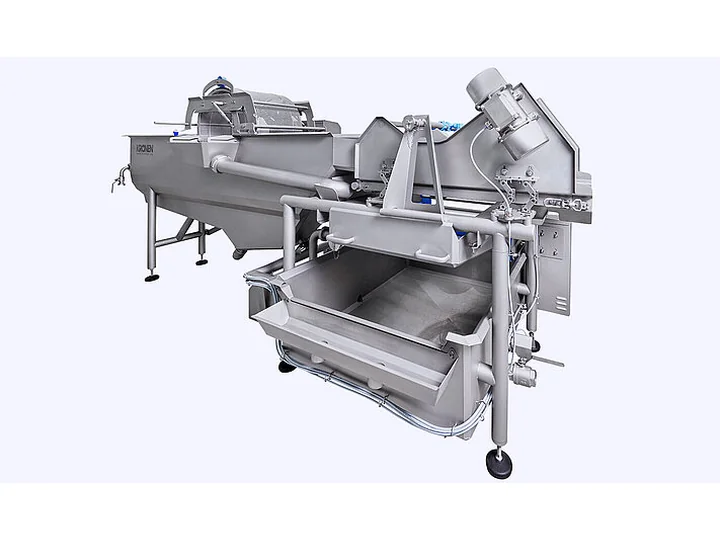
KRONEN HEWA 3800
General washing-family reference, not a confirmed broad bean configuration. Confirm retention, water movement, loading and supported outfeed for the chosen route.
Incoming whole pods require a different cleaning and debris-removal route from loose fresh seeds. Specify screen retention, clean discharge and the location of any wash. A general washer cannot establish that the desired seed skin will stay intact.
Include water filling and management, draining, rinse arrangements and cleaning access in the quotation. No chemical dose, microbial reduction or ready-to-eat result is established by a machine image or application list.
Trimming: name the material being removed
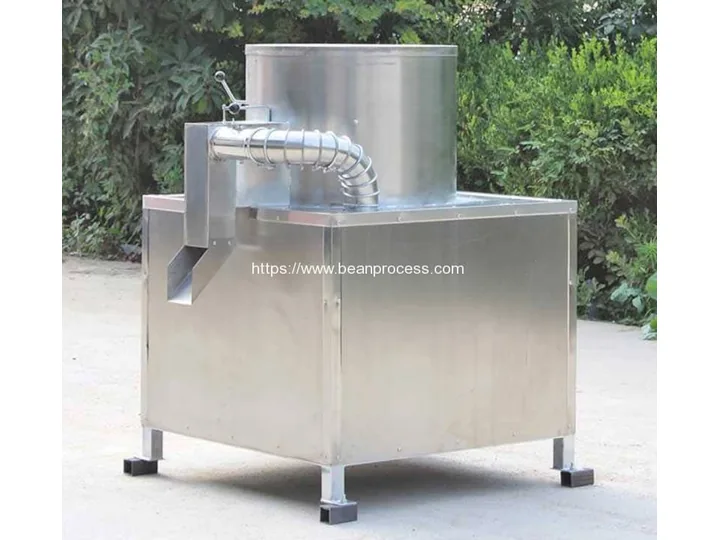
Romiter
Confirm whether the offered machine removes seed skins or opens fresh pods. The inspected Romiter film shows pale kernels and pieces, not a verified fresh-pod acceptance run.
Show the supplier an accepted seed and the waste: empty pod, seed coat or both. Romiter identifies broad-bean shelling, but the film and current quotation must establish the actual duty and input conditioning. Do not claim fresh-pod opening from a seed-peeling demonstration.
Cutting: retain whole seeds unless a recipe needs otherwise
Fresh seeds or peeled kernels generally bypass a vegetable slicer. Inspect split seeds as specified rejects or recipe inputs. Deliberate splitting, milling or pureeing needs separate tooling and an agreed ingredient specification.
Sorting: inspect seeds and separated waste
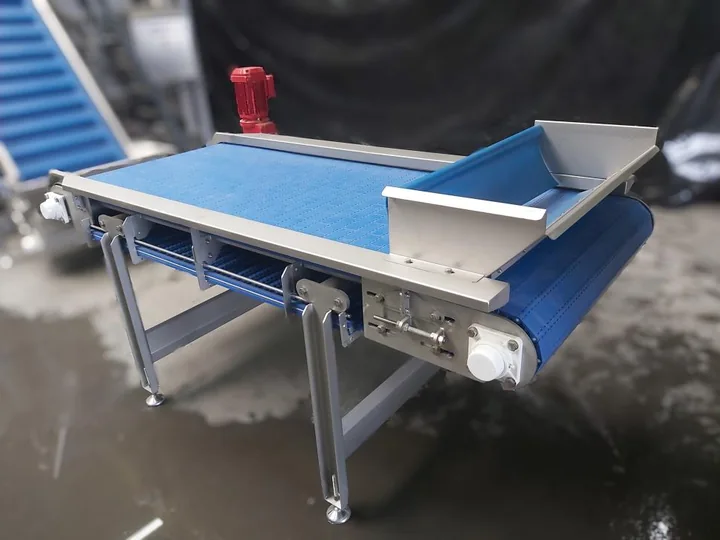
Herbort Inspection Belt 85
Manual inspection reference. Confirm presentation and separate rejects for broad bean. It does not establish optical grading or internal-defect detection.
Check whole seeds, broken kernels, attached skins and unwanted material after the specified removal stage. Verify useful seed loss in the waste stream. A manual inspection conveyor does not establish complete skin removal or an automatic foreign-material rejection rate.
Dewatering: control drainage after any wet process
Wet-conditioned seeds and fresh raw seeds may need different screens and handling. Trial the actual preparation state and smallest useful pieces. Separate surface-water removal from drying to a storage specification; no general shelf-stable result is inferred.
Agree the free-water and damage assessment after a realistic hold, then check the next transfer and doser. Surface-water removal differs from thermal drying, cooking and sterilisation.
Packaging: agree fresh, cooked or frozen ingredient handling
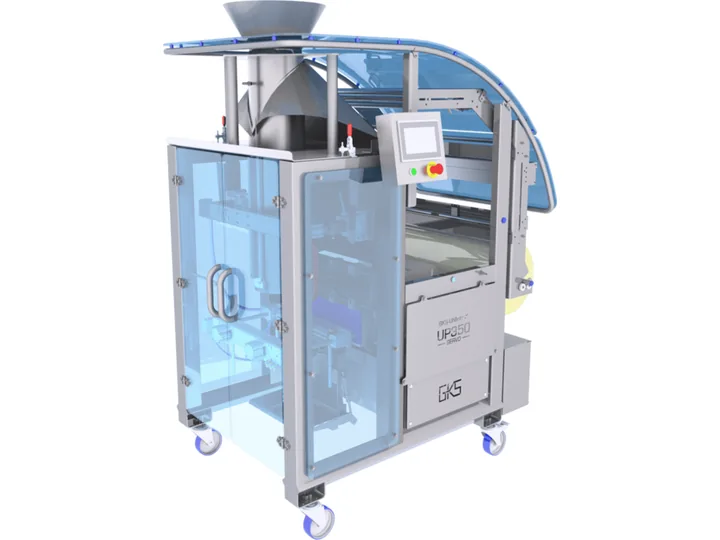
KRONEN FLEX L
General packaging-family reference. Confirm the actual broad bean feeder, doser, pack and seals. It does not establish whole-product fit, tray feeding, a MAP recipe or shelf life.
Pods, skin-on seeds and peeled kernels require different feeders and pack formats. Confirm the actual product state, dose and seals. The bagger photograph does not establish a complete fresh-pod line, drying process, cooking step or frozen-product configuration.
If MAP is proposed, obtain the exact gas-handling hardware, film, seals and distribution brief. A general bagger does not establish a gas recipe, shelf life or every optional configuration.
Name the removed shell before selecting a broad-bean machine
Romiter identifies this as broad-bean shelling. The inspected output is a kernel/peeling reference, not proof that fresh green pods are opened. Confirm seed conditioning, retained seed coat and acceptable split pieces. The short film does not establish fresh-pod feeding or measured whole-kernel yield.
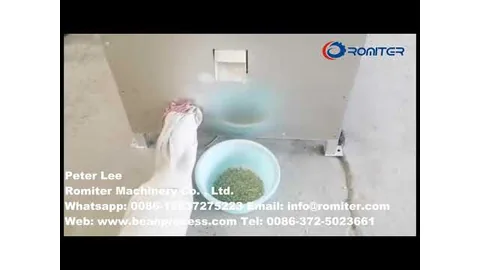 Watch on YouTube ↗ · 1:19
Romiter Food Processing Machine · Official manufacturer footage
- Around 0:31: The cylindrical stainless machine and its discharge area are shown.
- Around 1:13: A metal bowl contains pale kernels and broken pieces rather than intact fresh pods.
Current manufacturer links and source identity were checked. Confirm the offered version and configuration separately from historical demonstration footage. Original English watch notes provide a text alternative; no full transcript is reproduced. Playback is on YouTube. No crop capacity, yield, cleaning, damage or shelf-life guarantee is inferred from the film.
Prepare a broad bean equipment trial brief
- Bring representative input: variety, maturity, size, incoming condition and seasonal variation.
- Show accepted and rejected samples: retained skin, leaf, stem, head or cut form, useful rework and finished pack.
- Record useful output: trim/peel loss, damage, fines, missed defects, free water and rejected packs.
- Test interfaces: product supports, drops, screens, drainage, dose control, stops and restart.
- Confirm supplied configuration: safe access, guards, tooling, water circuits, utilities, cleaning and training.
Questions before choosing broad bean equipment
Does broad-bean shelling always mean fresh pods are opened?
No. It can refer to removing a seed coat. Identify the actual input and removed material, then obtain a trial for fresh pods, skin-on seeds or conditioned kernels as required.
Sources, image credits and review scope · 3 November 2026
Manufacturer equipment references may include studio images or technical renderings; photographs are identified in their captions. Footage and machine images belong to the named sources and are not Food Machinery IQ installations or independent acceptance tests. Source addresses are plain text. Supplier inclusion is permanently free.
- Broad Filmhttps://www.youtube.com/watch?v=7OS4hIVTBHw
- Romiter: broad-bean shelling equipment listinghttps://www.beanprocess.com/automatic-broad-bean-shelling-machine/
- Broad Filmhttps://www.youtube.com/watch?v=7OS4hIVTBHw
- Leaf Washhttps://www.kronen.eu/en/solutions/hewa-3800-washing-machine-with-vibration-or-belt-outfeed
- Prephttps://www.kronen.eu/en/solutions/trimming-table-for-4-people
- Inspectionhttps://www.herbort-gmbh.de/en/products/machines/inspection-belt-85
- Packhttps://www.kronen.eu/en/solutions/packaging-machine-flex-l
General layout and selection advice is an editorial trial brief. Crop-specific application listings are distinguished from general machine-family references. No certification, numerical output, pathogen reduction, energy saving or shelf-life promise has been independently established here.