Crop guide · Spring onion preprocessing
Start with the retained product
Define the actual green-onion variety, bulb development, stem length and retained green tops. FERMAQ documents a dedicated green-onion washer-cutter, and its film shows onions with pronounced bulbs. Confirm your crop dimensions rather than assuming that bulbous spring onions and slender scallions need the same support.
Compare washing, trimming or peeling, cutting, sorting, dewatering and packaging below. Attributed manufacturer images explain equipment roles. General family references require the actual crop configuration and a representative trial.
Choose the finished-product route
Whole trimmed bunches
Orient → remove unwanted roots/leaves → wash/inspect → drain → bunch/support → pack.
Keep the required green length and avoid unnecessary cross-cutting.
Prepared white/green portions
Select retained parts → trim → wash → inspect → drain → portion.
Specify whether white and green material stay together or are collected separately.
Cross-cut ingredients
Prepare/clean → align → configured belt cutting → inspect → dewater as needed → dose.
Show the required ring/short-piece geometry and accepted split or crushed stems.
Agree pre-cleaning, trimming, cutting and final-wash order for the incoming material and intended use. These routes are specification aids, not universal process settings.
Washing: clean the bulb/root area and retained tops
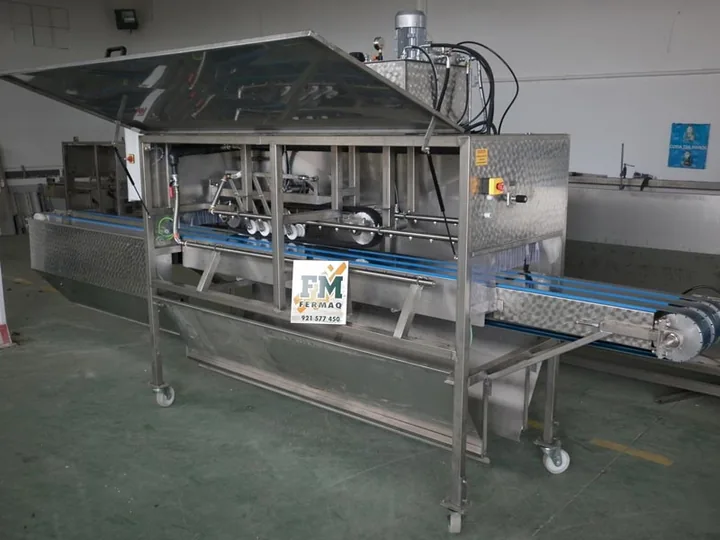
FERMAQ
Dedicated green-onion washer-cutter reference. Confirm your actual stem and bulb sizes, root/top trims and retained green length; cross-cutting is a separate duty.
The FERMAQ washer-cutter is a crop-specific reference for green onions. Check the water path, root-zone cleaning and movement of long tops. The historical film explains presentation but does not supply current wash settings or a microbial result.
Include water filling and management, draining, rinse arrangements and cleaning access in the quotation. No chemical dose, microbial reduction or ready-to-eat result is established by a machine image or application list.
Trimming: set root and top cuts explicitly
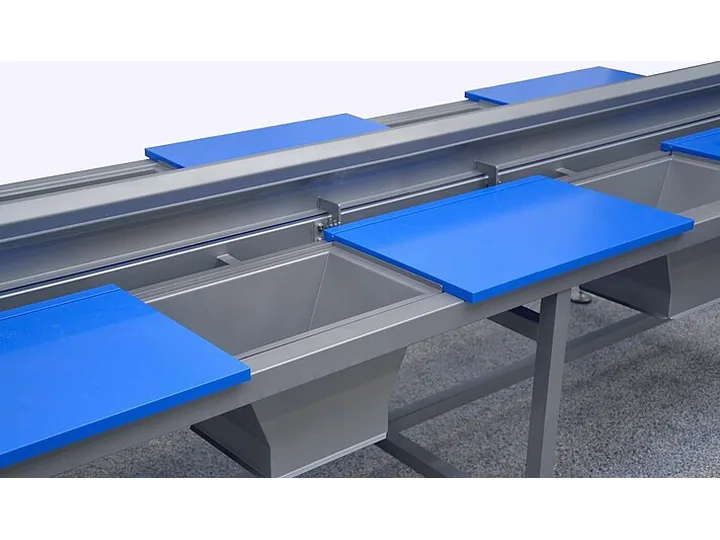
KRONEN
Manual preparation reference with supported work surfaces and separate waste collection. Define accepted spring onion portions, trim loss and touch-up before automating the duty.
Agree retained stem length, root-end appearance and removable outer leaves. Compare clamping/orientation with your actual bulb and stem thickness. Do not turn the displayed example dimensions into a universal scallion specification.
Cutting: separate end trimming from cross-cutting
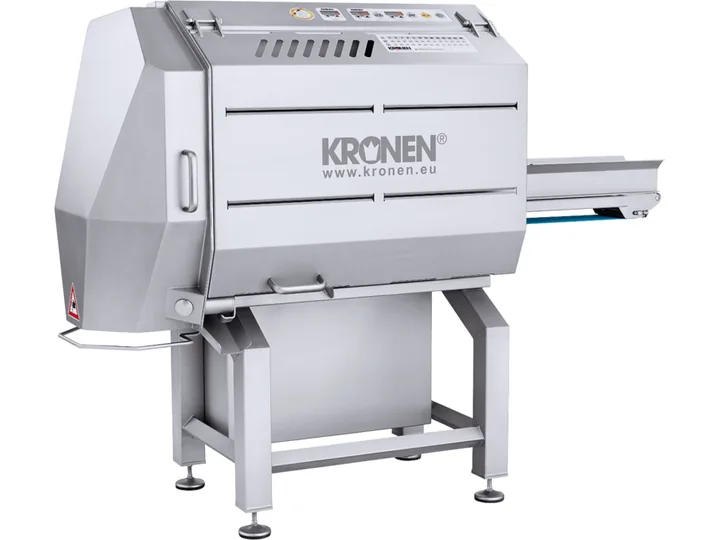
KRONEN GS 10-2
Confirm the actual product, tooling and interfaces with the named manufacturer.
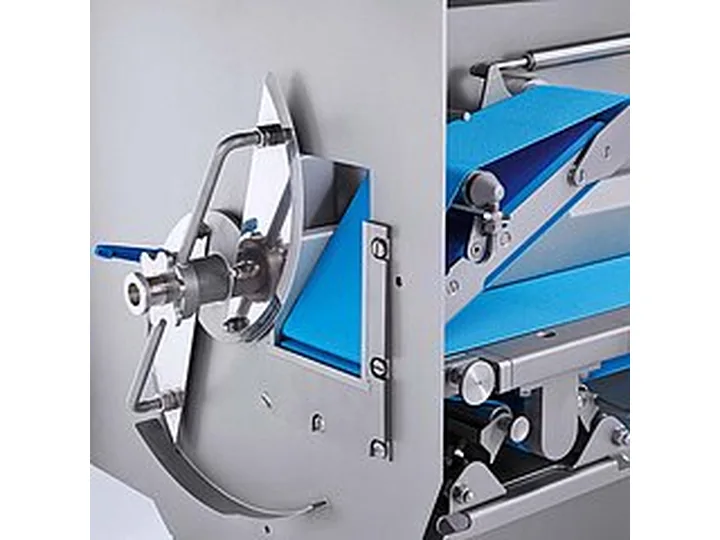
KRONEN GS 10-2
Feed and cutting-assembly detail for explanation. Confirm actual spring onion support and tooling. Operation and service must follow supplier guarding and isolation procedures.
The washer-cutter removes specified ends; a belt cutter is a separate family reference for prepared pieces. Trial alignment, white/green distribution, crushed hollow stems and the cut after transfer. Whole bunches need a cutter bypass.
Sorting: inspect retained greens and bunch composition
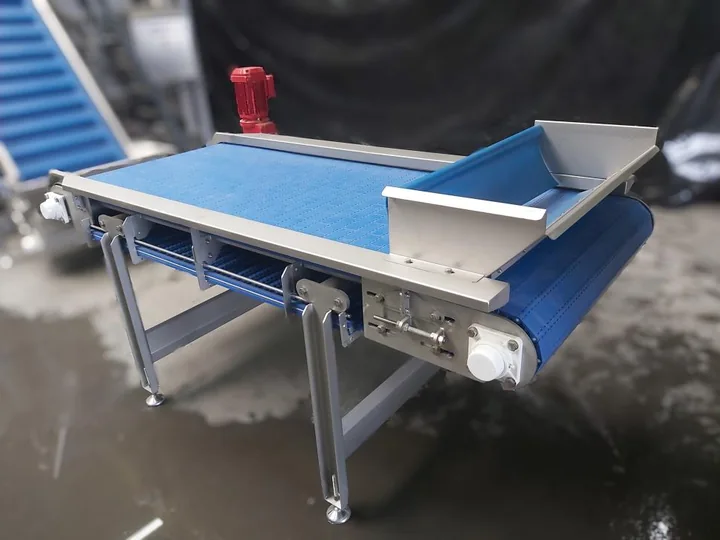
Herbort Inspection Belt 85
Manual inspection reference: compare product presentation, visibility, good-product collection and rejects. It does not establish automatic grading or internal-defect detection.
Give examples for yellow/damaged leaves, unwanted roots, surface debris and accepted bulb size. For cut packs, check fines and component balance. Manual belt inspection is not a verified optical sorter.
Dewatering: protect long hollow stems during drainage
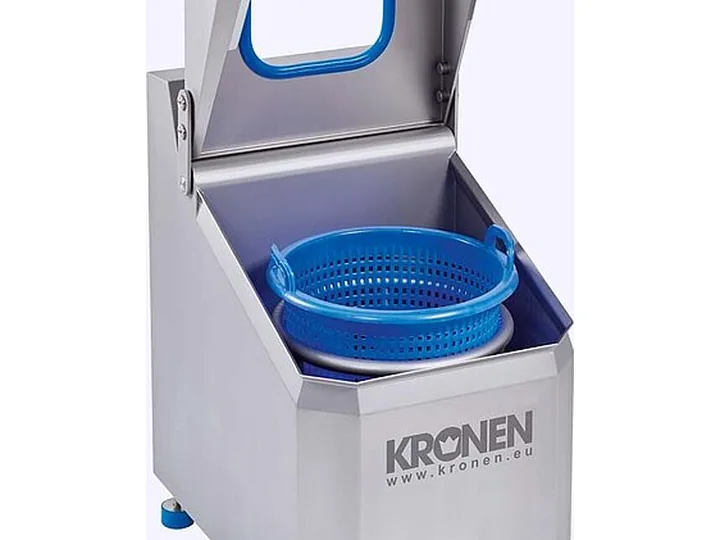
KRONEN KS-100 PLUS
General removable-basket reference for a supplier-confirmed wet route. Compare actual spring onion retention, damage and free water. Dry bulbs or dry pneumatic peeling may bypass this duty.
Whole bunches may need supported drainage rather than a basket spin. Cut pieces need the proposed water-removal method tested for fines and crushed tissue. No universal spring-onion spin programme is established by the general basket reference.
Agree the free-water and damage assessment after a realistic hold, then check the next transfer and doser. Surface-water removal differs from thermal drying, cooking and sterilisation.
Packaging: support bunches or dose loose pieces
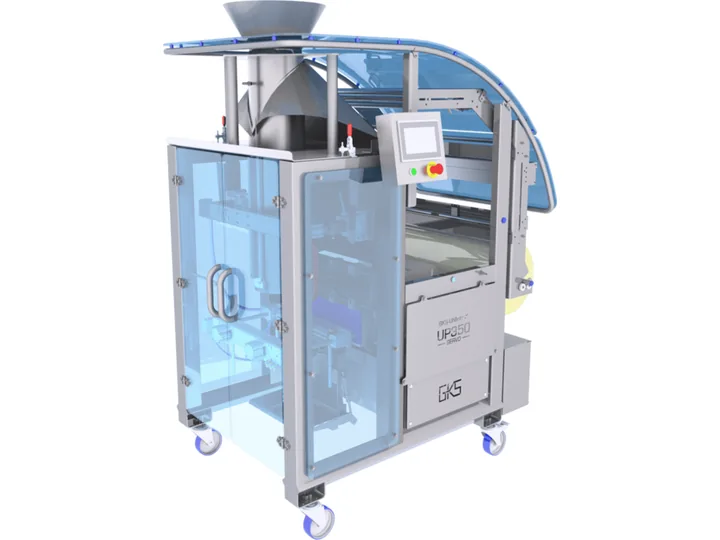
KRONEN FLEX L
Compare the actual spring onion feeder, doser, pack and seal clearance. Whole products, bunches and pastes can need different equipment; the image does not establish every feeding or MAP option.
Bunching, tying and sleeving are distinct from vertical loose-product bagging. Confirm retained length, orientation and top protection. Cut ingredients need dose, seals and moisture checks. Specify any MAP hardware and distribution independently.
If MAP is proposed, obtain the exact gas-handling hardware, film, seals and distribution brief. A general bagger does not establish a gas recipe, shelf life or every optional configuration.
Follow green-onion presentation and final collection
FERMAQ links this historical film from its green-onion washer-cutter page. It shows bulbous green onions; confirm your slender scallion or bunching-onion dimensions separately. End trimming is distinct from making loose cross-cut rings.
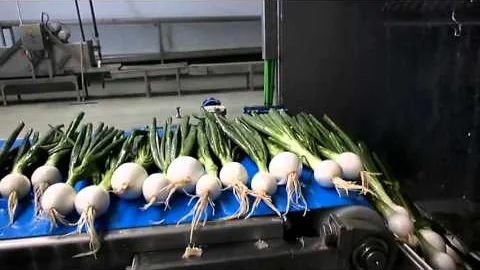 Watch on YouTube ↗ · 2:43
FERMAQ MAQUINARIA HORTICOLA · Official manufacturer footage
- Around 0:26: Roots and green tops enter along the supported blue belt and guide area.
- Around 1:39: Prepared green onions are presented on a white collection surface.
Current manufacturer links and source identity were checked. Confirm the offered version and configuration separately from historical demonstration footage. Original English watch notes provide a text alternative; no full transcript is reproduced. Playback is on YouTube. No crop capacity, yield, cleaning, damage or shelf-life guarantee is inferred from the film.
Prepare a spring onion equipment trial brief
- Bring representative input: variety, maturity, size, incoming condition and seasonal variation.
- Show accepted and rejected samples: retained skin, leaf, stem, head or cut form, useful rework and finished pack.
- Record useful output: trim/peel loss, damage, fines, missed defects, free water and rejected packs.
- Test interfaces: product supports, drops, screens, drainage, dose control, stops and restart.
- Confirm supplied configuration: safe access, guards, tooling, water circuits, utilities, cleaning and training.
Questions before choosing spring onion equipment
Does a green-onion washer-cutter also make loose scallion rings?
Not from that duty description alone. Root/top trimming and cross-cutting are separate operations. Select a cutter and aligned feeding arrangement for the desired short pieces or rings.
Sources, image credits and review scope · 3 November 2026
Manufacturer equipment references may include studio images or technical renderings; photographs are identified in their captions. Footage and machine images belong to the named sources and are not Food Machinery IQ installations or independent acceptance tests. Source addresses are plain text. Supplier inclusion is permanently free.
- FERMAQ: Green-onion washer-cutterhttps://fermaq.biz/en/maquinaria/green-onion-washer-cutter/
- KRONEN: GS 10-2 belt cutterhttps://www.kronen.eu/en/solutions/belt-cutting-machine-gs-10-2
- KRONEN: Manual preparation stationhttps://www.kronen.eu/en/solutions/trimming-table-for-4-people
- Herbort: Inspection Belt 85https://www.herbort-gmbh.de/en/products/machines/inspection-belt-85
- KRONEN: KS-100 PLUS basket systemhttps://www.kronen.eu/en/solutions/vegetable-and-lettuce-spin-dryer-ks-100-plus
- KRONEN: FLEX L packaging referencehttps://www.kronen.eu/en/solutions/packaging-machine-flex-l
General layout and selection advice is an editorial trial brief. Crop-specific application listings are distinguished from general machine-family references. No certification, numerical output, pathogen reduction, energy saving or shelf-life promise has been independently established here.