Crop guide · Amaranth leaves preprocessing
Start with the retained product
This page concerns edible vegetable amaranth leaves, not grain. Define maturity, retained colour and tender-stem content before choosing preparation equipment. The whole-leaf pack and a chopped ingredient need separate acceptance samples.
Compare washing, trimming or peeling, cutting, sorting, dewatering and packaging below. Attributed manufacturer images explain equipment roles. General family references require the actual crop configuration and a representative trial.
Choose the finished-product route
Whole selected leaves
Select and detach as specified → wash → dewater → inspect → pack.
Bypass cutting and assess useful leaf loss through handling and screens.
Leaf-and-tender-stem portions
Unpack bunches → trim coarse bases → cut if required → wash/dewater → portion.
Show accepted tender stems and rejected coarse material.
Ingredients for later manufacture
Select → specified cut/wash sequence → remove free water → weigh and transfer.
Cooking or preservation is a separate process brief; surface dewatering does not make dried shelf-stable greens.
Agree pre-cleaning, trimming, cutting and final-wash order for the incoming material and intended use. These routes are specification aids, not universal process settings.
Washing: keep useful leaves out of the waste
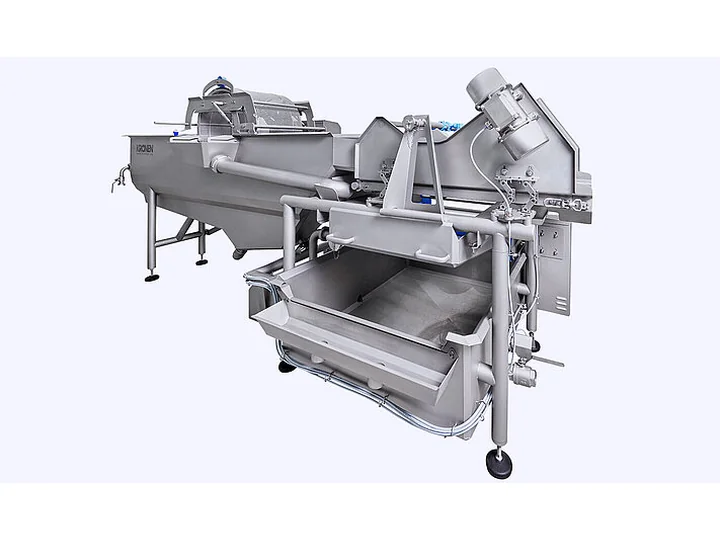
KRONEN HEWA 3800
Manufacturer equipment-family reference. Confirm actual amaranth leaves input, retained product, tooling, transfers and useful output in a representative trial.
Trial tank loading, fine-material removal and outfeed with the actual leaves and retained stems. Inspect clusters and useful leaf loss. Water colour is not a validated cleaning or safety result.
Include water filling and management, draining, rinse arrangements and cleaning access in the quotation. No chemical dose, microbial reduction or ready-to-eat result is established by a machine image or application list.
Trimming: separate coarse stems from retained greens
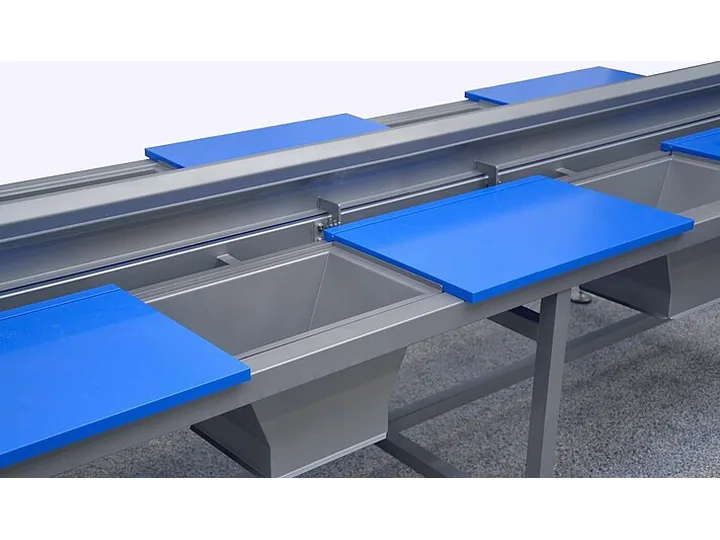
KRONEN
A supported preparation surface with separate collection paths. Define the accepted amaranth leaves portion before removing leaves, stalks, bases or other unwanted material.
Show retained leaf, tender stem and unwanted base samples. Compare operator reach, support and separate collection. No automatic amaranth leaf-stripper is established by these references.
Cutting: choose a cut for the final ingredient
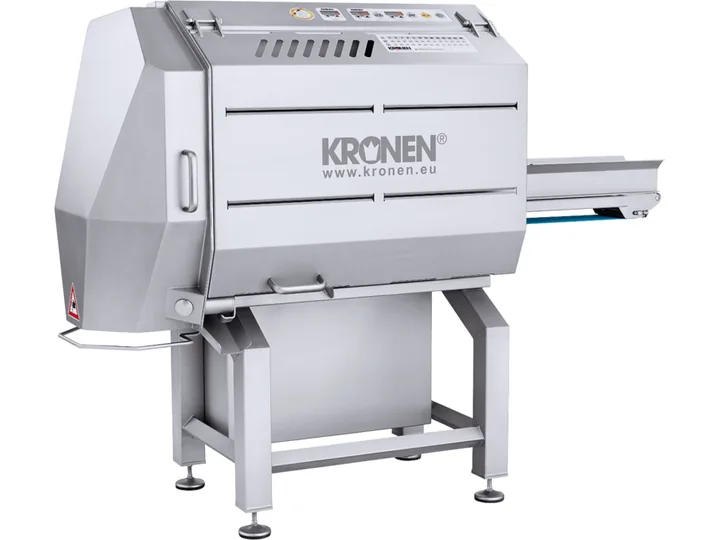
KRONEN GS 10-2
Manufacturer equipment-family reference. Confirm actual amaranth leaves input, retained product, tooling, transfers and useful output in a representative trial.
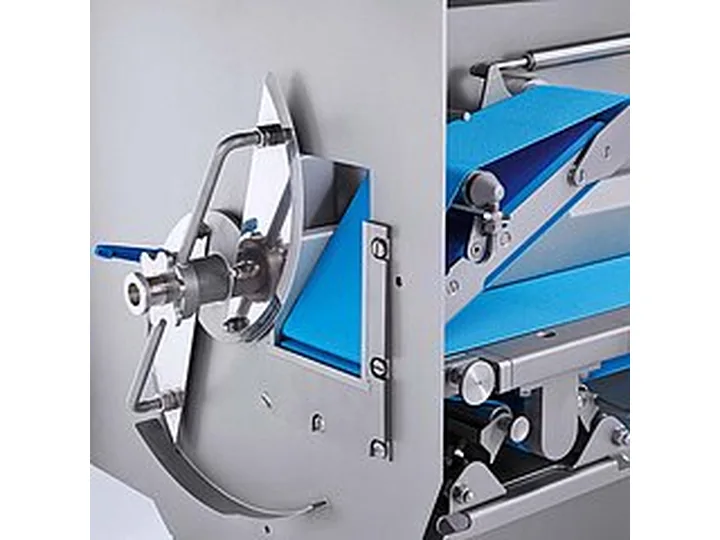
KRONEN GS 10-2
The detail exposes the feed and cutting assembly for explanation. Check actual amaranth leaves support and tooling. Operation and service must follow the supplier guarding and isolation procedure.
Whole leaves bypass cutting. For prepared portions, define strips or pieces, stem content, long fragments and fines. Require actual amaranth in the proposed feed and knife setup.
Sorting: match colour rules to the variety
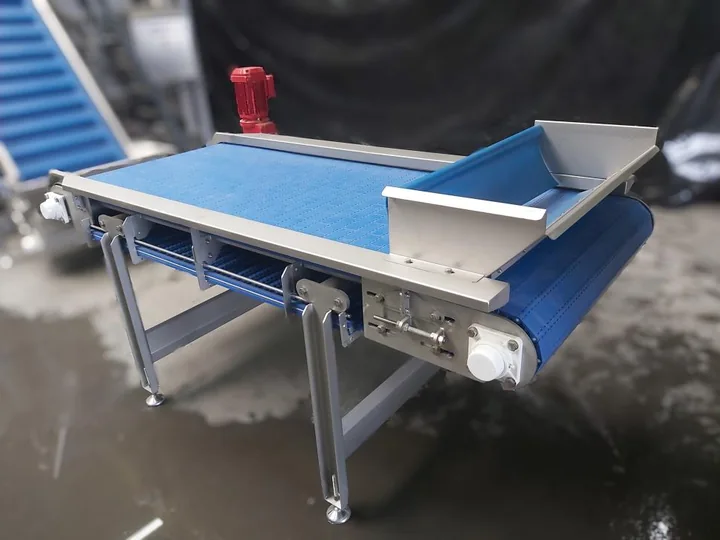
Herbort Inspection Belt 85
Compare presentation, operator visibility, good-product collection and rejects. This reference does not prove automated detection, grading or a amaranth leaves rejection rate.
Use accepted samples of the supplied green or coloured-leaf product. Distinguish normal variety colour from rejected condition. Compare overlap, lighting and the ability to inspect both leaf surfaces.
Dewatering: include loading and release in the basket trial
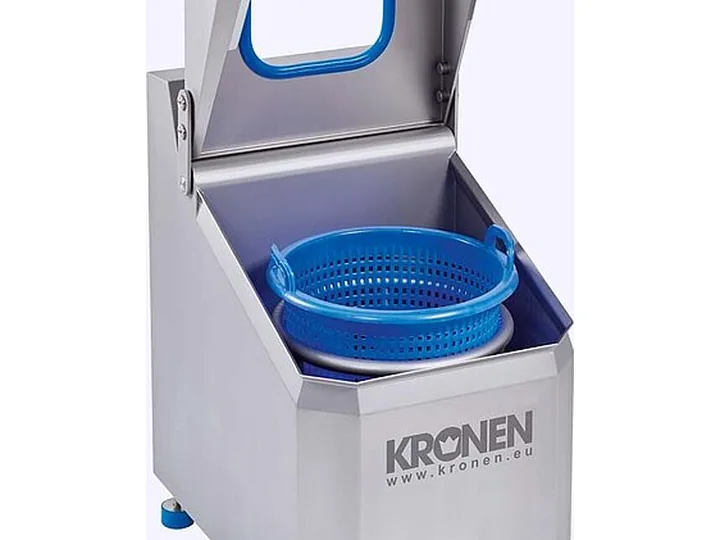
KRONEN KS-100 PLUS
Compare loading, distribution, unloading and retained free water using actual amaranth leaves. The removable-basket photograph is a family reference, not a validated crop programme.
Assess free water, clumps, tears and useful leaf loss after the proposed load, unloading and hold. The official film shows lettuce basket handling; it does not establish an amaranth cycle.
Agree the free-water and damage assessment after a realistic hold, then check the next transfer and doser. Surface-water removal differs from thermal drying, cooking and sterilisation.
Packaging: maintain the leaf and stem balance
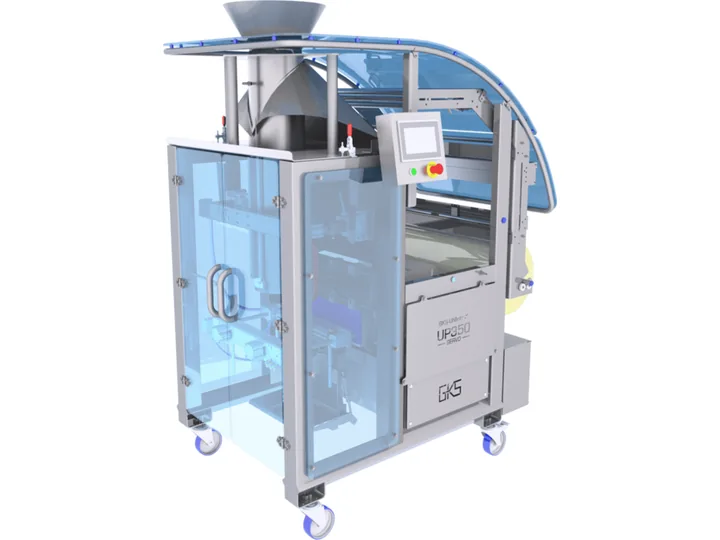
KRONEN FLEX L
Compare the actual amaranth leaves doser, drop, pack and seal clearance. Whole products or bunches may require different presentation. This reference does not establish every feeding or MAP option.
Trial whole or cut product through the doser. Compare compression, bridging and uneven stem distribution. Inspect weight, leaves in seals, moisture and rejected packs through stops and restart.
If MAP is proposed, obtain the exact gas-handling hardware, film, seals and distribution brief. A general bagger does not establish a gas recipe, shelf life or every optional configuration.
See the basket, controls and cleaning access
For amaranth, compare actual basket loading, release and useful leaf loss with this workflow. The film demonstrates lettuce handling and German-labelled equipment, not an amaranth programme.
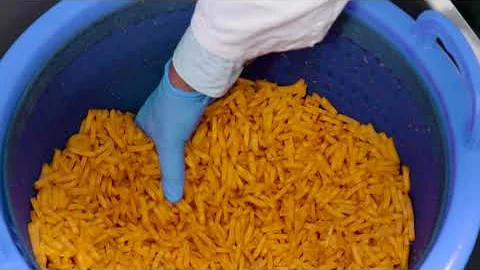 Watch on YouTube ↗ · 2:13
KRONEN German manufacturer channel · Official manufacturer footage
- Around 0:24: The programme selector and power control are shown close up.
- Around 0:53: Lettuce is visible in a removable blue basket.
- Around 1:46: The open machine is washed down with the basket removed.
Current manufacturer links and source identity were checked. Confirm the offered version and configuration separately from historical demonstration footage. Original English watch notes provide a text alternative; no full transcript is reproduced. Playback is on YouTube. No crop capacity, yield, cleaning, damage or shelf-life guarantee is inferred from the film.
Prepare a amaranth leaves equipment trial brief
- Bring representative input: variety, maturity, size, incoming condition and seasonal variation.
- Show accepted and rejected samples: retained skin, leaf, stem, head or cut form, useful rework and finished pack.
- Record useful output: trim/peel loss, damage, fines, missed defects, free water and rejected packs.
- Test interfaces: product supports, drops, screens, drainage, dose control, stops and restart.
- Confirm supplied configuration: safe access, guards, tooling, water circuits, utilities, cleaning and training.
Questions before choosing amaranth leaves equipment
Does this guide cover grain cleaning or ambient preservation?
No. Seed cleaning and milling are separate. Removing surface water also differs from a validated drying, cooking or preservation process.
Sources, image credits and review scope · 2 November 2026
Manufacturer equipment references may include studio images or technical renderings; photographs are identified in their captions. Footage and machine images belong to the named sources and are not Food Machinery IQ installations or independent acceptance tests. Source addresses are plain text. Supplier inclusion is permanently free.
- ARC: Vegetable production and edible leaf cropshttps://www.arc.agric.za/arc-iscw/CSA-Toolbox/CSA%20Vegetable%20Managment%20Production/Manual/7-Vegetable%20production.pdf
- NIFTEM: Amaranthus processinghttps://niftem.ac.in/newsite/pmfme/wp-content/uploads/2022/07/amaranthusprocessing.pdf
- KRONEN: HEWA 3800 washerhttps://www.kronen.eu/en/solutions/hewa-3800-washing-machine-with-vibration-or-belt-outfeed
- KRONEN: Manual preparation stationhttps://www.kronen.eu/en/solutions/trimming-table-for-4-people
- KRONEN: GS 10-2 belt cutterhttps://www.kronen.eu/en/solutions/belt-cutting-machine-gs-10-2
- Herbort: Inspection Belt 85https://www.herbort-gmbh.de/en/products/machines/inspection-belt-85
- KRONEN: KS-100 PLUS spin-dryerhttps://www.kronen.eu/en/solutions/vegetable-and-lettuce-spin-dryer-ks-100-plus
- KRONEN: FLEX L baggerhttps://www.kronen.eu/en/solutions/packaging-machine-flex-l
General layout and selection advice is an editorial trial brief. Crop-specific application listings are distinguished from general machine-family references. No certification, numerical output, pathogen reduction, energy saving or shelf-life promise has been independently established here.