Crop guide · Apple preprocessing
Whole apples and fresh-cut apples need different lines
A retail apple pack keeps the fruit whole. A pie, fruit-salad or chilled-slice operation may remove the peel and core before cutting. Start with the product you want to sell, then specify washing, peeling and coring, cutting, sorting and packaging around it.
Choose the route before comparing machines
Whole-fruit fresh-pack
Receiving and gentle unloading → appropriate washing and brushing → surface-water removal → quality and size grading → fruit grouping → retail or transport packing.
Keep peel and core in place. Peeling, coring and slicing are normally outside this brief. Confirm any separate storage, coating or market-specific handling requirements instead of assuming every packhouse uses the same sequence.
Peeled or skin-on fresh-cut
Fruit selection and washing → optional peeling → core removal and trimming → wedges, slices or another agreed cut → route-specific treatment and drainage → validated chilled packaging.
Specify the exposed product. Define colour, texture, core removal, cut quality, hygiene controls and the intended cold chain. Cooking, drying, pressing and juice processing are separate downstream routes.
Washing: clean the apple without losing fruit quality
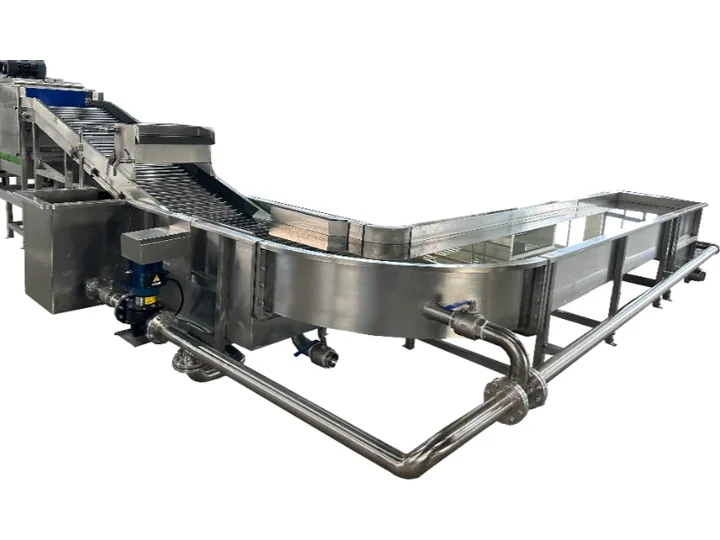
01 · Control the wet entry to the line
Apples enter a water-handling section before brush cleaning and drying in JCSORT’s published apple-line arrangement. The picture shows the inlet, not a complete wash or disinfection process. Specify each water, brush and drying duty separately.
Receiving, wash contact and water removal solve different problems. Compare a gentle unloading or water-flume arrangement, the cleaning contact, debris separation, water management and the outlet. Brush stiffness and contact time need to suit the actual apples; a rough root-vegetable peeling brush is not a substitute for an apple washing specification.
The JCSORT example combines a water-pool elevator, picking platform, brush cleaner, brush air-drying section, grader and packing platform. Treat that as one published arrangement, not a mandatory sequence for every plant. WSU’s packhouse overview also separates water handling, sorting and packing.
What to inspect: remaining dirt, fruit-to-fruit impacts, drops at transfers, stem and calyx areas, water carry-over and cleaning access. Agree water monitoring and hygiene controls with the responsible process team. Clear-looking water and an attractive surface do not establish microbiological safety.
Peeling and coring: two decisions, even on one machine
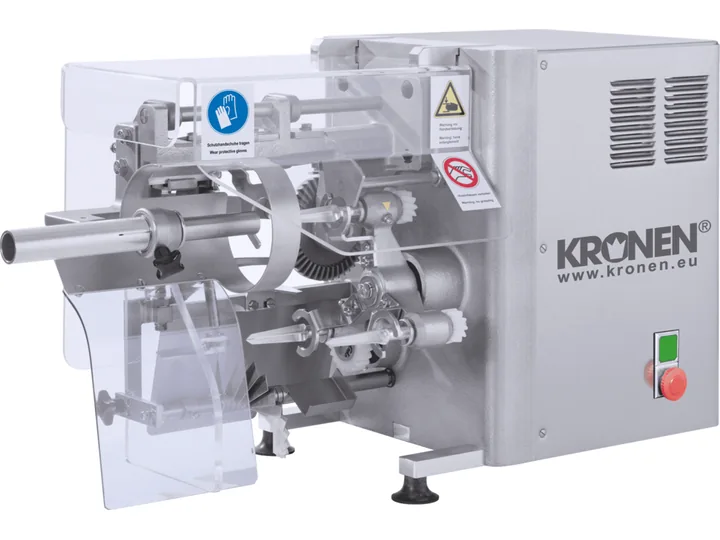
02 · Separate peeling from core removal
A semi-automatic tabletop approach suits a different task from whole-fruit grading. The operator loads the apple; the configured tooling can peel, core and divide or slice it. Establish which combination is required, including skin-on cuts. Changing the product means checking the tools and the output again.
Peeling removes the outer skin. Coring removes the central seed and core region. An apple can be cored and cut while keeping the skin, or peeled before another operation. State the required output rather than ordering a generic “apple processor”.
| Duty | Machine or tooling decision | Acceptance check |
|---|---|---|
| Peel removal | Peeling tool and fruit support; include any end trimming required. | Remaining peel and flesh loss across the actual shape and size range. |
| Core removal | Coring tool, fruit alignment and the specified core diameter. | Residual seed/core material, off-centre removal and acceptable flesh retained. |
| Loading and collection | Operator loading, automatic motions, discharge and separate peel/core collection. | Whole work cycle, access, stoppages and the condition of the collected product. |
KRONEN describes AS 4 as a semi-automatic tabletop machine. Do not assume it includes automatic bulk feeding, a washer, a complete continuous cutting line or downstream packaging. Request the exact machine, guards, tools and accessories in the offer.
Cutting: wedges, rings, slices and dice are different outputs
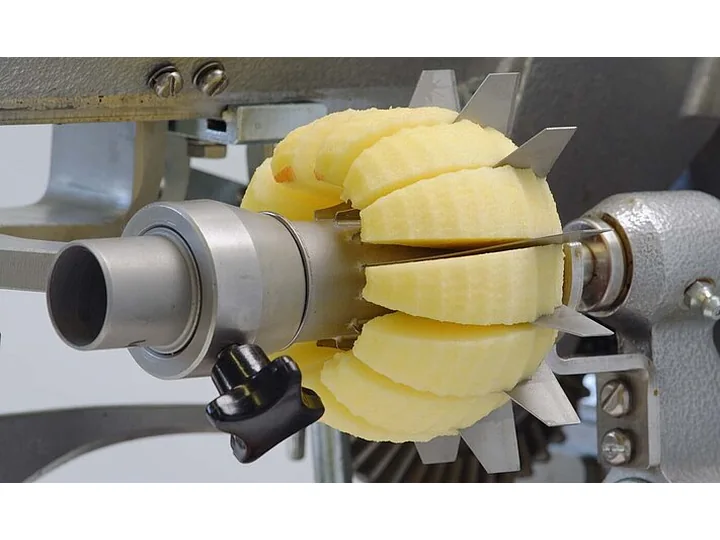
03 · Look closely at the finished cut
The close-up shows the apple, central coring area and cutting arrangement. Wedges and slices need their own tooling. Core diameter, apple alignment and fruit shape influence the usable result; inspect the cut pieces and the removed core as separate streams.
For wedges, define the number and consistency of pieces and the acceptable core opening. For slices or rings, define thickness, shape and breakage limits. For dice, specify a suitable dicing route separately: the AS 4 photographs do not establish a dicing function.
The current KRONEN page shows different slicing, coring and wedging tools. Ask for the tools that produce your agreed sample, including how they are changed and cleaned. Confirm the permissible apple size, shape and firmness with the supplier rather than extrapolating from a single round apple in a demonstration.
Compare saleable pieces: weigh prepared input, peel, cores, trim, fines and acceptable product separately. Assess damaged edges and browning over the intended handling period. Any anti-browning treatment, recipe, cooling condition or claimed shelf life needs a validated product process; no universal setting is specified here.
Sorting: separate size, surface defects and internal quality
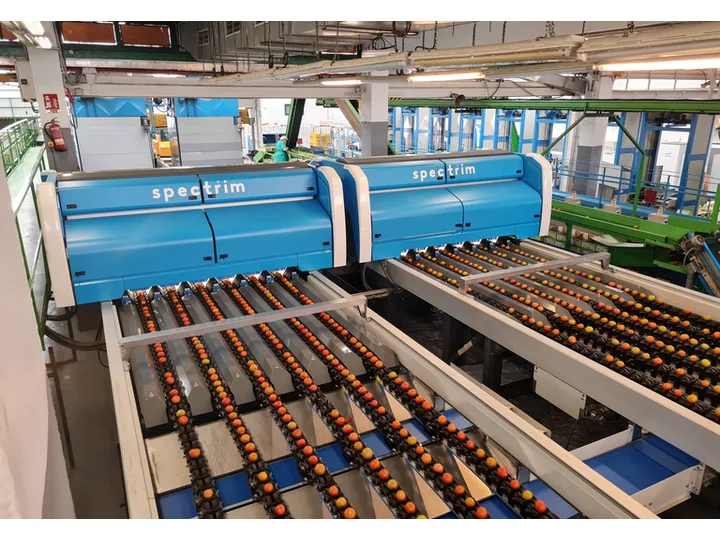
04 · Grade whole apples before the pack
Spectrim with LUCAi is a whole-fruit visual grading example. Set up the desired grade and defect classes, then verify accepted fruit and rejects. External imaging, sizing and optional internal-quality inspection are different duties; one cabinet photograph does not prove every inspection capability.
- Size or weight grading: direct fruit into the agreed bands and pack formats.
- External quality grading: define examples of acceptable colour and surface condition with the supplier. Confirm coverage around the fruit, including difficult stem and calyx views.
- Internal-quality inspection: specify a separately supported sensing option if required. External cameras do not establish every hidden defect or internal-quality attribute.
TOMRA’s apple range distinguishes sorting/grading platforms and technologies. Use the current configuration proposal to confirm the actual sensors and software. Challenge the setup with labelled examples, then inspect both accepted and rejected streams for missed defects and good-fruit rejection.
A whole-apple carrier system is not automatically suitable for wet wedges or slices. Fresh-cut inspection and foreign-material control need their own product presentation and equipment brief.
Packaging: protect whole fruit or control a fresh-cut product
05 · Match the wrapper to the apple presentation
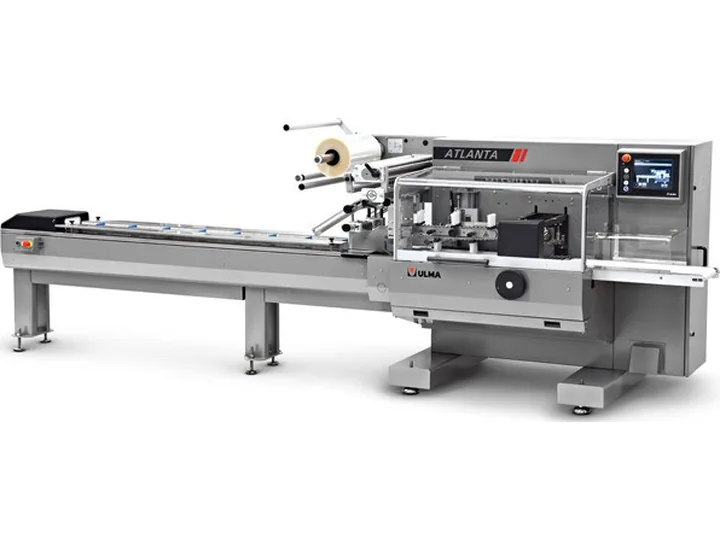
ULMA links ATLANTA to a trayless whole-apple application. A horizontal wrapper moves an arranged product group through film forming and sealing. Fruit grouping, orientation and gentle infeed need their own scope; the wrapper is not an apple grader.
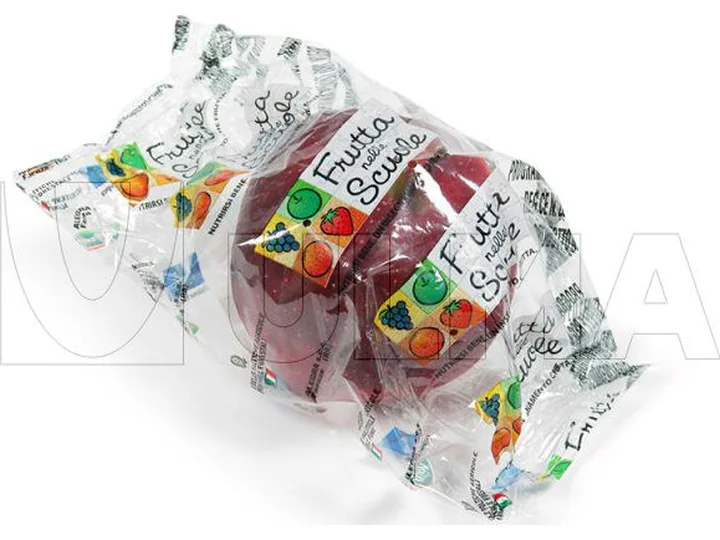
Start from a real whole-fruit pack
Use the example to agree the arrangement, film, seal position and display. It is a whole-apple pack, not proof that the same format suits peeled slices. Test handling and pack integrity with your own fruit, film and distribution conditions.
Whole apples: compare fruit grouping, trayless flow wrapping, suitable trays or bags, and the transport carton. Match the pack count or weight, product support, film properties, seal location, coding and downstream handling. Test bruising and product movement through the full route.
Fresh-cut apples: compare a suitable tray or pouch system, with MAP only when the product and film brief call for it. ULMA lists separate ready-to-eat cut-fruit traysealing applications. A whole-apple flow-wrapper example does not establish a fresh-cut MAP specification. Vacuum, gas flushing and tray sealing are different functions.
Agree the food-contact packaging, hygiene controls, seal integrity, temperature history and distribution conditions together. No gas mixture, treatment dose or shelf-life claim is inferred from the pictured equipment. Include pack testing and the required product validation in the project scope.
Watch the preparation mechanism and the packhouse route
The two official films answer different questions: how an apple is held and worked by tools, and how whole fruit travels through a connected grading installation. Open them on YouTube; the English notes below explain what to look for.
See the apple held, peeled and cut
This close view explains how one apple is supported and worked by the AS 4 tooling. It complements the machine and cutting-detail photographs.
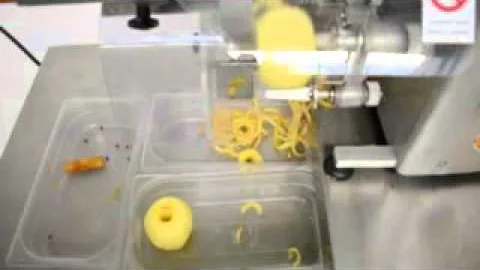 Watch on YouTube ↗ · 2:02
KRONEN Food processing · Official manufacturer footage
- Around 0:46: locate the apple on its support and follow the tool approaching the fruit surface.
- In the cutting sequence: compare how the apple passes the coring/dividing tools with the cut pieces collected below.
- For your trial: inspect remaining peel, off-centre cores, damaged pieces and the changeover between the ordered cuts.
Older official AS 4 demonstration, still linked from the current product page. It explains the mechanism, not a tested production rate or the exact specification of a new machine. English viewing notes supply the essential text alternative; automatic captions are not used as technical evidence.
Follow apples through a connected packhouse
This official customer story shows an integrated apple line at a third-party facility. Watch the fruit path and transfers rather than treating the customer’s reported benefits as your own trial result.
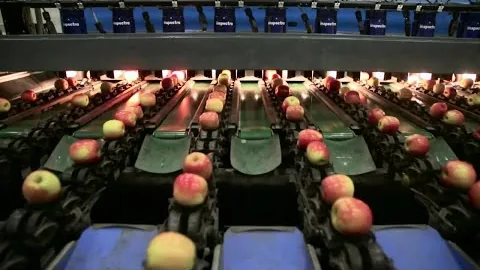 Watch on YouTube ↗ · 1:35
TOMRA · Official manufacturer footage
- Around 0:15: identify parallel fruit streams and the space needed around transfer lanes.
- Through the line views: follow how individual apples are presented and moved between grading and downstream handling.
- For your specification: ask the bidder to show the same transfers with your varieties, size mix and acceptable bruise limit.
Official TOMRA customer footage featuring Mikey Hanks. The filmed site, staffing statements and outcomes belong to that installation. The video does not independently establish defect-detection accuracy, labour savings or capacity for another project.
Build one trial brief for every supplier
- Bring the actual fruit. Include the intended varieties, size and shape range, firmness and storage history. Record the incoming quality and handling conditions.
- Agree the final sample. Whole retail pack, skin-on wedge, peeled wedge, slice and ingredient cut are different targets. State the peel/core standard and acceptable damage.
- Measure accepted output. Count or weigh usable product after all required preparation and packing stages, including loading, stops, changeovers and rejects.
- Check fruit handling. Inspect every transfer, drop and accumulation point. Agree how and when bruising and cut quality will be assessed.
- Include the complete scope. Feeding, water circuits, drying, waste collection, tools, sensors, packing, utilities, installation, cleaning access, training and spares all need an assigned supplier.
Questions that change the equipment choice
Does every apple line need a peeler and corer?
No. Whole-fruit packs normally retain both peel and core. Prepared wedges, slices and ingredients may need coring, peeling or both according to the product brief.
Can one apple cutter make every shape?
Check the exact tooling and supported output. The AS 4 references illustrate coring, wedging and slicing; a dicing requirement needs a separately confirmed cutting route.
Does an optical grader prove the apples are safe?
It performs specified inspection and grading duties under defined conditions. It does not replace the product’s hygiene controls, process validation or all other inspection requirements.
What should a price comparison include?
Use dated quotations for the same raw-fruit range and finished product. Compare the whole installed scope and agreed acceptance trial, rather than a bare machine price or an edited video.
Sources, image credits and review scope · 1 November 2026
Images are attributed manufacturer equipment and application references. Studio presentations, working details and the third-party packhouse photograph are identified beside each image. They do not show a Food Machinery IQ machine or installation. Supplier inclusion is permanently free; source addresses are plain text.
- JCSORT: apple washing, optical sorting and packing linehttps://jcsort.com/en-us/products/apple-washing-optical-sorting-packing-line.html
- KRONEN: AS 4 apple peeling and slicing machinehttps://www.kronen.eu/en/solutions/apple-peeling-and-slicing-machine-as-4
- TOMRA: apple sorting and packing solutionshttps://www.tomra.com/food/categories/fruit/apples
- TOMRA: Spectrim with LUCAihttps://www.tomra.com/food/machines/spectrim-with-lucai
- ULMA: trayless apple flow wrappinghttps://www.ulmapackaging.com/en/packaging-solutions/produce/fresh-fruit-without-tray/trayless-apple-packaging-in-flow-pack-wrapper-hffs
- ULMA: ATLANTA horizontal wrapperhttps://www.ulmapackaging.com/en/packaging-machines/flow-pack-hffs/atlanta
- ULMA: produce packaging formatshttps://www.ulmapackaging.com/en/packaging-solutions/produce
- Washington State University: apple pre-sizing and packinghttps://treefruit.wsu.edu/web-article/apple-pre-sizing-and-packing/
The official video identities were checked against manufacturer sources. Older film explains mechanisms or one customer installation; current signed specifications and an actual fruit trial remain the basis for procurement. No supplier ranking, comparative price, capacity, yield, detection percentage, certification or shelf-life result is claimed.