Crop guide · Potato preprocessing
Start with the potato you need to sell
Whole washed potatoes, chilled peeled potatoes and raw material for fries or chips need different preparation routes. Choose the final product first, then connect washing, peeling, cutting, sorting and packaging around it.
Three routes, with different stopping points
Whole fresh-pack
Receiving and debris removal → appropriate washing/brush cleaning → surface-water removal → size/quality grading → weighing or counting → bagging.
Keep the skin. Peeling and cutting are normally outside this product brief. Confirm whether the customer wants washed or dry-cleaned potatoes and the intended storage conditions.
Peeled or fresh-cut
Receiving and washing → peeling → inspection and trimming → optional cutting → rinsing and water removal → validated chilled packaging.
Protect the exposed surface. Discuss browning, water management, hygiene, cooling and the actual distribution chain. A vacuum bag alone does not establish safety or shelf life.
Fries or chips preparation
Receiving, debris removal and washing → optional peeling → defect control → strips for fries or slices for chips → route-specific downstream processing.
Agree the boundary. Blanching, frying, cooking and freezing are separate downstream operations. A preprocessing offer is not automatically a complete fries or chips plant.
Washing: get soil and stones out before precision equipment
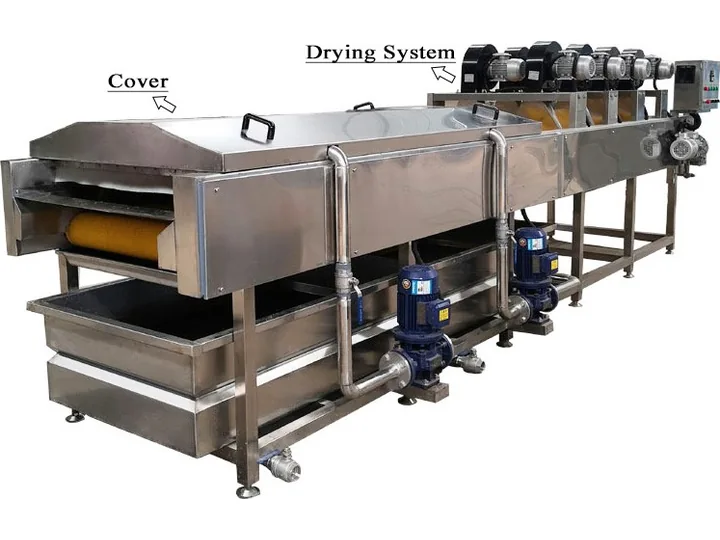
01 · Wash without assuming you must peel
Water loosens and carries dirt away; rotating brushes contact the surface. This brush-washer family offers different brushes for washing or stronger skin removal. Specify skin-on or peeled output before selecting the brush and exposure. The pictured configuration includes a separate drying section.
Separate soil removal, stone separation and washing in the specification. A destoner has a different duty from a brush washer. Assess the incoming dirt load, floating debris, stone risk, water circuit, sediment removal and the last rinse. Where you place the washer also changes the dirty-to-clean room boundary.
Ask to see: incoming and cleaned potatoes side by side, skin abrasion, remaining soil in eyes, water carry-over, clean-out access and the handling of the dirtiest expected batch. Require a product-specific hygiene and water-management plan rather than assuming clear-looking water proves cleanliness.
Peeling: compare what is removed and what is left
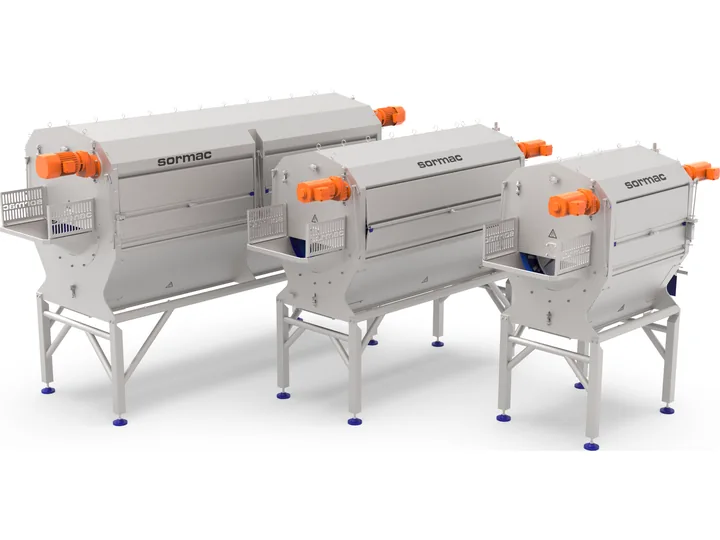
02 · Choose the peeling mechanism
The MS range uses knife peeling for pre-cleaned, pre-abraded round products. Abrasive preparation and final knife peeling can be separate stages. Ask which inlet preparation is required for the offered configuration; do not feed a precision peeler with field debris.
| Method | Equipment duty | Trial question |
|---|---|---|
| Abrasive / carborundum | A rough contact surface removes skin; batch or continuous arrangements exist. | How much flesh is lost on small or irregular potatoes, and how much trimming remains? |
| Knife peeling | Cutting elements remove surface material; inlet preparation depends on the machine. | Does the supplier require washing, pre-abrasion or size control first? |
| Steam peeling | A thermal peeling stage followed by skin removal; requires its own utility and pressure-equipment scope. | Is this scale and route justified by the complete process and utility proposal? |
Keep raw input, removed peel, hand trim, rejects and acceptable output as separate weighed streams. Compare the same variety, size mix, storage history and final peeling standard. A single percentage without those conditions is not a usable yield comparison.
Cutting: halves, strips, dice and slices are different jobs
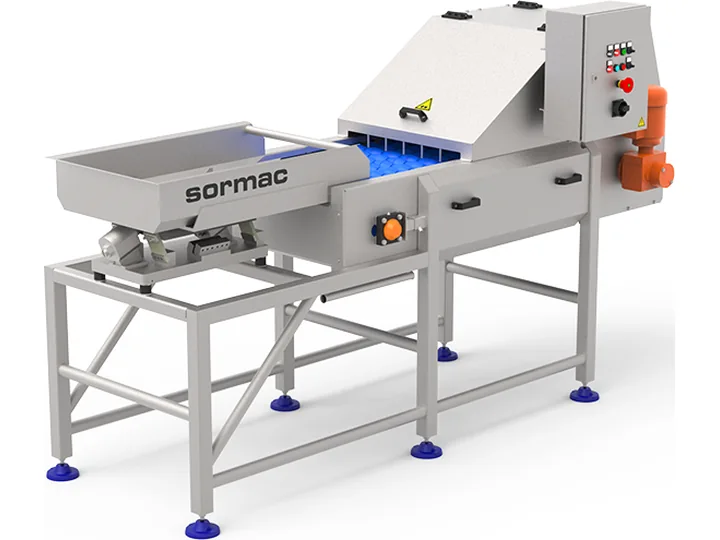
03 · Match the cut to the product
DMC halves potatoes. It is a useful visual example of a dedicated cutter, not a machine that makes every shape. Strips, dice and thin slices require different cutting arrangements and tooling. Compare the actual cut surface and size distribution with your potatoes.
For halves, compare orientation and the cut position. For fries, specify the strip cross-section and acceptable short pieces. For dice, inspect all three dimensions, fines and damaged edges. For chips, evaluate slice thickness and uniformity with the intended potato condition.
Urschel lists potato slicing and dicing/strip-cutting applications, including Model CC and DiversaCut families respectively. These are application examples, not interchangeable tooling. Ask the supplier to nominate the exact cutter, blade set, inlet size range and changeover arrangement in a dated offer.
Check the output: present real cut samples, not only a drawing. Agree rinse duty, surface starch removal where required, drainage, blade handling and the route into the next machine. No universal cut size or guaranteed throughput is specified here.
Sorting: decide what each outlet should contain
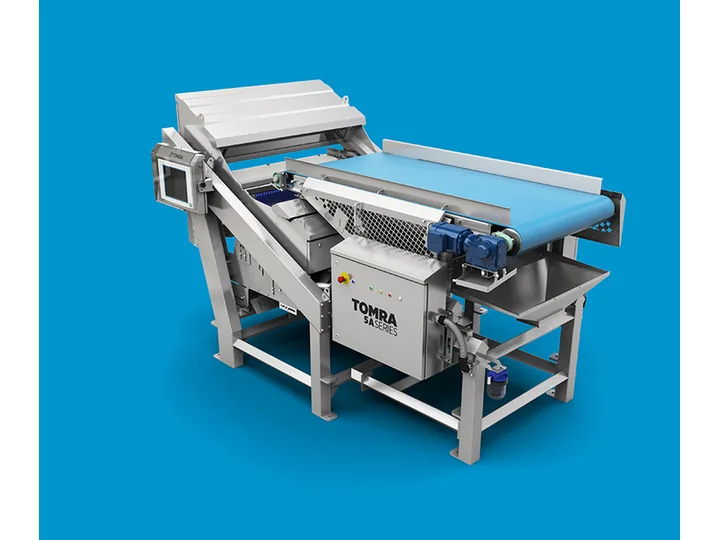
04 · Separate grading from defect rejection
Mechanical sizing separates size bands. Optical sorting assesses the configured visual or sensor criteria and rejects selected items. TOMRA positions 5A for whole-product potato sorting; confirm the exact sensors, defect classes and inlet condition. No published detection percentage is treated here as a guaranteed result.
- Size grading: agree size bands, grading accuracy and destinations for small and oversized potatoes.
- Quality sorting: define reject examples with the supplier, including what the installed sensors can and cannot observe.
- Inspection and trimming: plan how operators see, remove or rework remaining defects after peeling.
Test both the accepted stream and the reject stream. Record missed defects, good-product rejection and rework separately. A whole-potato sorter is not automatically specified for wet dice, strips or slices; the correct process position and sensor arrangement need confirmation.
Packaging: whole potatoes and peeled potatoes need separate briefs
05 · Build a pack around the destination
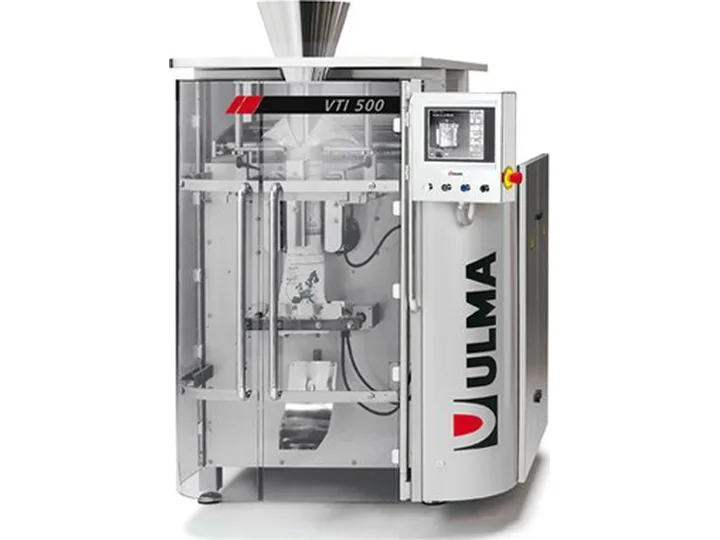
ULMA shows whole potatoes in pillow packs on VTI 500. The bagger forms and seals film; weighing or counting and product feeding are separate line duties. Peeled or cut potatoes need a different packaging and chilled-distribution brief.
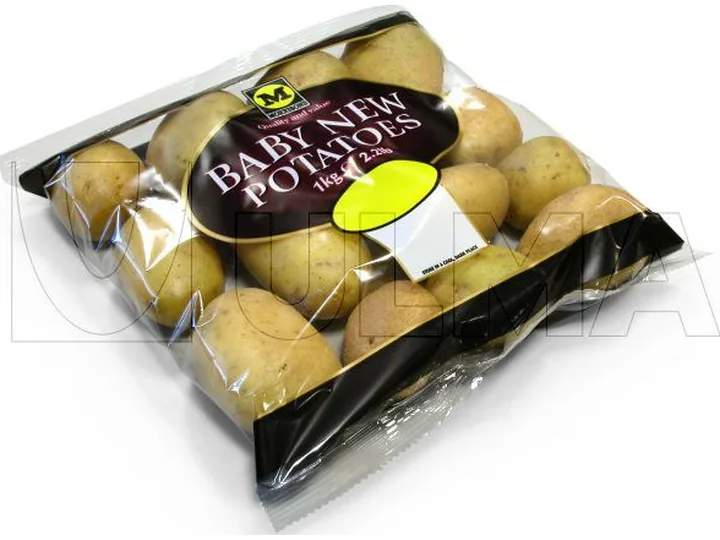
Start with an agreed pack sample
This is a pack-format reference, not a shelf-life result. Agree net weight, ventilation or barrier requirements, drop height, seal cleanliness, labelling and transport protection with the actual product and film.
Whole potatoes: compare suitable bags or other retail packs with the buyer. Align the weighing/counting unit, feed timing, drop control and bagger. Check film or mesh format, ventilation requirements, pack presentation and sealing around dirt or moisture.
Peeled or cut potatoes: compare suitable vacuum or thermoformed packs, or a validated MAP system if the product brief requires it. Vacuum sealing, gas flushing and tray sealing are different functions. Select the product, film, process and cold-chain conditions together; do not select an atmosphere or claim a storage period from a machine photograph.
ULMA lists distinct whole-potato, peeled-potato and potato-cube applications. Request the exact pack construction and product trial for your route. Include seal inspection, leak testing where applicable, coding, checkweighing and the agreed downstream handling in the acceptance brief.
Watch the product move through the machines
Open the official demonstrations on YouTube. The notes identify visible actions and explain what to compare with your own product.
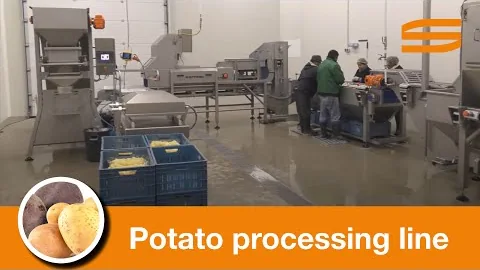
Follow a potato preparation line
 Watch on YouTube ↗ · 4:37
Sormac - Vegetable processing equipment · Official manufacturer demonstration
- Around 1:02: inspect the wet infeed and the open transfer path. Think about how soil-laden water and debris leave your own line.
- Around 2:33: follow the peeled potatoes up the cleated lift. Check product accumulation and access around transfers.
- Around 4:18: compare the peeled end product with the incoming potatoes. Ask for your own input/output mass balance and trim inspection.
Older official footage explains one connected configuration. It is not proof of current model availability, measured output, peeling yield or a validated shelf life. English viewing notes remain usable without playing the clip.
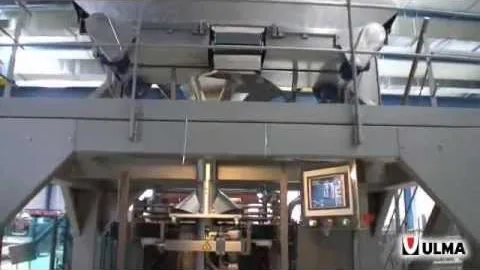
See four-potato gusseted packaging
 Watch on YouTube ↗ · 2:38
ULMA Packaging · Official manufacturer demonstration
- Opening: locate the whole-potato hopper and consider size variation before the bagger.
- Around 1:03: follow the film path and access around the packaging unit.
- Around 2:07: watch the front forming/sealing area and the filled pack leaving below it. Check whether your potatoes bridge, bruise or contaminate the seal.
This official demonstration shows a four-potato gusseted format with laminated film. It is a different configuration from the VTI 500 pillow-pack reference above; it is not presented as a VTI 500 demonstration or a verified production-rate test.
Give every supplier the same potato trial
- Bring the difficult raw material. Include the intended varieties, size range, shape variation, stored and fresh batches, and realistic soil and defect loads.
- Define acceptable output. Specify skin-on or peeled, remaining eyes/trim, shape, size distribution, surface damage and the final pack sample.
- Measure the connected route. Compare accepted packed output, labour tasks, interruptions, water and utilities over an agreed run. Keep machine nameplate rates separate from the tested line result.
- Trace the losses. Weigh peel, fines, trim, quality rejects, rework and saleable product separately.
- Test operation and cleaning. Demonstrate a changeover, downstream stop, restart, access for cleaning and safe blade or brush replacement using the supplier's documented procedures.
Questions before specifying the line
Does every potato line need peeling?
No. Whole skin-on fresh-pack potatoes need a cleaning and handling brief that preserves the intended skin condition. Peeling belongs to peeled products or a downstream recipe that requires it.
Can a washer also remove all stones and defects?
Do not assume so. Allocate soil removal, stone separation, washing, size grading, optical rejection and final inspection to explicit duties in the line proposal.
Does vacuum or MAP packaging guarantee shelf life?
No storage period is inferred here. Validate the prepared product, packaging, hygiene controls, temperature history and intended distribution conditions together with the responsible specialists.
How do I compare prices?
Obtain dated offers for the same route, raw material and accepted output. Include feeding, transfers, water treatment, peeling waste handling, utilities, packing, installation, commissioning, training and spare parts.
Sources, image credits and review scope · 1 November 2026
Manufacturer equipment photographs and references illustrate the named stages. The two Sormac machine images are explicitly labelled technical illustrations. The ULMA pack is an application example. None is a Food Machinery IQ installation or an independently measured trial. Supplier inclusion is permanently free; source addresses are plain text.
- Bango: brush roller washer equipment familyhttps://www.bangomachinery.com/product/Fruit_and_Vegetable_Processing_Machines/Fruit_and_Vegetable_Washing_Machine/Brush_Roller_Type_Fruit_and_Vegetable_Washing_Machine.html
- Sormac: potato processing rangehttps://sormac.com/en-us/potato-processing-equipment
- Sormac: MS knife peelerhttps://sormac.com/en-us/machines/knife-peeler-ms
- Sormac: DMC potato halving machinehttps://sormac.com/en-us/machines/potato-halving-machine-dmc
- Urschel: potato cutting applicationshttps://www.urschel.com/industries/potato/
- TOMRA: 5A optical sortinghttps://www.tomra.com/food/machines/tomra-5a
- TOMRA: fresh-pack potatoeshttps://www.tomra.com/food/categories/potatoes/fresh-pack-potatoes
- ULMA: whole-potato pillow packs on VTI 500https://www.ulmapackaging.com/en/packaging-solutions/produce/fresh-vegetables-without-tray/whole-potatoes-packaging-in-vertical-machine-vffs
- ULMA: VTI 500 machinehttps://www.ulmapackaging.com/en/packaging-machines/vertical-vffs/vti-500
- ULMA: produce packaging formatshttps://www.ulmapackaging.com/en/packaging-solutions/produce
Official channel identities were matched to manufacturer sources. Older demonstrations explain mechanisms; current supplier specifications and a product trial remain necessary. No comparative ranking, price, capacity, peeling yield, certification or shelf-life claim is made.