Crop guide · Nectarine preprocessing
Start with the retained product
A nectarine line has two very different destinations: an intact fruit packhouse and a processor making pitted ingredients. Begin with cultivar, firmness, stone attachment and the accepted finished shape. CTI lists nectarines for its Multi Fruit Coring family; its inspected film shows the coring concept using peaches, rather than a verified nectarine run.
Compare washing, trimming or peeling, cutting, sorting, dewatering and packaging below. Attributed manufacturer images explain equipment roles. General family references require the actual crop configuration and a representative trial.
Choose the finished-product route
Whole fresh nectarines
Receive → inspect → clean as specified → grade → remove surface water → pack.
Bypass pitting and cutting; protect the skin through every transfer.
Pitted halves
Clean → orient → remove the stone-bearing core → inspect → collect halves.
Agree the retained flesh around the stone and the acceptable cavity.
Slices or diced ingredients
Prepare pitted fruit → support and cut → inspect fragments → drain → portion.
Any freezing, cooking or preservation is a separate downstream specification.
Agree pre-cleaning, trimming, cutting and final-wash order for the incoming material and intended use. These routes are specification aids, not universal process settings.
Washing: clean without using the fruit as a scrub surface
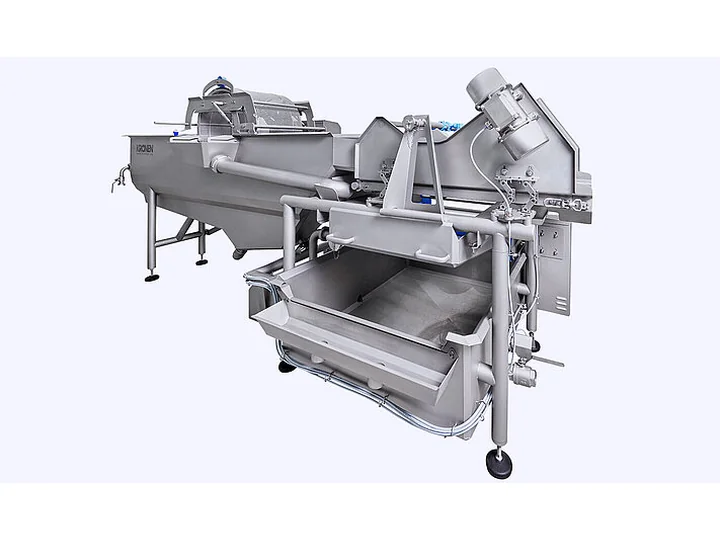
KRONEN HEWA 3800
KRONEN washing-family reference. Agree actual nectarine handling, water circuits and supported discharge in a representative trial.
Compare the incoming dust and debris with the permitted skin finish. Trial gentle spray or a supported washing system, including the drop onto the next belt. The pictured HEWA is a general washing reference; confirm the actual nectarine configuration. Check damage after holding, not only while fruit is wet.
Trimming: make the stone-removal decision first
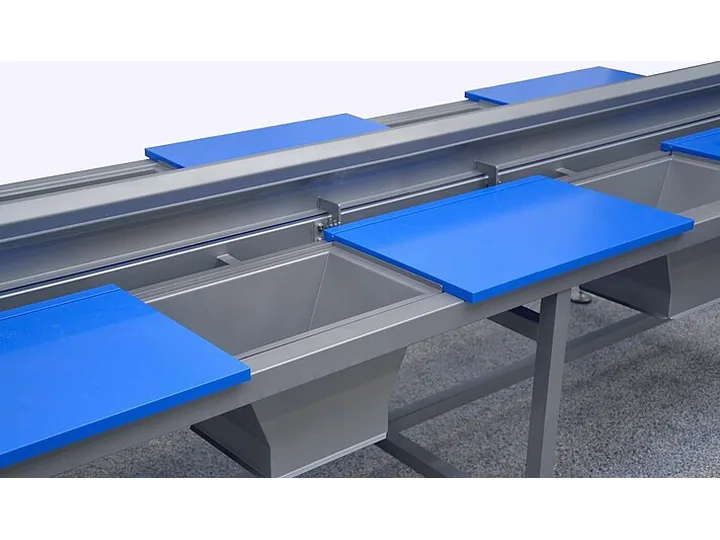
KRONEN
KRONEN manual preparation workstation. Use accepted nectarine samples to define retained tissue and waste; this is not an automatic peeling or destemming system.
Whole-fruit retail packs retain the skin and stone. Ingredient routes need stone removal; peeling is an additional buyer decision, not an automatic part of coring. Define stem removal, retained skin and any manual rework with accepted samples.
Cutting: compare a core cavity with a split fruit
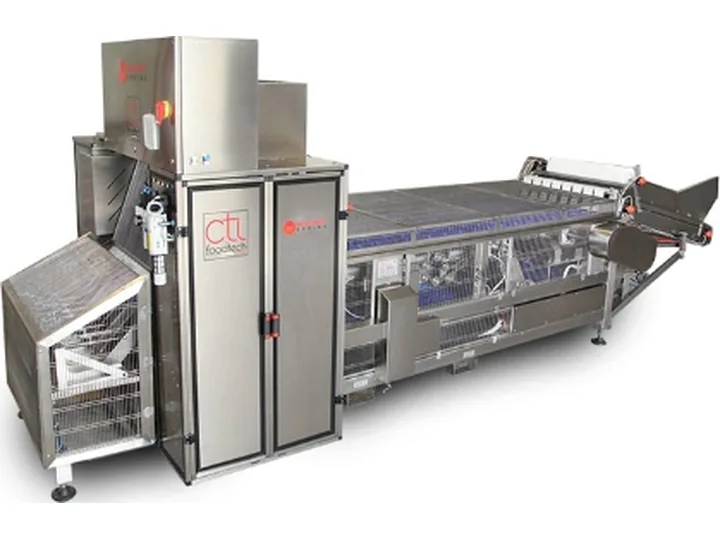
CTI Multi Fruit Coring
CTI lists nectarines and plums for this core-removal family. Compare the cavity, retained flesh and actual stone condition; the inspected film shows peaches.
CTI lists a machine family that removes a stone-bearing core and makes halves. This differs from assuming that every peach pitter will split every nectarine cleanly. Compare the cut cavity, useful flesh and broken-stone cases using representative fruit before selecting a punch or support.
Sorting: inspect whole fruit and pitted product separately
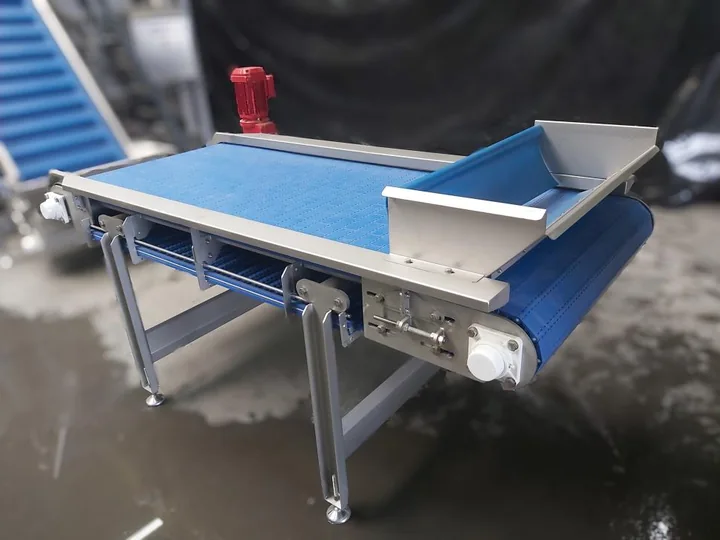
Herbort Inspection Belt 85
Herbort manual inspection conveyor. Present whole or prepared nectarine for viewing; automatic stone-fragment detection is a separate specification.
For retail fruit, grade agreed size, colour and skin defects. For ingredients, add checks for residual stone material, cavity damage and the required half or slice. A manual inspection belt is illustrated; automatic internal-quality or stone detection needs its own specified equipment and verification.
Dewatering: remove rinse water while preserving flesh
Whole fruit and cut halves should have separate transfer and drainage trials. Specify free water at the packer or next process, then check pooled juice and pressure marks. An aggressive leafy-product centrifuge is not assumed suitable for soft halves.
Packaging: support fruit through the final pack
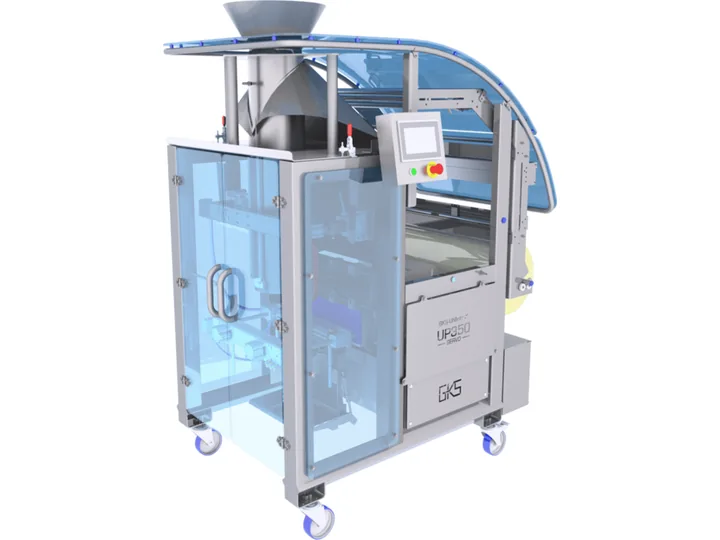
KRONEN FLEX L
KRONEN FLEX L packaging-family reference. Confirm the actual fruit feeder, portion and package; trays, cartons and liquid filling require their own interfaces.
Whole fruit may require trays or carton presentation; ingredient pieces require portioning and liquid control. The general bagger image illustrates a packaging machine family, not an established nectarine feeder. Test bruising, seal contamination and actual pack geometry.
Compare the core cavity with the flesh you want to retain
CTI names nectarines and plums in the Multi Fruit Coring family scope. The inspected film shows peach material: use it to understand the coring concept and the resulting cavity, then ask for actual nectarine or plum trials. Compare useful flesh and residual stone material; no yield or fragment-removal guarantee is adopted.
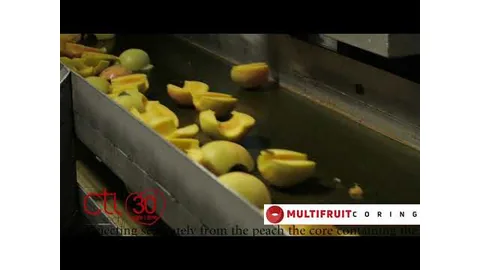 Watch on YouTube ↗ · 0:50
CTI FoodTech Group · Official manufacturer footage
- Around 0:29: Prepared peach halves with a central cut-out travel on a separate conveyor.
Current manufacturer links and source identity were checked. Confirm the offered version and configuration separately from historical demonstration footage. Original English watch notes provide a text alternative; no full transcript is reproduced. Playback is on YouTube. No crop capacity, yield, cleaning, damage or shelf-life guarantee is inferred from the film.
Prepare a nectarine equipment trial brief
- Bring representative input: variety, maturity, size, incoming condition and seasonal variation.
- Show accepted and rejected samples: retained skin, leaf, stem, head or cut form, useful rework and finished pack.
- Record useful output: trim/peel loss, damage, fines, missed defects, free water and rejected packs.
- Test interfaces: product supports, drops, screens, drainage, dose control, stops and restart.
- Confirm supplied configuration: safe access, guards, tooling, water circuits, utilities, cleaning and training.
Questions before choosing nectarine equipment
Can I use a peach demonstration as proof of nectarine yield?
No. It helps compare the coring method. Confirm nectarines, tooling, firmness and useful flesh in the actual proposed machine trial.
Sources, image credits and review scope · 3 November 2026
Manufacturer equipment references may include studio images or technical renderings; photographs are identified in their captions. Footage and machine images belong to the named sources and are not Food Machinery IQ installations or independent acceptance tests. Source addresses are plain text. Supplier inclusion is permanently free.
- Multi Filmhttps://www.youtube.com/watch?v=fwU5f-l4vJg
- CTI Multi Fruit Coring: core-removal machine familyhttps://ctifoodtech.com/en/industrial-machines/multi-fruit-coring/
- Cti Allhttps://ctifoodtech.com/en/industrial-machines/
- Leaf Washhttps://www.kronen.eu/en/solutions/hewa-3800-washing-machine-with-vibration-or-belt-outfeed
- Prephttps://www.kronen.eu/en/solutions/trimming-table-for-4-people
- Inspectionhttps://www.herbort-gmbh.de/en/products/machines/inspection-belt-85
- Packhttps://www.kronen.eu/en/solutions/packaging-machine-flex-l
General layout and selection advice is an editorial trial brief. Crop-specific application listings are distinguished from general machine-family references. No certification, numerical output, pathogen reduction, energy saving or shelf-life promise has been independently established here.