Crop guide · Peach preprocessing
Start with the retained product
Peach handling depends on cultivar, firmness and stone behaviour. Whole-fruit packing, pitting halves and prepared ingredients need different routes. CTI describes several peach pitting mechanisms, including spoon and torque systems. Its 320 APA-E film shows supported fruit presentation; a machine family or trade name does not establish a pit-fragment-free result.
Compare washing, trimming or peeling, cutting, sorting, dewatering and packaging below. Attributed manufacturer images explain equipment roles. General family references require the actual crop configuration and a representative trial.
Choose the finished-product route
Whole fresh peaches
Inspect → configured gentle cleaning → surface drainage → grade → supported pack.
Retain skin and protect soft fruit.
Pitted halves
Prepare suitable fruit → orient → selected pitting/halving mechanism → inspect cavities and waste → downstream process.
Skin removal, if required, is a separate duty.
Prepared pieces
Prepare pitted retained tissue → supported slicing/dicing → inspect → portion or downstream treatment.
Preservation and final filling are separately specified.
Agree pre-cleaning, trimming, cutting and final-wash order for the incoming material and intended use. These routes are specification aids, not universal process settings.
Washing: protect skin and soft flesh during cleaning
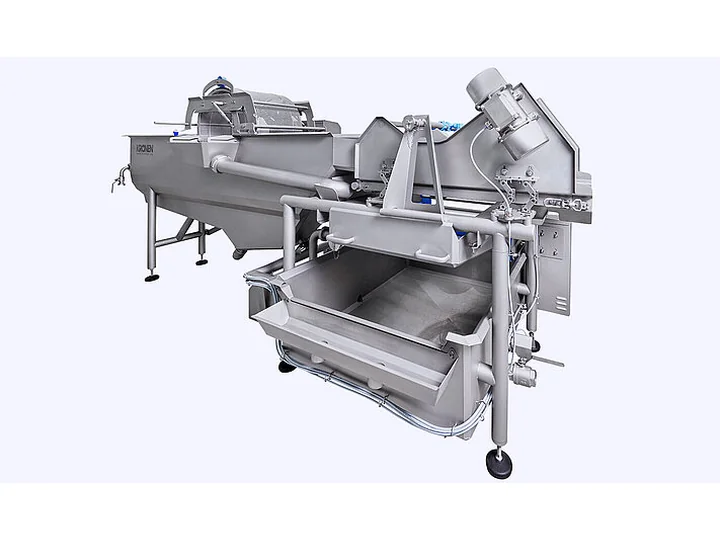
KRONEN HEWA 3800
KRONEN washing-family reference, not a confirmed peach configuration. Define input condition, retained pieces, water handling and supported discharge in an actual trial.
Trial actual firmness, fuzz, surface debris and transfer drops. Whole-fruit cleaning and a later prepared-piece rinse have different purposes. A general washer reference is not a confirmed peach programme; no peeling or microbial result is inferred.
Include water filling and management, draining, rinse arrangements and cleaning access in the quotation. No chemical dose, microbial reduction or ready-to-eat result is established by a machine image or application list.
Trimming: select pitting around the actual stone
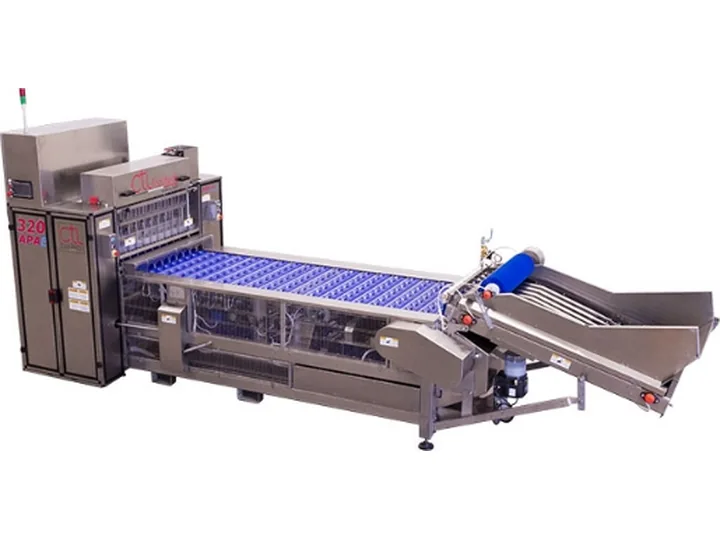
CTI 320 APA-E
CTI 320 APA-E peach pitter. Define cultivar, firmness, orientation and stone condition. Neither image nor film guarantees every pit fragment is removed.
CTI lists spoon and torque approaches across its range. Identify clingstone or freestone input, split stones and retained half shape before a trial. The 320 APA-E illustration and film do not prove all pit conditions are handled without fragments. Define residual-stone inspection and useful flesh in separated waste.
Cutting: cut only the agreed retained tissue
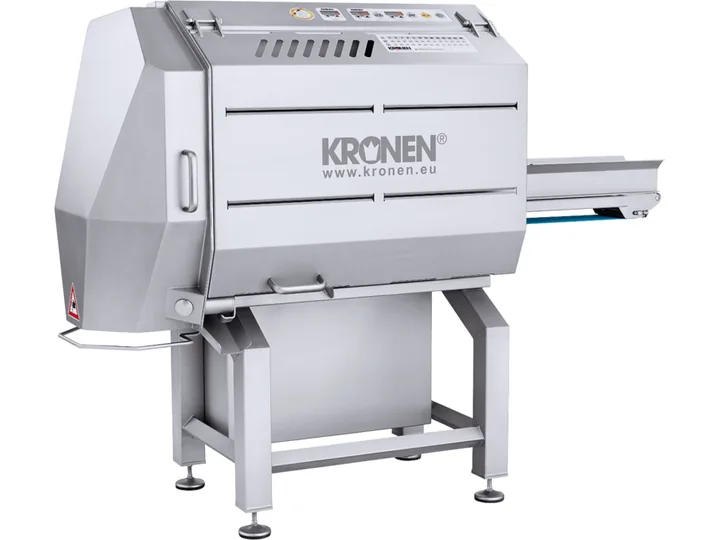
KRONEN GS 10-2
KRONEN supported cutting-family reference. Confirm current tooling and actual peach suitability require confirmation. No every-cut attachment or exact version equivalence is inferred.
Whole fresh fruit bypasses the pitter and cutter. For slices or dice, supply prepared pitted fruit with the required skin retention and firmness. General cutting-family imagery does not establish an actual peach feeder or every cut attachment; inspect crushed pieces and ragged edges.
Sorting: inspect pitting results separately from external grade
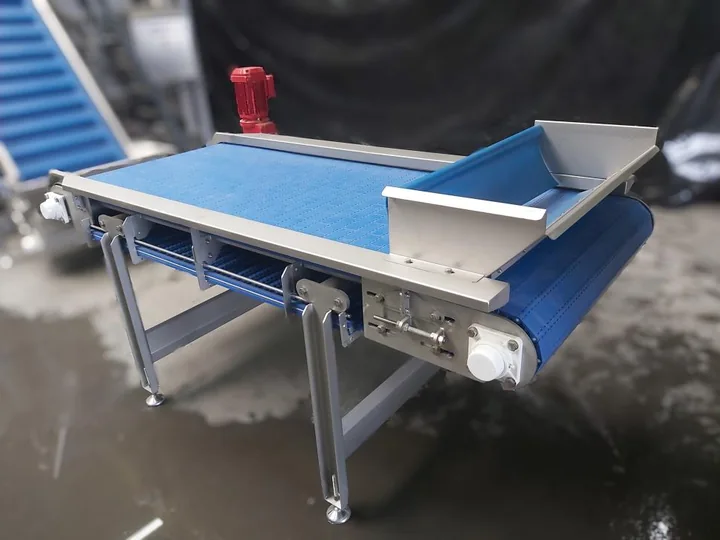
Herbort Inspection Belt 85
Herbort manual inspection reference. Present actual peach surfaces for viewing; no automatic turning, species identification or internal scanning is established.
Whole fruit can be graded for buyer-defined size and visible condition. Pitted halves need cavity, retained stone and flesh-damage inspection. A manual belt does not guarantee detection of every fragment or provide automatic internal scanning.
Dewatering: separate rinse water from peach juice
Soft halves can release juice as well as carry surface water. Trial supported drainage and collection after holding, without unnecessary pressure. No generic leaf-spin setting is specified and drainage does not provide preservation.
Agree the free-water and damage assessment after a realistic hold, then check the next transfer and doser. Surface-water removal differs from thermal drying, cooking and sterilisation.
Packaging: match the pack to whole fruit, halves or dice
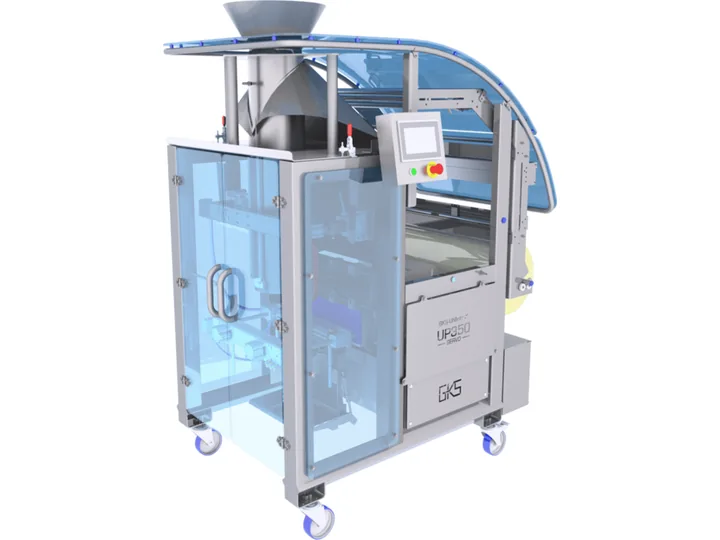
KRONEN FLEX L
General packaging-family reference. Confirm actual peach feeding, portion and seals. It does not establish a tray filler, paste filler, gas recipe or shelf-life result.
Whole peaches need gentle support; prepared pieces need compatible dosing and seal control. The general bagger is not a demonstrated whole-peach tray packer or canning filler. Specify any cooking, preservation and gas options independently of the pitter.
If MAP is proposed, obtain the exact gas-handling hardware, film, seals and distribution brief. A general bagger does not establish a gas recipe, shelf life or every optional configuration.
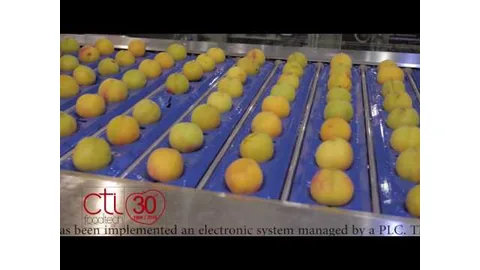
Look at individual peach presentation ahead of pitting
CTI identifies the 320 APA-E peach knife pitter. The inspected view explains fruit presentation before the cutting and pitting duty. It does not show an inspection for every stone fragment or prove all cultivars and stone conditions are handled equally. Confirm residual-stone checks and useful-flesh acceptance separately.
 Watch on YouTube ↗ · 1:05
CTI FoodTech Group · Official manufacturer footage
- Around 0:26: Peaches sit individually in rows of blue supports on the machine feed.
Current manufacturer links and source identity were checked. Confirm the offered version and configuration separately from historical demonstration footage. Original English watch notes provide a text alternative; no full transcript is reproduced. Playback is on YouTube. No crop capacity, yield, cleaning, damage or shelf-life guarantee is inferred from the film.
Prepare a peach equipment trial brief
- Bring representative input: variety, maturity, size, incoming condition and seasonal variation.
- Show accepted and rejected samples: retained skin, leaf, stem, head or cut form, useful rework and finished pack.
- Record useful output: trim/peel loss, damage, fines, missed defects, free water and rejected packs.
- Test interfaces: product supports, drops, screens, drainage, dose control, stops and restart.
- Confirm supplied configuration: safe access, guards, tooling, water circuits, utilities, cleaning and training.
Questions before choosing peach equipment
Does a peach pitting demonstration guarantee no remaining stone fragments?
No. Define the stone condition, inspection method and acceptance criteria in an actual cultivar trial. A pitter film alone does not verify a fragment-free result.
Sources, image credits and review scope · 3 November 2026
Manufacturer equipment references may include studio images or technical renderings; photographs are identified in their captions. Footage and machine images belong to the named sources and are not Food Machinery IQ installations or independent acceptance tests. Source addresses are plain text. Supplier inclusion is permanently free.
- Peach Filmhttps://www.youtube.com/watch?v=kL4RNWvtgQI
- CTI: 320 APA-E peach pitterhttps://ctifoodtech.com/en/industrial-machines/320-apa-e/
- CTI: spoon and torque pitting mechanisms; promotional numerical claims not adoptedhttps://ctifoodtech.com/en/history-of-pitting/
- Leaf Washhttps://www.kronen.eu/en/solutions/hewa-3800-washing-machine-with-vibration-or-belt-outfeed
- Prephttps://www.kronen.eu/en/solutions/trimming-table-for-4-people
- Gshttps://www.kronen.eu/en/solutions/belt-cutting-machine-gs-10-2
- Inspectionhttps://www.herbort-gmbh.de/en/products/machines/inspection-belt-85
- Packhttps://www.kronen.eu/en/solutions/packaging-machine-flex-l
General layout and selection advice is an editorial trial brief. Crop-specific application listings are distinguished from general machine-family references. No certification, numerical output, pathogen reduction, energy saving or shelf-life promise has been independently established here.