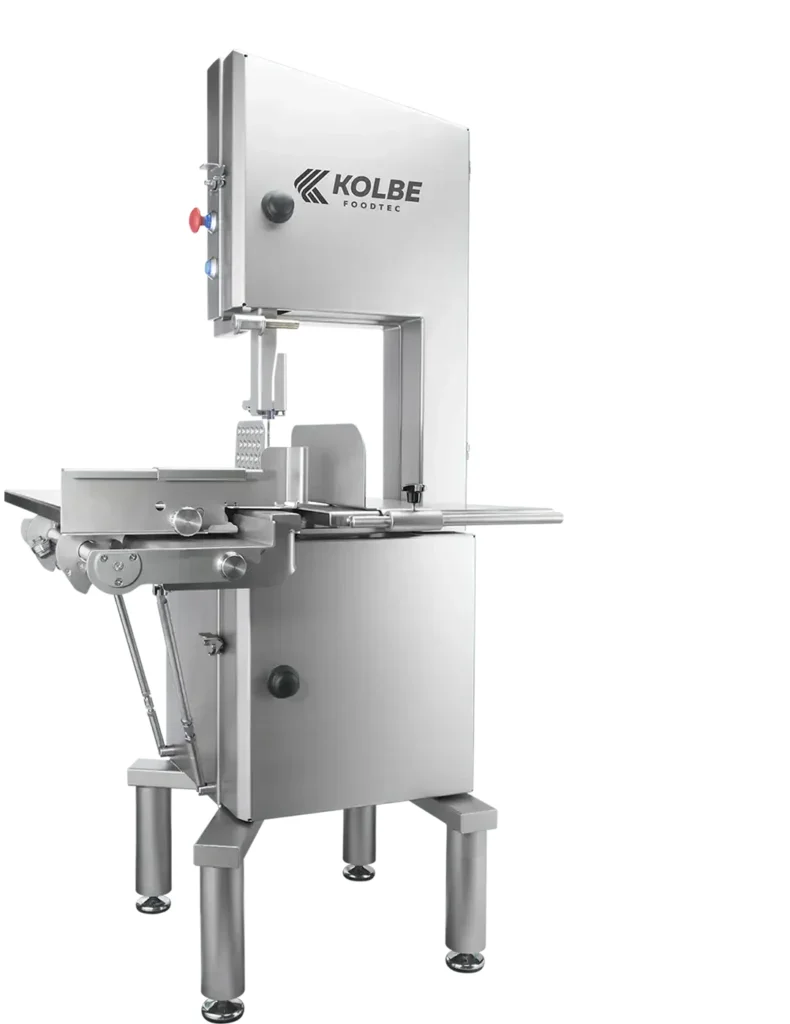
Specify the whole blade, not just its length.
A matching loop length is only one compatibility check. A buyer also needs the approved width and thickness, tooth pitch/profile, blade construction and the precise machine version. Use the machine maker's documented specification before asking a blade supplier to propose alternatives.
This page helps prepare a blade enquiry. It does not give installation, tension, tracking, feed-speed or fault-repair instructions.
The details a supplier needs
| Field | What to send | Why it matters |
|---|---|---|
| Machine identity | Maker, full model, serial/version and the relevant manual or approved blade part number. | Similar model names can have different blade configurations. |
| Loop length, width and thickness | Documented dimensions and units; do not substitute by visual similarity. | A blade must suit the wheel, guide and tensioning arrangement of that machine. |
| Tooth pitch and profile | TPI (teeth per inch), tooth profile and product application. | Pitch is one part of the cutting design, not a universal quality grade. |
| Material and condition | Bone-in or boneless, species, frozen/fresh condition, product size and observed temperature range. | The supplier can assess the actual duty instead of a generic food label. |
| Cut objective | Thickness or target weight, cut-face requirement, bone-debris observations and trial basis. | The same purchase objective must be used when comparing blade options. |
| Supply identification | Exact blade item code, pack quantity, documentation and local replenishment route. | Keep later deliveries comparable and traceable. |
Why “3 TPI or 4 TPI?” has no universal answer
KT presents 4 TPI as its standard option and gives application-specific alternatives. MESI describes a 3 TPI option for an aggressive cutting duty and discusses 4 TPI where cut appearance is prioritised. Starrett's food-cutting catalogue separately lists width, thickness, pitch and profile variants. These are supplier-specific product choices, not conflicting instructions for one identified saw.
Ask the machine maker and blade supplier to agree a compatible item for the actual product. A tooth-count recommendation from another machine or a metal/wood-cutting catalogue is not a substitute. No universal pitch, blade life or speed is prescribed here.
Keep trial comparisons interpretable
- Record the exact blade item and machine configuration supplied for each run.
- Use comparable product lots and report fresh/frozen condition separately.
- Keep cut-face observations, recoverable pieces, debris and time records distinct.
- Ask the supplier to explain any changed blade specification; do not attribute every change in result to TPI alone.
Blade wandering, damage or inability to track belongs with trained service and the machine-specific procedure, not a trial-and-error adjustment guide.
Continue the decision
Bone Saws for Fresh Meat, Frozen Meat & Fish: Product FitBone saw types, working principles and dated market pricesSources and scope
Reviewed 2026-11-04. Manufacturer statements support the particular product or catalogue scope. Buyer questions, worksheets and arithmetic are editorial planning aids; they are not tested machine results or operating instructions. Manufacturer images remain attributed equipment references.
Source URLs, plain text
- https://www.koneteollisuus.com/product/band-saw-blades/
- https://mesisaws.com/en/meat-bandsaw/
- https://www.starrett.com/products/meat-cutting-and-food-processing/band-saw-blades/meatkutter-frozen
- https://kolbe-foodtec.com/en/product/bandsaws/k330rs-en/k330rs-2/