Crop guide · Fig preprocessing
Start with the retained product
Compare the finished-product routes before combining machines. Attributed equipment photographs, output examples and English selection notes below explain the duties. Confirm the actual fruit, supplied tooling and accepted output with representative samples.
Compare washing, trimming or peeling, cutting, sorting, dewatering and packaging below. Attributed manufacturer images explain equipment roles. General family references require the actual crop configuration and a representative trial.
Choose the finished-product route
Fresh whole figs
receive gently, inspect, clean as specified and support during packing.
Compare the feed and accepted output at every handoff.
Halves or pieces
prepare accepted fresh or dried fruit, trim unwanted stems, cut and inspect.
Compare the feed and accepted output at every handoff.
Paste or bakery filling
prepare accepted material, reduce to the agreed texture and transfer into the downstream process.
Compare the feed and accepted output at every handoff.
Agree pre-cleaning, trimming, cutting and final-wash order for the incoming material and intended use. These routes are specification aids, not universal process settings.
Washing: match cleaning to the destination
First define fresh, dried or rehydrated input. Compare supported spray or rinse handling with representative fruit rather than choosing an aggressive root-vegetable washer by name alone. Set an acceptance check for splits, crushed flesh and free liquid after transfer. Cleaning a dried ingredient is a separate specification from washing fresh fruit; the selected cutter does not provide either operation.
Trimming: define skin, stem and seed preparation
Specify stem removal, damaged-area trimming and whether skin remains in the retained product. Show the actual fruit to the supplier. Do not introduce a stone-pitting stage by analogy with peaches: the visible small seeds and their contribution to the desired texture need a separate decision if refining is proposed. Peeling is not automatically required for a whole-fruit or filling route.
Cutting: choose pieces, reduction or extraction
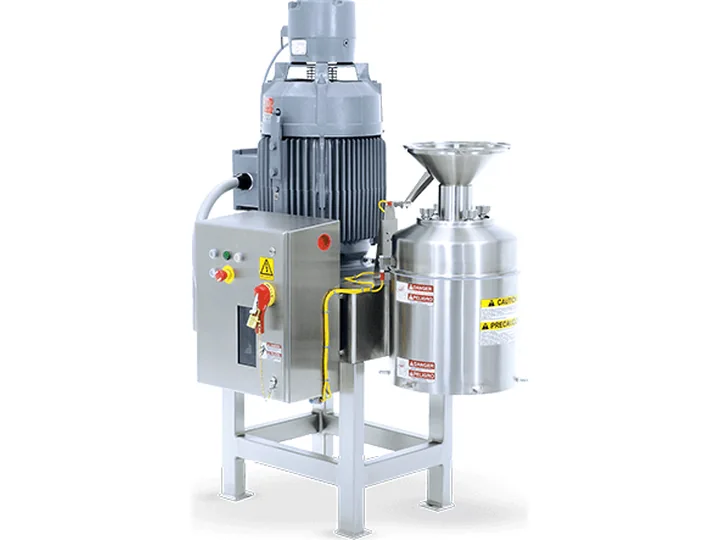
Urschel Comitrol 1700
Urschel lists this family for fig-paste reduction. Compare feed preparation, head and retained texture; it is not illustrated as a fresh-fig halving machine. No output rate or acceptance result is adopted.
Urschel lists its Comitrol Processor Model 1700 for a fig-paste application. This is a reduction reference for an ingredient, not a fresh-fig halving machine. Agree fresh, dried or previously reduced feed, head selection and the retained texture before ordering. For halves or pieces, ask for a separate cut trial with the required presentation, supported feeding and accepted edge quality.
Sorting: inspect the retained product
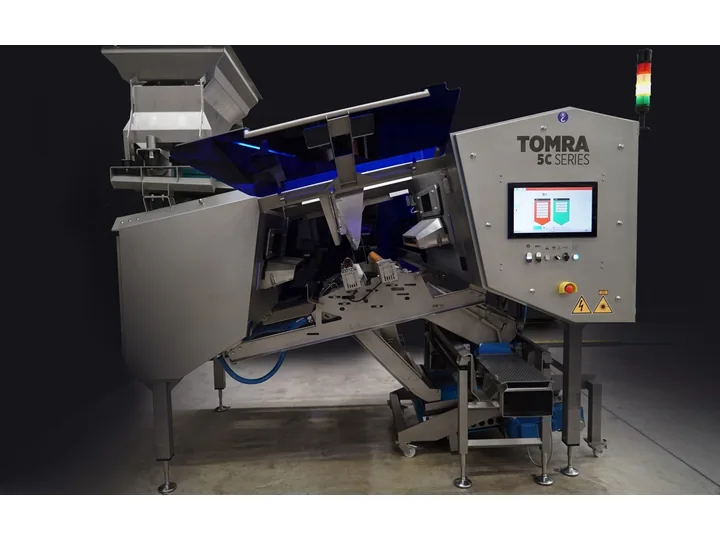
TOMRA 5C
TOMRA includes figs in its dried-fruit applications and shows this sorting family. Confirm the offered configuration and actual dried-fig samples; the equipment image is not a fresh-fig trial or proof of universal defect detection.
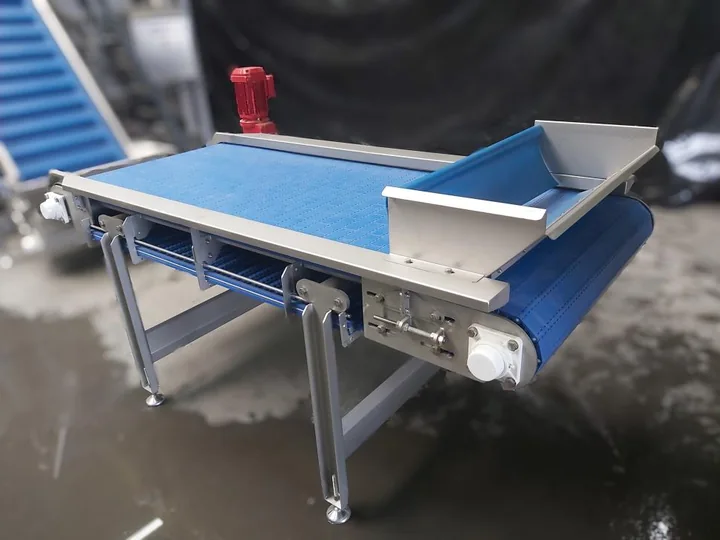
Herbort Inspection Belt 85
A manual inspection conveyor. Agree the viewing and reject procedure; this photograph does not establish optical or internal-defect detection.
Fresh-fig inspection should define splits, damage, stems and useful rework. TOMRA lists figs within its dried-fruit sorting applications; that listing does not establish fresh-fruit suitability or detection of every unwanted material. Confirm the actual sorter, sensor package, feed presentation and reject samples. Keep manual inspection and optical sorting as separate options in the quotation.
Dewatering: separate surface water from processing
Remove free wash water without treating flesh compression as a drying method. Record released juice separately from process water and useful product. Dried figs require a separately designed dehydration process; optical sorting of already dried material neither dries fresh fruit nor establishes a finished moisture specification.
Packaging: match support, portioning and closure
Whole fresh figs need supported collection and packs suited to the accepted fruit shape. Pieces require different portioning, and sticky paste requires a suitable ingredient feeder or depositor. Trial sticking, drops and the closure area. A downstream package or film choice alone does not establish preservation, storage conditions or shelf life.
Compare the actual retained product in a supplier trial
For fig, ask the maker to demonstrate the intended whole-fruit, prepared-piece or ingredient route. No unrelated generic film is substituted here. The equipment photographs and written source descriptions explain the roles without requiring video playback.
Prepare a fig equipment trial brief
- Bring representative input: variety, maturity, size, incoming condition and seasonal variation.
- Show accepted and rejected samples: retained skin, leaf, stem, head or cut form, useful rework and finished pack.
- Record useful output: trim/peel loss, damage, fines, missed defects, free water and rejected packs.
- Test interfaces: product supports, drops, screens, drainage, dose control, stops and restart.
- Confirm supplied configuration: safe access, guards, tooling, water circuits, utilities, cleaning and training.
Questions before choosing fig equipment
Does the line receive fresh figs, dried figs or prepared pieces?
Include this point in the supplier trial and quotation. Show actual accepted and rejected samples, and record the supplied configuration and retained output.
Is the required output intact fruit, a cut piece or paste?
Include this point in the supplier trial and quotation. Preparation, retained product and downstream interfaces must be agreed separately from the equipment photograph.
What material should inspection reject?
Include this point in the supplier trial and quotation. Preparation, retained product and downstream interfaces must be agreed separately from the equipment photograph.
Sources, image credits and review scope · 3 November 2026
Equipment photographs and output references are identified beside each image. Historical installation photographs are labelled. Footage and machine images belong to the named sources and are not Food Machinery IQ installations or independent acceptance tests. Source addresses are plain text. Supplier inclusion is permanently free.
- Fig Cuttinghttps://www.urschel.com/cutting-applications/figs/
- Fig Millhttps://www.urschel.com/cutting-machines/comitrol-processor-model-1700/
- Fig Sortinghttps://www.tomra.com/en-gb/food/categories/nuts-and-dried-fruit/dried-fruit
- Image Inspection Belthttps://www.herbort-gmbh.de/en/products/machines/inspection-belt-85
General layout and selection advice is an editorial trial brief. Crop-specific application listings are distinguished from general machine-family references. No certification, numerical output, pathogen reduction, energy saving or shelf-life promise has been independently established here.