Crop guide · Lychee preprocessing
Start with the retained product
Compare the finished-product routes before combining machines. Attributed equipment photographs, output examples and English selection notes below explain the duties. Confirm the actual fruit, supplied tooling and accepted output with representative samples.
Compare washing, trimming or peeling, cutting, sorting, dewatering and packaging below. Attributed manufacturer images explain equipment roles. General family references require the actual crop configuration and a representative trial.
Choose the finished-product route
Whole fresh fruit
clean as specified, inspect and classify before supported packing.
Compare the feed and accepted output at every handoff.
Retained flesh
open and remove the shell, remove the seed as ordered, inspect and portion.
Compare the feed and accepted output at every handoff.
Juice or reduced ingredients
prepare the agreed feed, reduce or extract, then clarify and fill as separately specified.
Compare the feed and accepted output at every handoff.
Agree pre-cleaning, trimming, cutting and final-wash order for the incoming material and intended use. These routes are specification aids, not universal process settings.
Washing: match cleaning to the destination
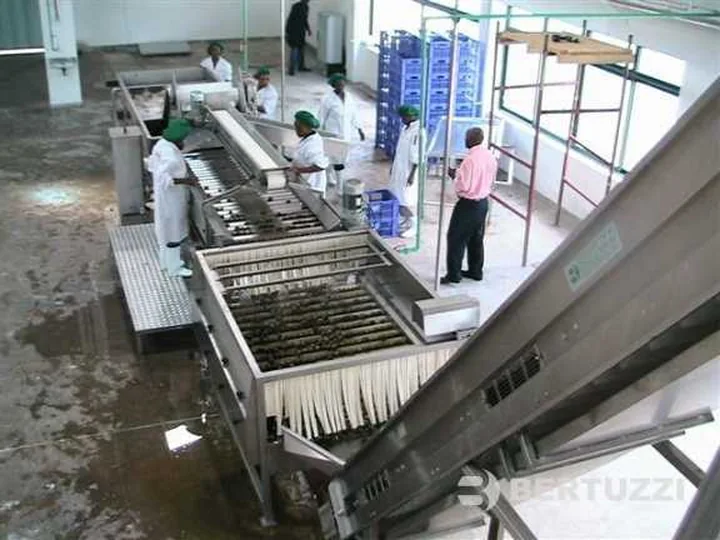
Bertuzzi
A wash and preparation arrangement linked from the shared processing page. Confirm actual crop, brush contact and transfers. The photograph does not establish a crop-specific cleaning programme or an intact-flesh preparation result.
Bertuzzi presents washing, brushing and conveyor inspection in its shared lychee/longan processing reference. Select actual water contact, brushes and transfers for the supplied fruit rather than copying an installation arrangement. Check the shell condition and handoff to exposed flesh. No chemical dose, hygiene result or validated cleaning programme is inferred from a photograph.
Trimming: define skin, stem and seed preparation
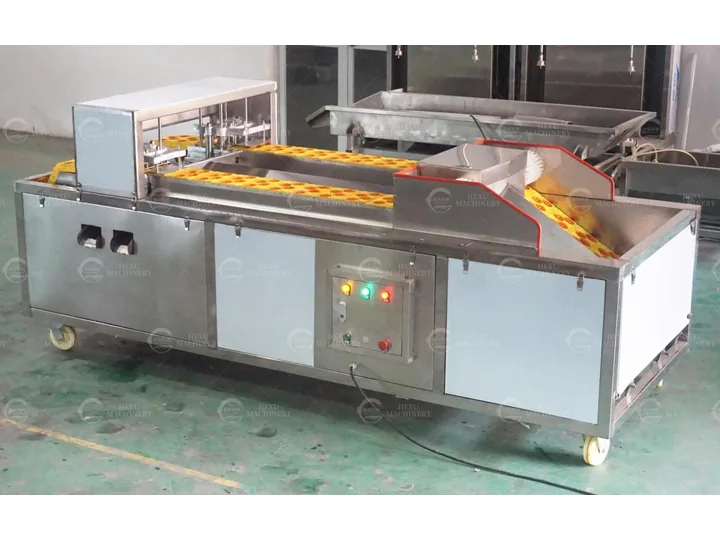
Hexu
The supplier describes manually placed fruit, mould transport and seed removal. Confirm input shell condition and accepted flesh form. The exterior photograph is not evidence of automatic peeling or a seed-fragment-free result.
Whole-fruit packs retain the shell and seed. A flesh product needs shell opening/removal and seed separation specified as distinct duties. Hexu labels its conveyor-mould unit as a litchi pitter with manual product placement. The written page does not establish the shell-preparation sequence. Confirm whether feed must already be peeled, how fruit is oriented and what flesh damage is accepted; do not call pitting automatic peeling.
Cutting: choose pieces, reduction or extraction
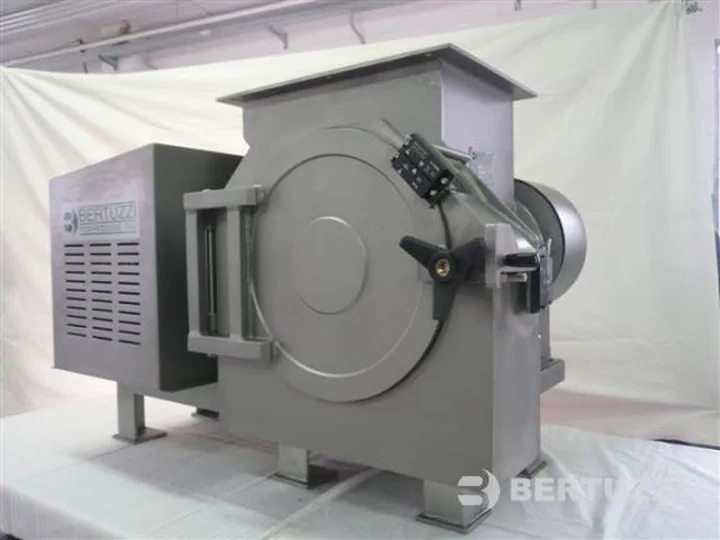
Bertuzzi Chopper
Reduction equipment for the ingredient route. Feed preparation and accepted material must be agreed. This is not a peeler or a machine intended to retain intact flesh portions.
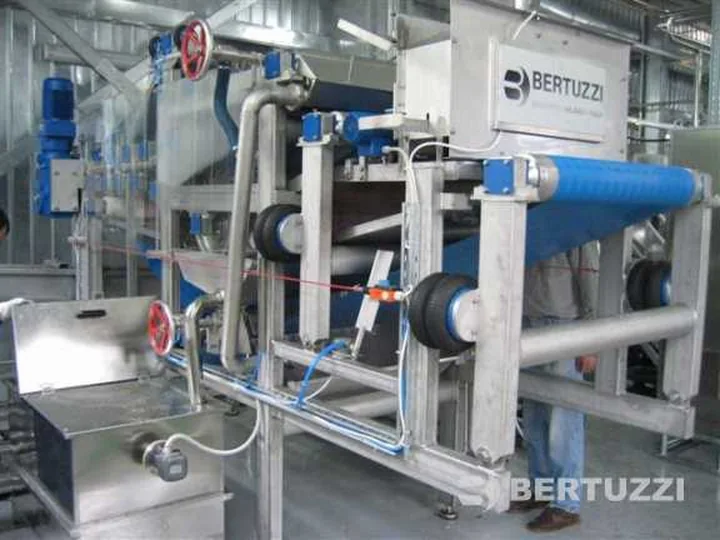
Bertuzzi
A juice-extraction interface following prepared processing material. Pressing changes the retained product and is separate from surface-water drainage of fresh flesh.
For intact flesh, evaluate the retained aril and the seed-removal opening before adding optional cutting. Hexu distinguishes standard pitting from an optional cutting function; obtain the exact supplied tooling. Bertuzzi separately describes chopping and belt pressing for a juice route. Those operations reduce or press material and cannot be treated as a way to preserve intact flesh portions.
Sorting: inspect the retained product
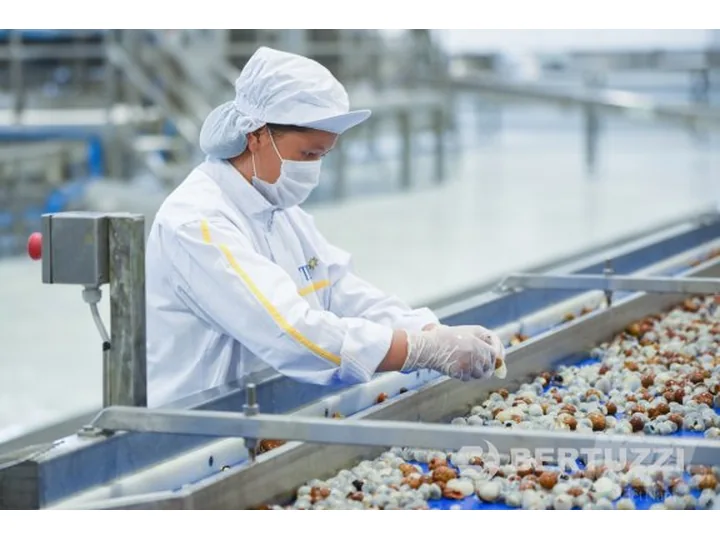
Bertuzzi
An operator station illustrates inspection and reject handling. Identify the retained stream before selecting the station; this is not automatic seed-fragment detection or an independently accepted crop trial.
Inspect incoming whole fruit and prepared flesh at separate points. For flesh, define residual shell, seed fragments, damaged arils and useful rework with physical samples. Neither a pitter nor a juice press establishes automatic fragment detection. Agree how rejects leave the line and how accepted flesh reaches portioning without being mixed with shell or seed waste.
Dewatering: separate surface water from processing
Control exterior wash-water carryover before opening fruit, then check free water and juice around exposed flesh. Belt pressing extracts juice from processing material; it is not surface drying of intact arils. Dried lychee requires a separate dehydration route and product specification, not merely a blower setting.
Packaging: match support, portioning and closure
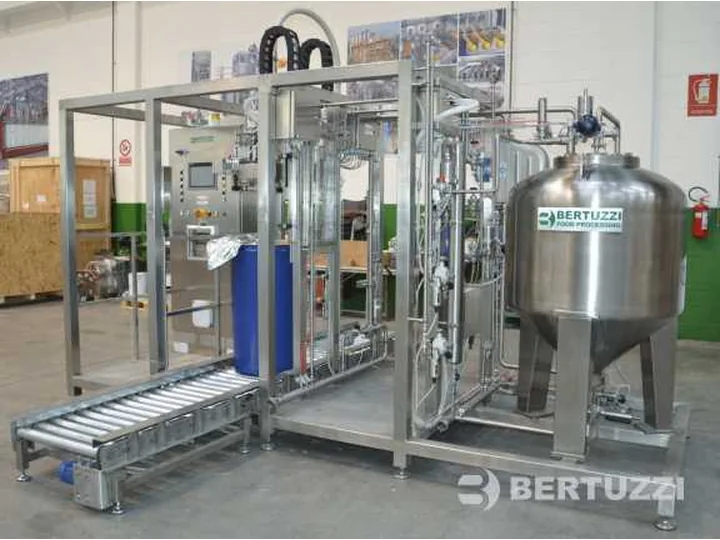
Bertuzzi
A bulk processing-line filling reference, not a whole-fruit or fresh-cut packer. Product preservation and filling must be designed as one system; the image alone establishes no validated treatment or storage life.
Whole-fruit packs, supported flesh portions and bulk juice need different feeders and closures. Trial compression, pooling, portioning and seal contamination with the accepted product. A juice-line bulk filler is a downstream ingredient reference, not a fresh-flesh tray sealer. Preservation and storage conditions require a separate product/package design.
Compare the actual retained product in a supplier trial
For lychee, ask the maker to demonstrate the intended whole-fruit, prepared-piece or ingredient route. No unrelated generic film is substituted here. The equipment photographs and written source descriptions explain the roles without requiring video playback.
Prepare a lychee equipment trial brief
- Bring representative input: variety, maturity, size, incoming condition and seasonal variation.
- Show accepted and rejected samples: retained skin, leaf, stem, head or cut form, useful rework and finished pack.
- Record useful output: trim/peel loss, damage, fines, missed defects, free water and rejected packs.
- Test interfaces: product supports, drops, screens, drainage, dose control, stops and restart.
- Confirm supplied configuration: safe access, guards, tooling, water circuits, utilities, cleaning and training.
Questions before choosing lychee equipment
Must the pitter receive peeled fruit?
Include this point in the supplier trial and quotation. Show actual accepted and rejected samples, and record the supplied configuration and retained output.
Should the retained aril remain intact?
Include this point in the supplier trial and quotation. Preparation, retained product and downstream interfaces must be agreed separately from the equipment photograph.
Which seed-removal and cutting tools are actually supplied?
Include this point in the supplier trial and quotation. Preparation, retained product and downstream interfaces must be agreed separately from the equipment photograph.
Sources, image credits and review scope · 3 November 2026
Equipment photographs and output references are identified beside each image. Historical installation photographs are labelled. Footage and machine images belong to the named sources and are not Food Machinery IQ installations or independent acceptance tests. Source addresses are plain text. Supplier inclusion is permanently free.
- Lychee Pitterhttps://www.hexumachinery.com/products/179-Litchi-Pitting-Machine.html
- Lychee Longanhttps://www.bertuzzi.it/longan-lychee
- Image Aseptic Fillerhttps://www.bertuzzi.it/guava
General layout and selection advice is an editorial trial brief. Crop-specific application listings are distinguished from general machine-family references. No certification, numerical output, pathogen reduction, energy saving or shelf-life promise has been independently established here.