Crop guide · Swiss chard preprocessing
Choose what happens to the leaf and its edible stalk
Swiss chard is grown for its leaves and edible petioles, commonly called stalks. A tender intact leaf, a mature leaf with a retained stalk, and separately cut leaf and stalk ingredients need different preparation and handling.
This guide explains washing, trimming, cutting, sorting, dewatering and packaging with manufacturer equipment images and an official cutting demonstration. Herbort explicitly lists Swiss chard for Washer 135C. Other machine families illustrate equipment duties that still require confirmation with your actual product.
Three product routes to keep separate
Intact tender leaves
Receive and select → remove unwanted material → configured washing → drain and remove free water → final selection → dose and pack.
Keep the required leaf intact and provide a cutter bypass. Agree the allowed petiole length, acceptable leaf condition and the finished loose-leaf pack before selecting transfers and dewatering equipment.
Mature leaves with retained stalks
Receive → remove ties and unpack bunches → inspect and trim bases → wash → dewater to the agreed standard → inspect → portion and pack or transfer.
The stalk can be useful product. Specify the retained length and the support needed for a broad leaf attached to a heavier petiole. A loose baby-leaf feed is not automatically suitable for this form.
Separate leaf and stalk ingredients
Receive → inspect → separate the agreed leaf and stalk parts → controlled feeding and specified cuts → configured washing and selection → dewater → weigh and pack or transfer.
Write separate cut and handling briefs for leaf strips and stalk pieces. Combine them only if the recipe calls for it. Cutting a stalk into short pieces does not separate it from the leaf.
These are equipment specification routes. Agree the position of pre-cleaning, separation, cutting and final washing for the actual incoming material and intended end use.
Trimming: separate the wanted stalk from the discard
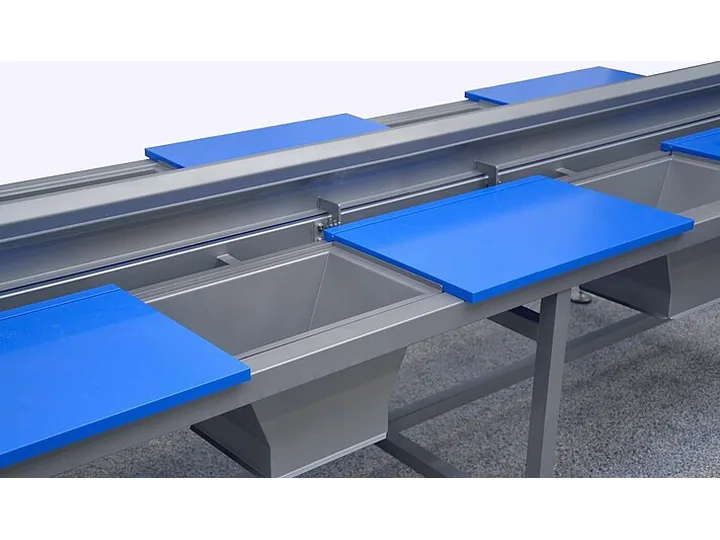
Keep edible stalks when the product calls for them
Separate useful leaves and petioles from unwanted material at a supported work surface. Show operators the accepted stalk length and base trim. This table illustrates manual work; it is not an automatic Swiss chard stem separator.
Show an accepted leaf, retained petiole and discard sample. Define base trim, damaged areas, unwanted ties and the required leaf-to-stalk balance. Keep useful stalks on a product path rather than automatically sending them to waste.
If separate ingredients are required, compare manual separation and collection before cutting. Check operator reach, board support, good-product collection and waste removal. No automatic Swiss chard leaf-stripper or stalk separator has been verified for this guide; request an actual crop demonstration if a supplier proposes one.
Cutting: leaf strips and stalk pieces are different briefs
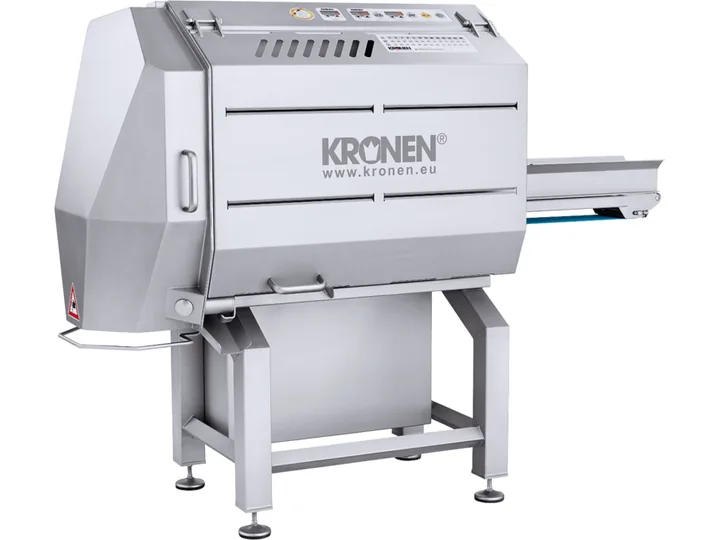
Choose the cut after choosing the retained parts
The GS 10-2 is a lettuce and vegetable cutting-family reference. Compare leaf strips and stalk pieces in separate feed/tooling trials if their required dimensions differ. The source does not establish a Swiss chard cut, yield or output guarantee.
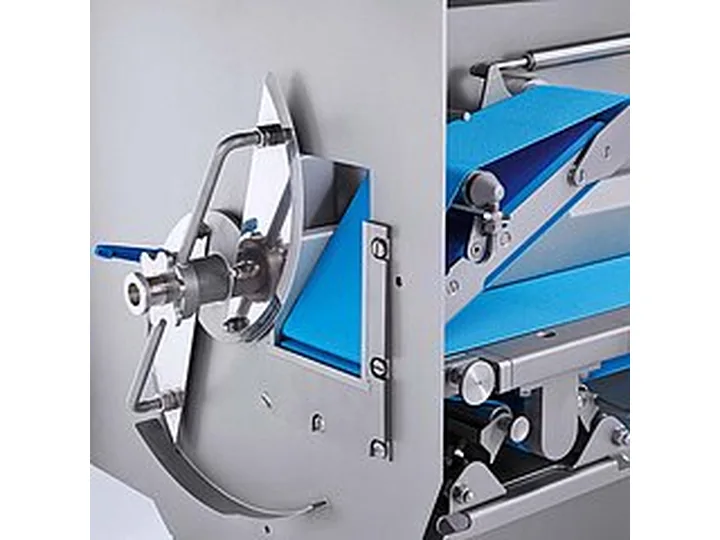
Look inside the feed and cutting arrangement
The detail makes product support and the cutting position visible. For broad leaves with thick petioles, ask how the offered setup presents and holds the material. This open-machine image explains components; operation and access must follow the supplier's guarding and isolation procedure.
For an intact leaf or whole bunch, bypass cutting. For prepared ingredients, define retained stalk content, target dimensions, long pieces, torn edges and fines. If leaves and stalks need different cuts, separate them first and agree the appropriate tool and feed arrangement for each stream.
The official film below illustrates lettuce and cabbage feeding and cutting. Its visible product forms help explain the mechanism, while chard acceptance needs representative leaves and petioles. Inspect useful output after subsequent washing, dewatering and holding, not just at the cutter outlet.
Check product support and how feed variation affects the result. Ask the supplier to demonstrate safe isolation, tool changes and cleaning access on the offered version.
Washing: examine folds, bases and the retained petiole
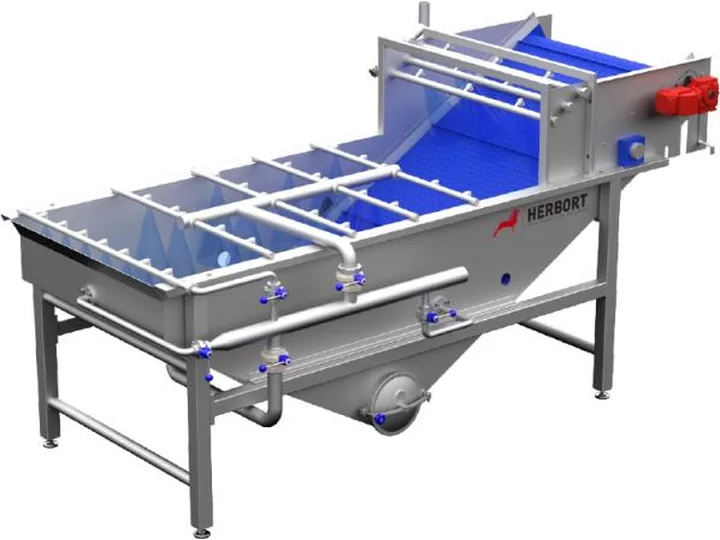
Start with a washer that explicitly lists Swiss chard
Herbort explicitly lists Swiss chard among the leafy vegetables for Washer 135C and describes a circulating pump and spray jet nozzles. Confirm the exact whole-leaf or cut-product configuration in a sample trial; the listing is not a measured cleaning result.
Washer 135C provides a manufacturer-stated Swiss chard application reference. Its circulating pump and spray nozzles explain the washing approach, but the exact product load, water movement and discharge need a trial with your incoming crop.
For whole large leaves, inspect folds and the leaf-to-petiole area as well as exposed surfaces. For cut leaf and stalk streams, compare distribution, small-piece retention and the outfeed separately. Record useful product caught in screens, debris removal and transfers.
Specify incoming soil and debris, water supply and management, draining, rinse arrangements, cleaning access and stops/restart. An application listing does not establish a universal chemical dose, microbial reduction or ready-to-eat status.
Sorting: define acceptable petiole colours before rejecting them
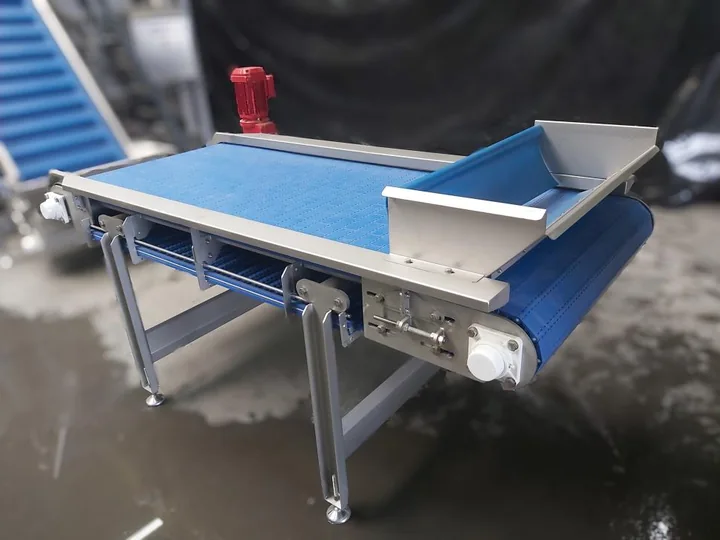
Make the accepted leaf and stalk visible
Compare operator access, product spread and reject collection. This is a general inspection conveyor, not a verified optical Swiss chard sorter. Define accepted petiole colours for the actual product before deciding which colour changes count as defects.
Swiss chard varieties can have different stalk colours. Define accepted colours for the supplied cultivar or rainbow chard mix, alongside the unwanted material and leaf defects. Colour alone is not a complete rejection rule.
Compare manual presentation, lighting, wet reflections, overlap and the visibility of both leaf and stalk. Provide separate good-product and reject paths. If optical sorting is proposed, require a supplier-confirmed chard configuration and a challenge trial covering missed defects and useful-product loss.
Dewatering: test the leaf and stalk as the product will be sold
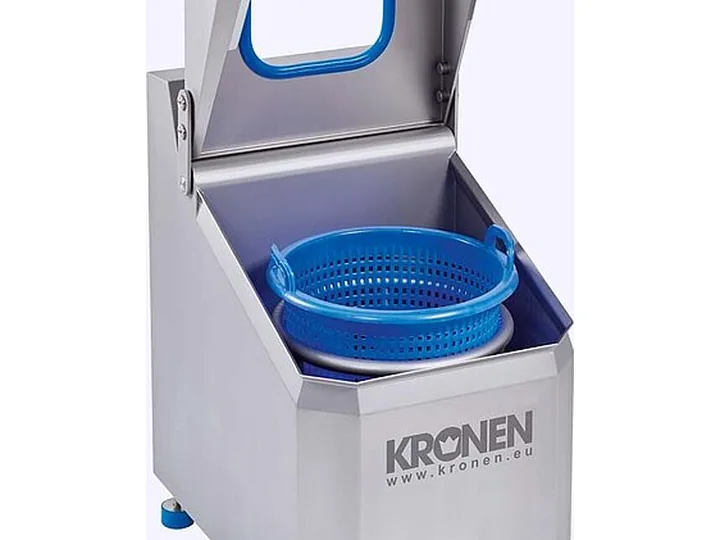
Check both retained water and handling damage
A lettuce/vegetable basket spinner provides a batch dewatering reference. Trial actual leaves with their retained petioles, or the separated cut streams. Compare loading, distribution, drain water and unloading; do not transfer another crop's settings to Swiss chard.
Specify whether the load contains intact tender leaves, large leaves with stalks, or separated cut ingredients. Compare basket loading, distribution, cycle, drainage and unloading with that actual material. Check free water, leaf tears, bent stalks, clumps and small pieces lost through openings.
| Product form | Handling question | Finished-product check |
|---|---|---|
| Tender intact leaves | Can the load be spread and released without clumping? | Leaf integrity, free water and useful leaf loss. |
| Large leaf with petiole | Does loading support both the leaf and the retained stalk? | Tears, bent petioles and water in folds. |
| Separate cut streams | Do leaf strips and stalk pieces need different handling? | Required dimensions, fines, retained water and product balance. |
Where a supplier proposes an automated drying line, confirm the exact chard application, feed buffer, load control and discharge. A general basket image does not validate that alternative. Agree the residual free-water and damage assessment after a realistic hold; surface dewatering is separate from thermal drying or sterilisation.
Packaging: separate bunch handling from loose-product dosing
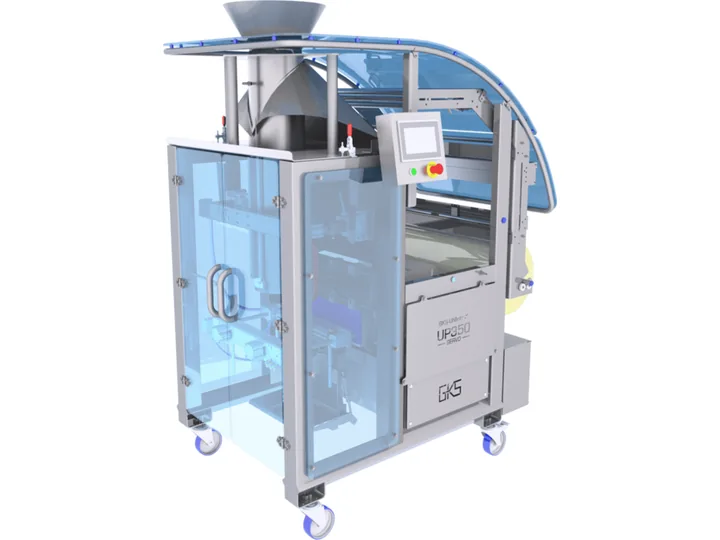
Match the packer to loose leaves or prepared pieces
A loose-leaf or cut ingredient needs suitable dosing and a controlled drop before sealing. FLEX L illustrates a produce bagging family. Whole bunches and large leaves may require a different packing presentation; confirm the actual product, pack and handling setup.
Loose leaves or cut ingredients: compare the weigher/doser, bridging, compression, drop height and release into the pack. Check whether a mixed leaf/stalk recipe stays consistent across finished portions.
Large leaves or bunches: specify orientation, retained stalk length, pack support and the intended bag, sleeve or tray. Do not assume the illustrated vertical bagger accepts the whole product without a different feed and packing arrangement.
Inspect weight variation, product across seals, residual water, seal leaks, coding and rejects during normal running and restart. If MAP is proposed, obtain the actual gas-handling configuration, film and seals for the product and distribution brief. This general bagger reference does not establish a gas recipe or shelf life.
See what changes when the product form changes
The film makes the feed direction and cutting position easier to understand than a machine outline alone. Compare the visible lettuce and cabbage forms with the leaf and stalk samples in your own brief.
Watch the feed, cut and product change
The official KRONEN GS10-2 film, titled “Perfect cutting of salads and herbs”, shows lettuce, cabbage and herbs. Use it to understand how prepared material enters a belt cutter and reaches the cutting position. It does not show a verified Swiss chard trial.
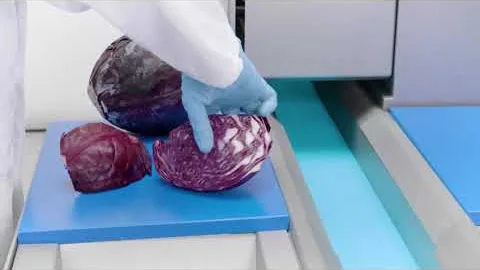 Watch on YouTube ↗ · 1:32
KRONEN Food processing · Official manufacturer footage
- Around 0:10: an operator positions prepared lettuce at the blue feed belt. Watch the product orientation; ask how broad chard leaves and retained petioles would be presented in your own trial.
- Around 0:18: lettuce reaches the visible cutting disc and cut pieces leave the cutting position. Compare the motion with the detail photograph, then specify the leaf strip and stalk piece you actually need.
- Around 0:46: prepared cabbage sections are placed on the feed belt. The change in product form is a useful reminder that one machine family still needs product-specific feeding and tooling.
The film was observed as approximately nine years old and remains linked from the current GS 10-2 manufacturer page. Confirm the offered machine version and guarding separately. Captions were unavailable in the YouTube player; these original English scene notes provide a text alternative. No chard cut quality, stalk separation, throughput or safety result is inferred from the footage.
Prepare a Swiss chard equipment trial brief
- Bring the actual crop: cultivar or rainbow mix, maturity, leaf size, stalk thickness, incoming condition and seasonal variation.
- Show the retained product: intact leaf, large leaf with stalk, or separate leaf and stalk cuts; include the finished pack.
- Agree measurable acceptance: useful yield, unwanted material, cut dimensions, tears, bent stalks, free water and rejected packs.
- Test the connections: product support, drops, washing outfeed, basket handling or proposed buffers, dosing, stops and restart.
- Confirm cleaning and utilities: water circuits, drains, safe access, tooling, supplied guarding and operator training.
Questions before choosing Swiss chard equipment
Should all chard stalks be removed?
No. The petioles are edible. Keep or separate them according to the finished-product brief; define unwanted base material separately.
Does a cutter automatically separate leaves and stalks?
No. Size reduction and separation are different duties. If the two parts need different cuts, specify separation before the appropriate feeding and cutting steps.
Does the official video show Swiss chard?
No verified chard run is shown. The checked film demonstrates the GS10-2 family with lettuce, cabbage and herbs. It explains the mechanism, while actual chard performance needs a crop trial.
Is Swiss chard explicitly listed for the washer?
Yes. Herbort names Swiss chard on its Washer 135C page. The offered configuration and actual cleaning result still need confirmation with representative product.
Sources, image credits and review scope · 2 November 2026
The seven equipment images are attributed manufacturer photographs or equipment references. The mechanical detail is an open-machine component view; the video and its preview show other vegetables. None is presented as a Food Machinery IQ installation or a measured Swiss chard acceptance trial. Supplier inclusion is permanently free; source addresses are plain text.
- University of Wisconsin Extension: Swiss chard leaves and edible petioleshttps://hort.extension.wisc.edu/articles/swiss-chard/
- Herbort: Washer 135C, explicitly listing Swiss chardhttps://www.herbort-gmbh.de/en/products/machines/washer-135c
- KRONEN: configurable manual preparation workstationhttps://www.kronen.eu/en/solutions/trimming-table-for-4-people
- KRONEN: GS 10-2 belt cutting machine and official videoshttps://www.kronen.eu/en/solutions/belt-cutting-machine-gs-10-2
- Herbort: Inspection Belt 85https://www.herbort-gmbh.de/en/products/machines/inspection-belt-85
- KRONEN: KS-100 PLUS vegetable and lettuce spin-dryerhttps://www.kronen.eu/en/solutions/vegetable-and-lettuce-spin-dryer-ks-100-plus
- KRONEN: FLEX L packaging machinehttps://www.kronen.eu/en/solutions/packaging-machine-flex-l
Wisconsin Extension supports the edible leaf/petiole distinction and variation in petiole colour. Herbort explicitly names Swiss chard for Washer 135C. The other equipment references need crop-specific configuration and trials. No numerical capacity, microbial reduction, certification, energy-saving or shelf-life promise is independently established here.