Crop guide · Youmai lettuce preprocessing
Keep long leaves useful from receiving to packing
Youmai lettuce, also called You Mai Cai or Sword lettuce, is identified by NParks as a cultivar of Lactuca sativa. This guide covers its edible leaves and the equipment decisions for washing, trimming, cutting, sorting, dewatering and packaging.
Start with a sample of the actual crop and the finished pack. Specify whether you sell an intact trimmed plant or bunch, detached long leaves, or cut ingredients. Equipment references below belong to lettuce and leafy-vegetable families; they are not presented as verified Youmai installations.
Specify the product form before drawing the line
Trimmed plants or bunches
Receive → remove unwanted material → trim the base to the agreed standard → inspect → apply the specified cleaning and water-removal route → align and pack.
Keep the required leaf attachment and presentation. A detached-leaf wash tank or loose-product bagger does not automatically suit an intact plant. Confirm support and cleaning access with the actual sample.
Detached intact leaves
Receive → separate leaves and remove the unwanted base → inspect → configured loose-leaf washing → drain and remove free water → inspect → portion and pack.
Preserve the specified leaf length. Compare tangling, folded leaves, torn tips and the handling required at every transfer. Cutting normally has a bypass for an intact-leaf pack.
Cut cooking ingredients
Receive → specified trimming → prepare the feed → cut → configured washing and selection → dewater → weigh and pack or transfer to cooking.
Define the retained rib and stem-end pieces as well as leaf size. Fresh cut ingredients, cooked meals, frozen products and preserved vegetables require different downstream specifications.
Agree the positions of pre-cleaning, cutting, inspection and final washing for the incoming material. The routes are specification aids, not universal processing instructions.
Trimming: define the base cut and retained leaf
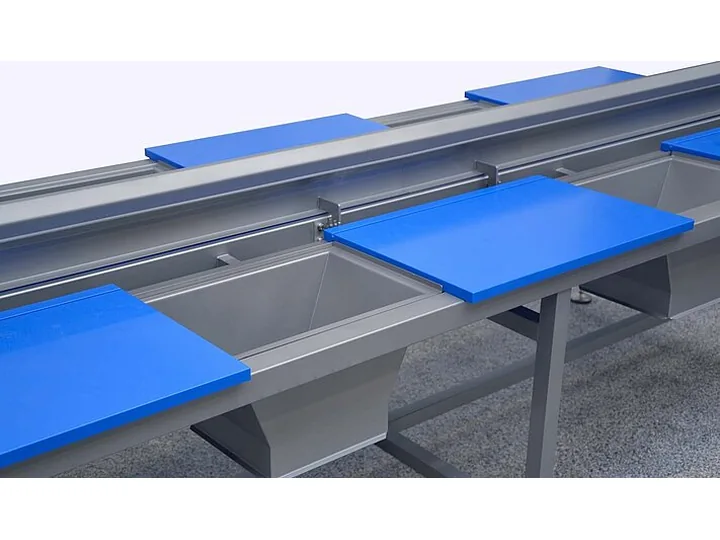
Support the long leaf while trimming the base
Define the retained base and leaf length before arranging the workstation. Separate ties, unwanted ends and damaged leaves from usable product. The table illustrates manual preparation; it is not evidence of an automatic Youmai base-trimming installation.
Show the trim line on a real plant. Decide whether the customer wants leaves attached at the base, detached complete leaves or cut pieces. Remove ties, packaging and unacceptable leaves on a separate path, keeping usable material off the discard stream.
For manual preparation, compare leaf support, operator reach, cutting-board position, collection and the waste chute. Check retained base fragments, torn leaves and useful product in the waste. An iceberg corer or a stem-peeling machine is not automatically a Youmai trimming solution.
This leaf-processing guide does not specify celtuce stem peeling. Do not substitute a thick-stem lettuce procurement brief merely because the crop names overlap in trade.
Cutting: a short leaf piece is different from an intact leaf
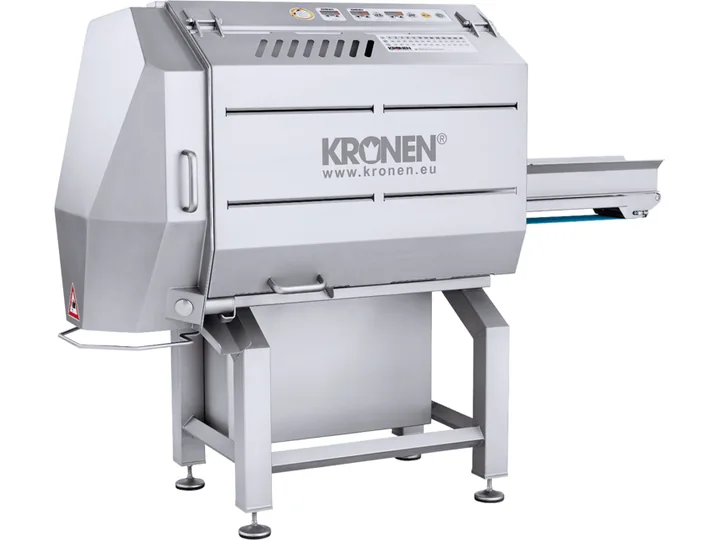
Present prepared leaves evenly to a belt cutter
The current model page covers lettuce and other prepared produce. For cut Youmai, specify the leaf and retained rib together, then confirm feed arrangement and tooling in a supplier trial. This lettuce-family reference does not establish a tested Youmai cut or output rate.
Agree the required piece length, leaf-to-rib mix and acceptable long pieces, ragged edges and fines. Present trimmed leaves consistently instead of feeding an uncontrolled bunch. Ask how the chosen belt and tooling manage the actual leaf size and retained rib.
Inspect output immediately after cutting and again after washing, dewatering and holding. A neat cutter discharge does not establish the condition in the finished pack. Record useful yield rather than assuming that a published machine-family rating applies to Youmai.
For an intact-leaf product, specify a bypass and supported transfers. Do not add cutting simply because the line contains a cutter.
Washing: distinguish the tank from its transfers
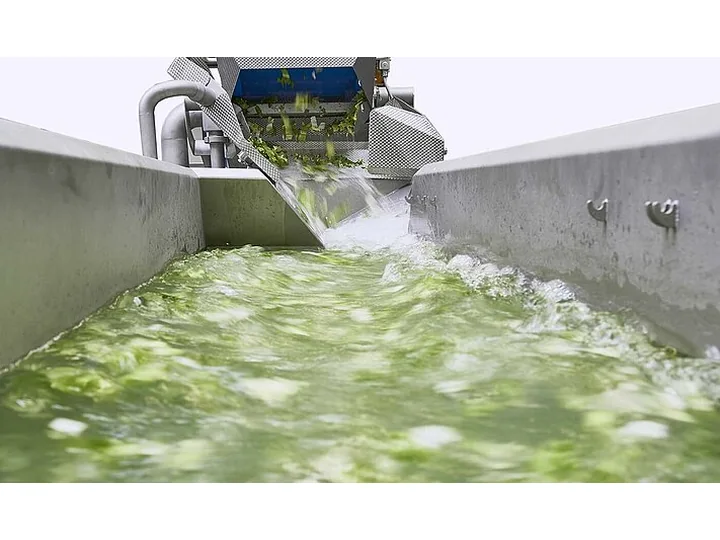
See how loose greens occupy the wash tank
The GEWA XL family covers cut and whole lettuce and other produce. This tank photograph makes product distribution and the incoming transfer visible. It shows other greens, not a verified Youmai cleaning trial; test intact long leaves and cut pieces separately.
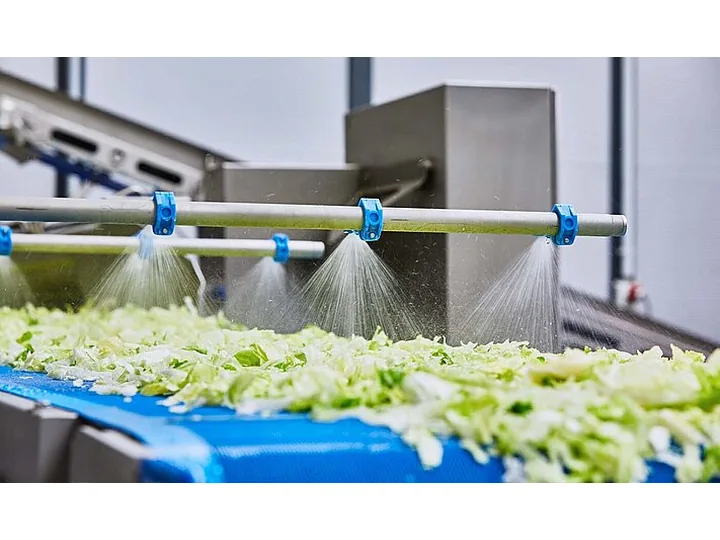
Follow the leaves from water to the next conveyor
The outfeed image shows a belt and overhead rinse sprays. Compare leaf spread, drainage, drop height and the transfer to inspection or dewatering. Water on an outfeed belt is not evidence that a product is ready to pack.
For detached leaves or cut pieces, compare how the proposed water action separates overlapping material and carries it through the tank. Inspect leaf folds and retained base areas after the trial. For an intact plant or tied bunch, confirm a separate supported cleaning proposal rather than assuming loose-leaf equipment will reach every surface.
Specify debris separation, screens, water management, drainage, rinse arrangements and cleaning access. Track fine-piece loss and good leaves carried into debris removal. Include stops, restart and the transfer to the next conveyor so accumulation is visible.
Assess the actual required cleaning outcome. No universal chemical dose, temperature, contact time or microbial-reduction result is supplied here. Washing equipment alone does not establish ready-to-eat status.
Sorting: expose the base, leaf surface and reject path
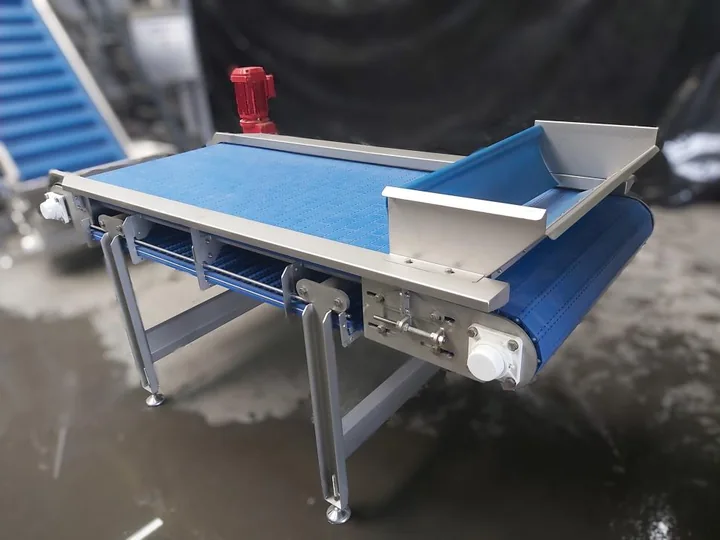
Make leaf condition and unwanted material visible
Use a supported inspection surface for manual quality selection. Specify access to the base, both leaf faces and the reject path as needed. This general conveyor reference does not include verified optical detection or a demonstrated Youmai sorting result.
Define acceptable colour, leaf integrity, base condition and unwanted material before choosing inspection equipment. For whole plants, operators may need to turn the product. For detached or cut leaves, compare spreading, overlap, wet reflections and access from each working position.
A manual inspection belt is a transport and presentation tool. An optical sorter needs its own supplier-confirmed configuration and a Youmai challenge trial covering both missed defects and good-product rejection. Cutting to a shorter size is not a substitute for quality selection.
Dewatering: protect the leaf while removing free water
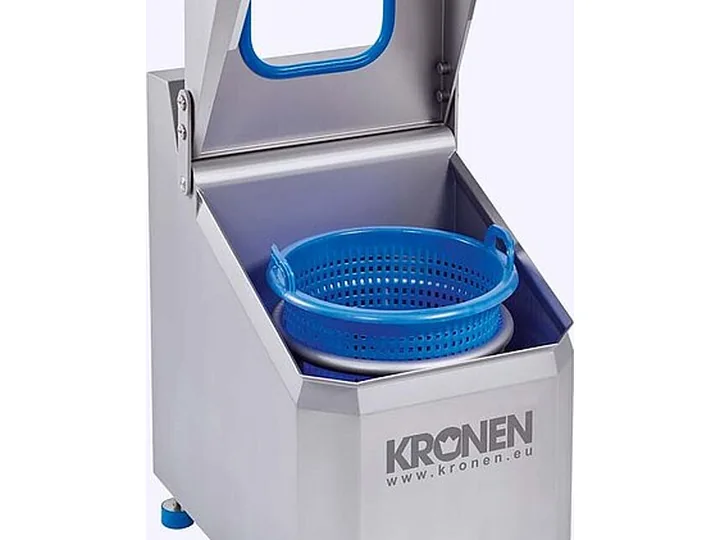
Check the basket, not just the spin cycle
A removable basket makes batch loading and unloading easy to understand. The model family covers lettuce and vegetables. Agree how long Youmai leaves will be loaded, distributed and released, then assess damage and free water after a representative hold.
Begin with drain-down and the transfer out of the washer. Trial the actual leaf form, load distribution, cycle and unloading method. Assess the product after a realistic hold, when remaining water, clumps and handling damage can be checked.
| Product form | Handling question | Trial checks |
|---|---|---|
| Trimmed plants or bunches | Can the proposed route preserve attachment and aligned presentation? | Water retained at the base, leaf breakage and handling effort. |
| Detached intact leaves | How are long leaves loaded and released without unwanted folding? | Tangling, torn tips, uneven loads, free water and unloading. |
| Cut ingredients | Are the openings and transfer suitable for small pieces? | Fines loss, clumping, retained water and dosing consistency. |
Compare basket, continuous centrifugal or air-based proposals against the same retained-product standard. The illustrated basket family does not establish the best method or a universal cycle for Youmai. Removing surface water is separate from thermal drying, cooking or sterilisation.
Packaging: align long leaves or dose loose pieces
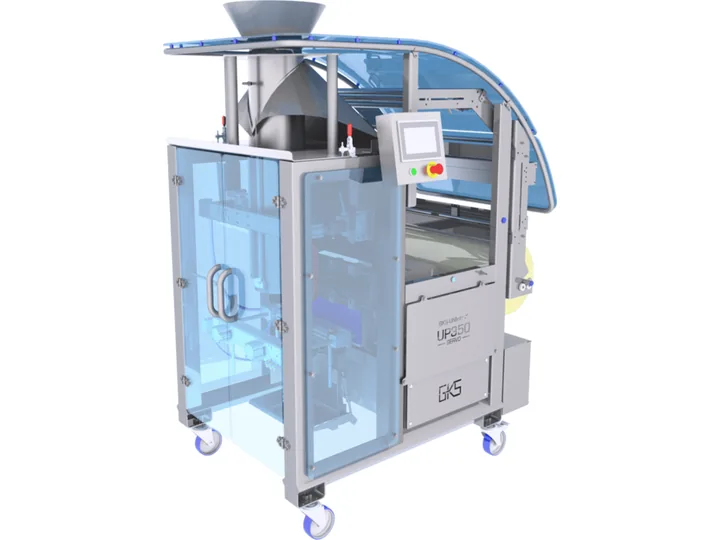
Choose the product presentation before the packer
FLEX L is a packaging-family reference for free-flowing products and produce. It helps explain a loose/cut-leaf bagging route. Confirm the doser, bag geometry and actual Youmai feeding behaviour; whole plants or long aligned bunches need a separately specified packing arrangement.
Plants, bunches and long leaves: specify alignment, support, accepted compression and the required sleeve, bag, tray or wrapping route. Inspect tips and bases after packing, rather than judging the empty package alone.
Loose or cut leaves: compare doser feeding, bridging, drop height, settling and bag geometry. Check net-weight variation, water near the sealing area, leaves across the seal, leaks, coding and rejected packs. Include interruptions and restart.
If modified-atmosphere packaging is proposed, obtain the gas-handling, film, seal-validation and distribution specification for the actual product. A bagger image does not establish MAP capability in every configuration or a shelf-life promise.
See the loose-leaf wash path in motion
The film adds the movement between conveyor, water tank, sprays and outfeed that still photographs cannot show as clearly. Use it alongside the separate whole-plant, intact-leaf and cut-product decisions above.
Watch loose-leaf infeed, rinsing and outfeed
KRONEN's official GEWA XL demonstration shows how lettuce enters a water-based washer and travels onto the outfeed. For Youmai, use it to identify the transfer and leaf-presentation questions to test with your longer intact leaves or cut cooking ingredients.
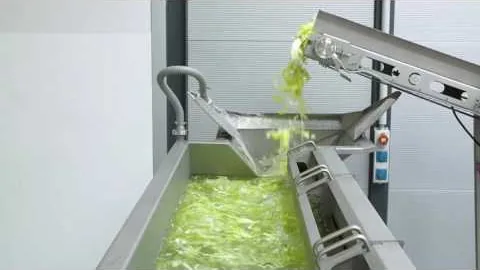 Watch on YouTube ↗ · 1:26
KRONEN Food processing · Official manufacturer footage
- Around 0:32: a conveyor drops loose lettuce into the wash tank. Compare the fall, leaf spread and tank entry with the support your actual Youmai product needs.
- Around 0:52: overhead sprays sit above the moving lettuce at the outfeed. Ask where rinsing ends, drainage begins and the next handling stage receives the product.
- Around 1:12: mixed leafy material travels up the outfeed conveyor. Look at overlap and distribution before discussing inspection, buffers and water removal.
This approximately nine-year-old model-family demonstration shows other lettuce and mixed leaves, not a confirmed Youmai run. Current supplied options and transfers require confirmation. No Youmai throughput, cleaning result, leaf-damage rate or shelf life is established by the film. YouTube displayed captions as unavailable; the original English observations above provide a text alternative.
Prepare a Youmai equipment trial brief
- Bring the actual incoming crop: cultivar or trade name, maturity, leaf length, retained base, ties and realistic variation.
- Show the retained product: attached or detached leaves, trim line, cut dimensions, accepted defects and a finished pack.
- Follow useful output: trim loss, leaf tearing, fines, rejected quality, rework and rejected packs.
- Check the line interfaces: support, drop heights, drain-down, baskets, buffers, interruptions and restart.
- Agree acceptance and cleaning: include water circuits, drains, safe access, tool changes, utilities and supplier training.
Questions before choosing Youmai lettuce equipment
Is Youmai the same equipment brief as iceberg lettuce?
No. Both belong to lettuce processing, but the actual leaf shape, retained base and finished product determine handling. A reference for cut iceberg does not establish an intact long-leaf result.
Does the film show Youmai lettuce?
No confirmed Youmai run is shown. It illustrates lettuce-family washing transfers with other lettuce and mixed leaves.
Must every product be cut or basket-spun?
No. Intact products normally bypass cutting, and their water-removal method must preserve the specified form. Select the route through a sample trial.
Does this guide specify a verified complete Youmai installation?
No. It connects attributed equipment-family references to a Youmai specification brief, with crop-specific configuration and acceptance left for confirmation.
Sources, image credits and review scope · 2 November 2026
NParks supports the crop name and lettuce identity. Images are attributed manufacturer workstation, equipment and process references. Wash photographs and the official film show other lettuce or leafy material. The inspection photograph shows a general conveyor in a workshop. None is presented as a Food Machinery IQ installation or a verified Youmai acceptance trial. Supplier inclusion is permanently free; source addresses are plain text.
- NParks: Lactuca sativa cultivar You Mai Cai, also called Sword Lettucehttps://www.nparks.gov.sg/florafaunaweb/flora/8/4/8413
- KRONEN: GEWA XL washing machine and process detailshttps://www.kronen.eu/en/solutions/washing-machine-gewa-xl-with-belt-outfeed
- KRONEN: configurable preparation workstationhttps://www.kronen.eu/en/solutions/trimming-table-for-4-people
- KRONEN: GS 10-2 belt cutting machinehttps://www.kronen.eu/en/solutions/belt-cutting-machine-gs-10-2
- Herbort: Inspection Belt 85https://www.herbort-gmbh.de/en/products/machines/inspection-belt-85
- KRONEN: KS-100 PLUS vegetable and lettuce spin-dryerhttps://www.kronen.eu/en/solutions/vegetable-and-lettuce-spin-dryer-ks-100-plus
- KRONEN: FLEX L packaging machinehttps://www.kronen.eu/en/solutions/packaging-machine-flex-l
Current model-family information was checked against the illustrated duties. Exact Youmai suitability, supplied options and acceptance results require supplier confirmation. Manufacturer capacity, hygiene, certification and shelf-life language is not adopted as an independently verified performance promise.