Crop guide · Lime preprocessing
Start with the retained product
Key limes, Persian limes and other supplied lime lots should be presented as actual trial material, not a single fixed machine setting. UNITEC publishes a lime sorting application, and JBT explicitly lists limes for citrus extraction. Whole packs, wedges, peel ingredients and juice remain different retained products.
Compare washing, trimming or peeling, cutting, sorting, dewatering and packaging below. Attributed manufacturer images explain equipment roles. General family references require the actual crop configuration and a representative trial.
Choose the finished-product route
Whole fresh fruit
Receive → inspect → configured washing → grade → remove surface water → pack.
Peeling, cutting and extraction are bypassed.
Prepared peel or flesh
Clean whole fruit → define retained peel, pith or flesh → prepare/cut → inspect → portion.
Zesting and complete peeling make different products.
Juice preparation
Clean → size/present for the selected extractor → extract → separate peel, seeds and pulp as specified.
Finishing, preservation and liquid filling are separate downstream duties.
Agree pre-cleaning, trimming, cutting and final-wash order for the incoming material and intended use. These routes are specification aids, not universal process settings.
Washing: clean the surface before opening the fruit
State the smallest useful lime and loose debris before choosing screens, rollers and transfer gaps. Trial cleaning contact and retention at every outlet. The sorting images are citrus-family references, not proof that small limes are retained in a proposed washer.
Trimming: specify which part of the peel is retained
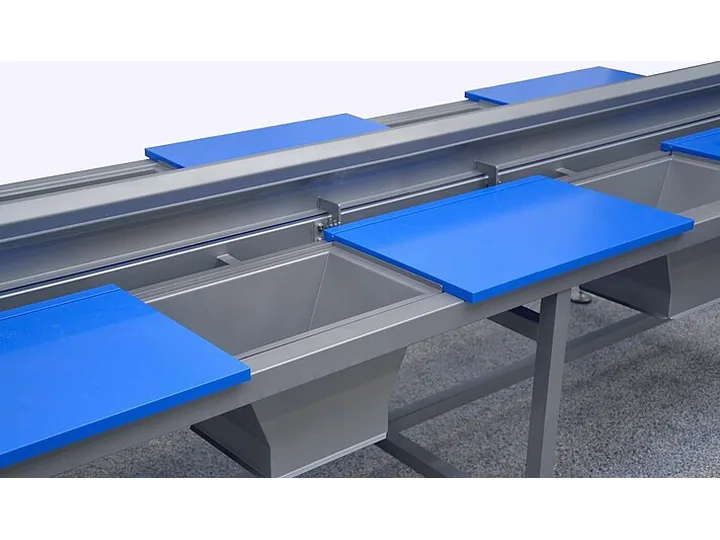
KRONEN
KRONEN manual preparation workstation. Use accepted lime samples to define retained tissue and waste; this is not an automatic peeling or destemming system.
Keep the rind for whole packs and peel-on wedges unless the buyer specifies otherwise. Zest removal and full rind removal differ in depth and finished product. PND describes a citrus surface-peeling family; actual small-lime size and support need confirmation.
Cutting: choose slices, segments or extraction
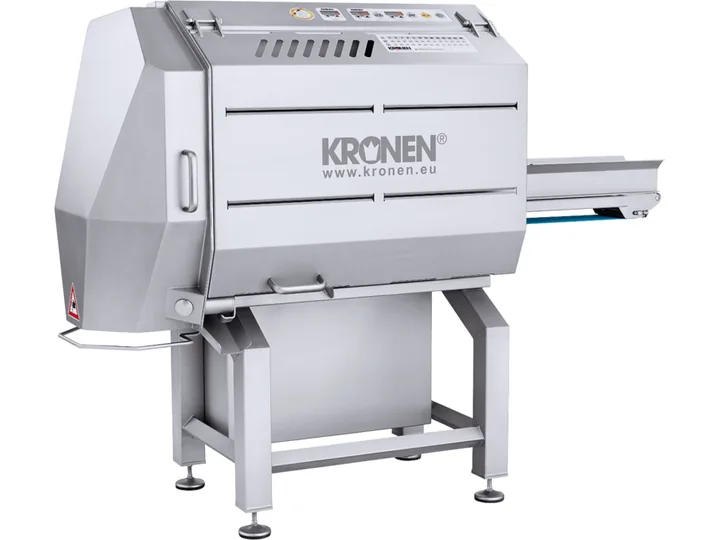
KRONEN GS 10-2
KRONEN supported cutting-family reference. Confirm preparation, fruit support, blade and desired cut with actual lime; segment separation and extraction are distinct duties.
Define rounds, wedges or juice before selecting tools. Small fruit requires secure presentation and a confirmed minimum feed size. The illustrated belt cutter is not a demonstrated lime fixture. JBT names limes for extraction, but the supplied extraction configuration and juice-quality acceptance require the actual lot.
Sorting: define classes before choosing sensors
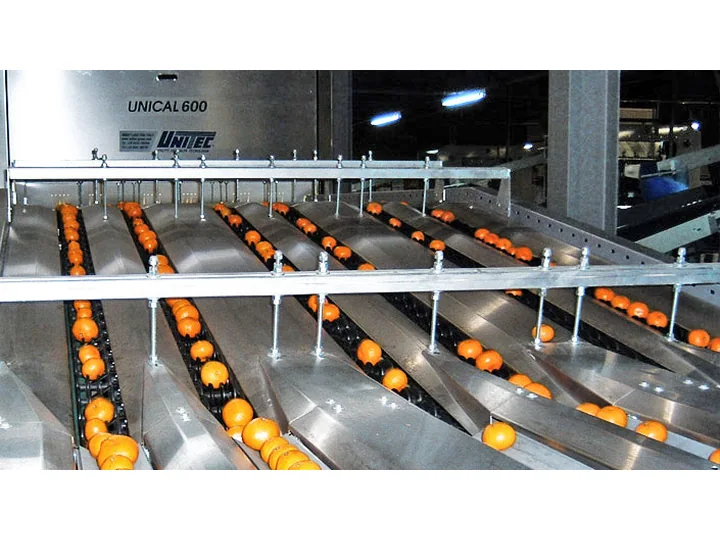
UNITEC UNICAL 600
UNITEC mandarin handling photograph. For lime, confirm actual fruit dimensions, supports and grade decisions; related layout is not an identical supplied line.
UNITEC describes lime grading and adjustable defect selection. Agree diameter, shape and colour classes for the target product. The historical orange video is a related motion reference; it does not establish lime sensor accuracy, retention or a particular supplied line.
Dewatering: remove surface water for the next operation
Inspect retained water around the small fruit and at pack contact points. Specify gentle drainage or a proposed air stage, with useful fruit retained. A surface-water target is separate from dried-lime manufacture or juice concentration.
Packaging: match the packer to whole fruit or ingredients
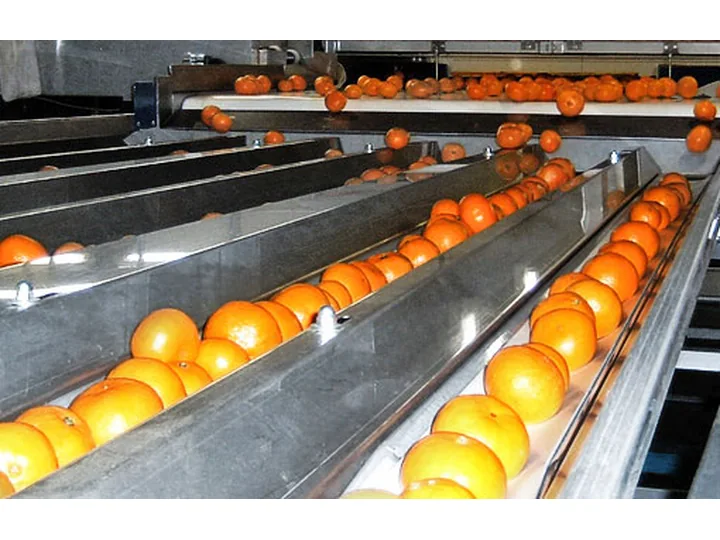
UNITEC citrus collection
Sorted citrus collection before final packing. Confirm the actual lime package, filler and transfer height; this is not a complete sealer.
Whole-lime packs need a suitable small-fruit feeder, count or weight specification and check for escapes. Wedges need different portioning and sealing; juice needs liquid filling after its downstream process. The collection-lane photograph illustrates transfer before final packing.
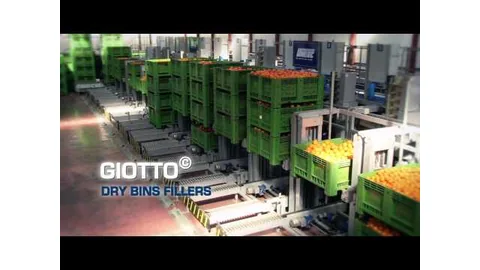
See how whole oranges reach the bin-filling interface
UNITEC shows a historical orange processing and sorting line. Use it to compare fruit presentation and discharge interfaces. For lime and grapefruit, this is a related citrus-handling reference rather than an identified crop trial; their size, shape and offered supports need separate confirmation. Customer promotional productivity claims are not adopted.
 Watch on YouTube ↗ · 2:15
Unitec Group · Official manufacturer footage
- Around 1:07: Green bins of oranges stand on roller conveyors beneath the GIOTTO dry-bin-filler title.
Current manufacturer links and source identity were checked. Confirm the offered version and configuration separately from historical demonstration footage. Original English watch notes provide a text alternative; no full transcript is reproduced. Playback is on YouTube. No crop capacity, yield, cleaning, damage or shelf-life guarantee is inferred from the film.
Prepare a lime equipment trial brief
- Bring representative input: variety, maturity, size, incoming condition and seasonal variation.
- Show accepted and rejected samples: retained skin, leaf, stem, head or cut form, useful rework and finished pack.
- Record useful output: trim/peel loss, damage, fines, missed defects, free water and rejected packs.
- Test interfaces: product supports, drops, screens, drainage, dose control, stops and restart.
- Confirm supplied configuration: safe access, guards, tooling, water circuits, utilities, cleaning and training.
Questions before choosing lime equipment
Can one citrus machine deliver whole packs, peeled segments and bottled juice?
These are separate routes. Agree the retained product first, then specify the washing, preparation, extraction, finishing and packing interfaces required for that route.
Sources, image credits and review scope · 3 November 2026
Manufacturer equipment references may include studio images or technical renderings; photographs are identified in their captions. Footage and machine images belong to the named sources and are not Food Machinery IQ installations or independent acceptance tests. Source addresses are plain text. Supplier inclusion is permanently free.
- Orange Filmhttps://www.youtube.com/watch?v=x5pG-ExiYdE
- Limehttps://en.unitec-group.com/fruit-vegetables-technology/lime-processing-sorting-grading-machines/
- UNITEC: mandarin and clementine grading and configurable packinghttps://en.unitec-group.com/fruit-vegetables-technology/mandarin-clementine-processing-sorting-grading-machines/
- Prephttps://www.kronen.eu/en/solutions/trimming-table-for-4-people
- Gshttps://www.kronen.eu/en/solutions/belt-cutting-machine-gs-10-2
- JBT READYGo JUICE family: citrus extraction routeshttps://blog.jbtc.com/wp-content/uploads/2024/04/READYGo-JUICE-FAMILY-EN.pdf
- PND ZESTCRAFT: controlled citrus surface-peeling dutyhttps://pndsrl.it/en/macchine/zestcraft/
General layout and selection advice is an editorial trial brief. Crop-specific application listings are distinguished from general machine-family references. No certification, numerical output, pathogen reduction, energy saving or shelf-life promise has been independently established here.