Crop guide · Dragon fruit preprocessing
Start with the retained product
Compare whole fruit, prepared edible portions and processed ingredients before combining machines. Attributed equipment and process images below explain the different duties; actual fruit, tooling and accepted output remain part of the supply specification.
Compare washing, trimming or peeling, cutting, sorting, dewatering and packaging below. Attributed manufacturer images explain equipment roles. General family references require the actual crop configuration and a representative trial.
Choose the finished-product route
Whole fresh fruit
receive, clean as specified, inspect, grade and support through packing.
Compare actual input and accepted output before choosing the line.
Fresh-cut flesh
clean exterior, remove peel, cut accepted flesh and portion.
Compare actual input and accepted output before choosing the line.
Pulp ingredients
prepare accepted flesh and specify reduction or refining before downstream filling.
Compare actual input and accepted output before choosing the line.
Agree pre-cleaning, trimming, cutting and final-wash order for the incoming material and intended use. These routes are specification aids, not universal process settings.
Washing: match cleaning to the destination
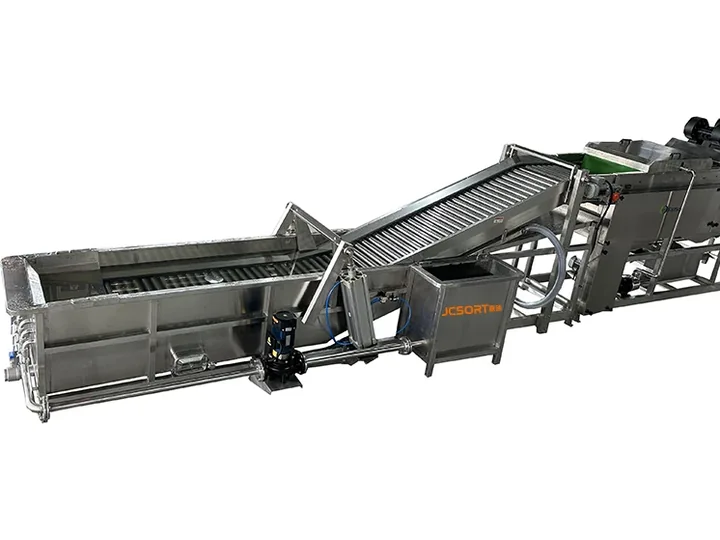
JCSORT
The maker lists water reception, brush washing, inspection, air drying and weight grading. Confirm each supplied section and fruit support; the image does not establish a commissioned line or validated cleaning result.
JCSORT describes a dragon-fruit line with water reception, brush cleaning, inspection, air drying and weight grading. Define the required surface finish and handling of the external bracts before selecting brush contact or transfer arrangements. A line description does not establish a validated cleaning programme.
Trimming: separate peel, seed and shell decisions
Whole-fruit packs retain the peel; prepared flesh does not. Specify bract trimming, damaged areas and manual peel removal with accepted samples. The whole-fruit grading line is not evidence of an automatic flesh-peeling system.
Cutting: choose pieces, reduction or extraction
Choose whole flesh pieces, slices or pulp before selecting the cutter. Present peeled fruit with the actual firmness and dimensions. Reduction or fine refining belongs to an ingredient route and can change the accepted texture; it is not automatically required for fresh-cut flesh.
Sorting: inspect the retained product
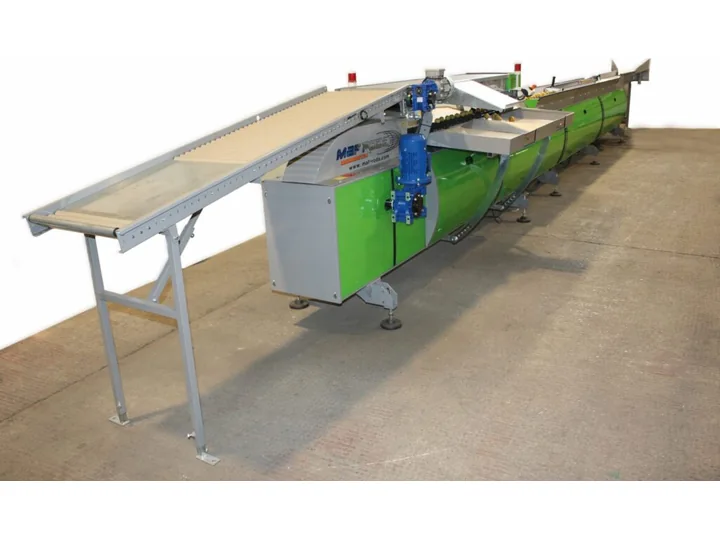
MAF RODA Freeway
The dragon-fruit application lists weight grading. This workshop photograph explains the equipment family; a particular crop trial, sensor package or internal-quality result is not inferred.
MAF RODA explicitly lists dragon fruit for its Freeway IV weight-grading family. Weight classification is different from defect detection. Agree size, weight and visible-condition classes, including fruit with irregular bracts; confirm any proposed sensor package separately.
Dewatering: distinguish water removal from processing
Surface-water removal ahead of a whole-fruit grader and drainage of exposed flesh are different duties. Compare air handling and supported transfers, recording free water separately from juice released by damaged flesh.
Packaging: match the feeder and final pack
Whole fruit needs supports for its shape and bracts. Prepared flesh needs suitable portioning and closure. Clarify whether a quoted line only collects sorted fruit or also performs final packing; do not infer a retail sealer from a grading outlet.
Compare the actual retained product in a supplier trial
For dragon fruit, ask the maker to demonstrate the intended whole-fruit, prepared-piece or ingredient route. No unrelated generic film is substituted here. The equipment photographs and written source descriptions explain the roles without requiring video playback.
Prepare a dragon fruit equipment trial brief
- Bring representative input: variety, maturity, size, incoming condition and seasonal variation.
- Show accepted and rejected samples: retained skin, leaf, stem, head or cut form, useful rework and finished pack.
- Record useful output: trim/peel loss, damage, fines, missed defects, free water and rejected packs.
- Test interfaces: product supports, drops, screens, drainage, dose control, stops and restart.
- Confirm supplied configuration: safe access, guards, tooling, water circuits, utilities, cleaning and training.
Questions before choosing dragon fruit equipment
Can one machine perform all dragon fruit preparation stages?
Compare the required input and retained output at each interface. Whole-fruit handling, opening, peeling or seed removal, cutting, refining and packing are separate duties. A machine photograph is not evidence of a complete processing line.
Sources, image credits and review scope · 3 November 2026
Equipment photographs and output references are identified beside each image. Historical installation photographs are labelled. Footage and machine images belong to the named sources and are not Food Machinery IQ installations or independent acceptance tests. Source addresses are plain text. Supplier inclusion is permanently free.
- Dragon Linehttps://www.mafroda.com/us-en/fruits-and-vegetables/dragon-fruit/
- Dragon Washhttps://www.jcsort.com/products/Dragon-Fruit-Washing-Weight-Grading-Machine
General layout and selection advice is an editorial trial brief. Crop-specific application listings are distinguished from general machine-family references. No certification, numerical output, pathogen reduction, energy saving or shelf-life promise has been independently established here.