Crop guide · Raspberry preprocessing
Start with the retained product
Define the incoming raspberry and the finished product before choosing machines. Whole fresh product, frozen ingredients and further-processed material need different line interfaces.
Compare washing, trimming or peeling, cutting, sorting, dewatering and packaging below. Attributed manufacturer images explain equipment roles. General family references require the actual crop configuration and a representative trial.
Choose the finished-product route
Fresh whole berries
inspect and support through fresh-market packing.
Agree the retained product and acceptance samples before selecting the complete line.
Frozen whole or crumble
prepare for freezing, classify the frozen material and package to the agreed grade.
Agree the retained product and acceptance samples before selecting the complete line.
Puree ingredients
inspect, reduce and specify seed separation before downstream filling or preservation.
Agree the retained product and acceptance samples before selecting the complete line.
Agree pre-cleaning, trimming, cutting and final-wash order for the incoming material and intended use. These routes are specification aids, not universal process settings.
Washing: match cleaning to the destination
Do not copy a vigorous fruit-washing programme onto delicate fresh raspberries. Establish whether a wet step is required for the intended product and obtain an actual raspberry handling trial before naming a washer configuration.
Trimming: define the tissue to retain
Define unwanted stalks, leaves and other field material separately from damaged edible fruit. Any mechanical preparation must be evaluated against the accepted whole-berry fraction.
Cutting: bypass or specify deliberate reduction
A whole-berry route does not need slicing. Frozen crumble is a product class to specify, not an assumed by-product that every buyer accepts. Puree and seed separation need their own equipment brief.
Sorting: separate grading from preparation
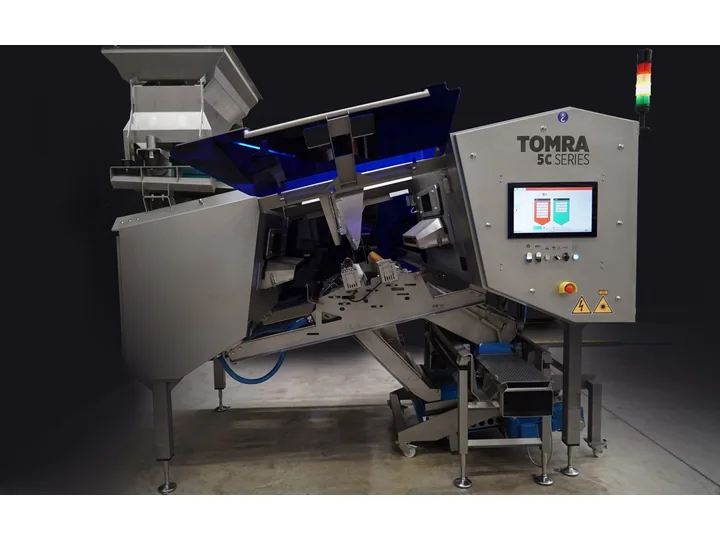
TOMRA 5C
A sorting-machine family exterior. Specify actual fresh, frozen or dried input and defect samples; no detection percentage or food-safety guarantee is inferred.
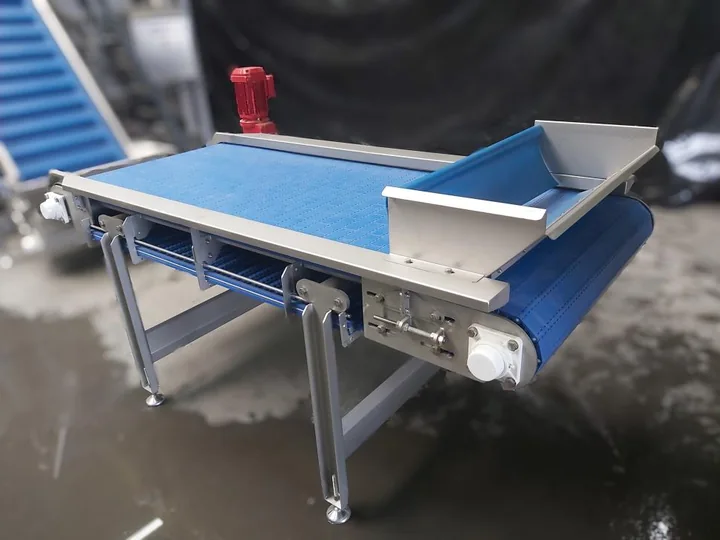
Herbort Inspection Belt 85
A manual inspection conveyor. Agree the viewing and reject procedure; this photograph does not establish optical or internal-defect detection.
The TOMRA Vitafoods reference concerns frozen raspberries and distinguishes whole and crumble material. Keep that evidence with the frozen route; it does not demonstrate a fresh raspberry retail line.
Dewatering: control free water
Agree free-water control before freezing and check clumping after the proposed sequence. Surface-water removal is different from thermal drying or juice concentration.
Packaging: specify the feeder and pack
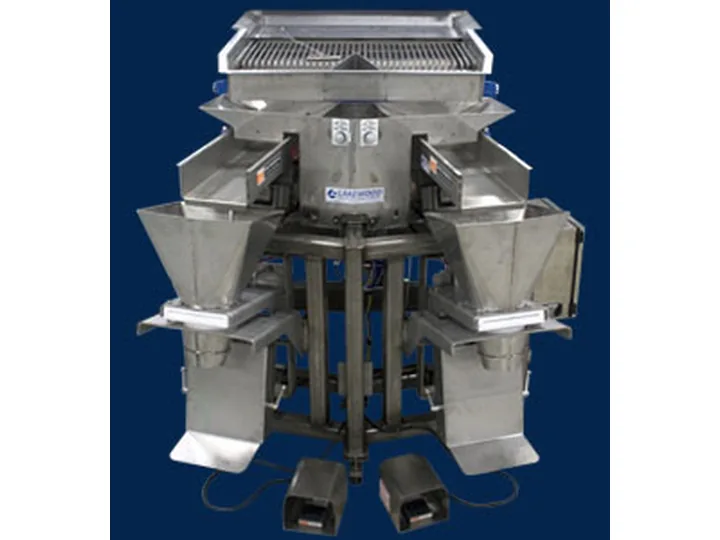
Lakewood frozen-berry filler
Lakewood describes weighed filling into bags or boxes for frozen raspberries and blackberries. Confirm sealing or taping as a separate interface.
Compare supported fresh packs, frozen ingredient bags and puree filling separately. For whole frozen berries, inspect damage through the feeder and sealing handoff rather than relying only on target weight.
Raspberry manufacturer reference
Lakewood identifies this shared raspberry and blackberry line for frozen material. Its written description separates air cleaning, crumble classification, inspection and weighed bag or box filling; it is not a fresh-raspberry retail-line claim.
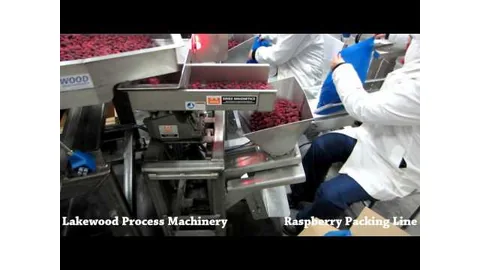 Open the manufacturer reference on YouTube ↗
Lakewood Process Machinery · External manufacturer reference
Questions to compare with the proposed equipment
- Are the raspberries frozen?
- Are whole fruit and crumble separate grades?
- What happens at the discharge into the next machine?
These comparison questions follow the written equipment description. Video content and playback have not been independently reviewed. No timestamps, measured result or verified playback claim is supplied. The written guide stands on its own.
Prepare a raspberry equipment trial brief
- Bring representative input: variety, maturity, size, incoming condition and seasonal variation.
- Show accepted and rejected samples: retained skin, leaf, stem, head or cut form, useful rework and finished pack.
- Record useful output: trim/peel loss, damage, fines, missed defects, free water and rejected packs.
- Test interfaces: product supports, drops, screens, drainage, dose control, stops and restart.
- Confirm supplied configuration: safe access, guards, tooling, water circuits, utilities, cleaning and training.
Questions before choosing raspberry equipment
Does this establish a ready-to-run raspberry line?
No. Manufacturer references explain equipment roles. Agree actual input, retained product, supplied configuration, interfaces and acceptance samples in a supplier trial.
Sources, image credits and review scope · 3 November 2026
Equipment photographs and output references are identified beside each image. Historical installation photographs are labelled. Footage and machine images belong to the named sources and are not Food Machinery IQ installations or independent acceptance tests. Source addresses are plain text. Supplier inclusion is permanently free.
- Raspberry Iqfhttps://www.tomra.com/food/media-center/customer-stories/vitafoods
- Berrieshttps://www.tomra.com/food/categories/fruit/berries
- Prephttps://www.kronen.eu/en/solutions/trimming-table-for-4-people
- Inspectionhttps://www.herbort-gmbh.de/en/products/machines/inspection-belt-85
- Raspberry Filmhttps://www.youtube.com/watch?v=ZmpJYA1ROKQ
- Raspberry Blackberry Packinghttps://www.lakewoodpm.com/products/raspberry-blackberry-packing-equipment
General layout and selection advice is an editorial trial brief. Crop-specific application listings are distinguished from general machine-family references. No certification, numerical output, pathogen reduction, energy saving or shelf-life promise has been independently established here.