Crop guide · Strawberry preprocessing
Start with the retained product
Define the incoming strawberry and the finished product before choosing machines. Whole fresh product, frozen ingredients and further-processed material need different line interfaces.
Compare washing, trimming or peeling, cutting, sorting, dewatering and packaging below. Attributed manufacturer images explain equipment roles. General family references require the actual crop configuration and a representative trial.
Choose the finished-product route
Fresh whole fruit
inspect and pack to the specified fresh-market handling programme.
Agree the retained product and acceptance samples before selecting the complete line.
Prepared fruit
configured washing, calyx removal, inspection, optional cutting, drainage and portioning.
Agree the retained product and acceptance samples before selecting the complete line.
Frozen ingredients
prepare whole berries or pieces, remove excess free water, freeze and inspect the frozen product.
Agree the retained product and acceptance samples before selecting the complete line.
Agree pre-cleaning, trimming, cutting and final-wash order for the incoming material and intended use. These routes are specification aids, not universal process settings.
Washing: match cleaning to the destination
UNIMASZ explicitly lists strawberries for its delicate-fruit washer and air-drying equipment. Assess flotation, belt pickup and discharge with the softest accepted fruit. Do not insert a processing wash into every fresh-market route by default.
Trimming: define the tissue to retain
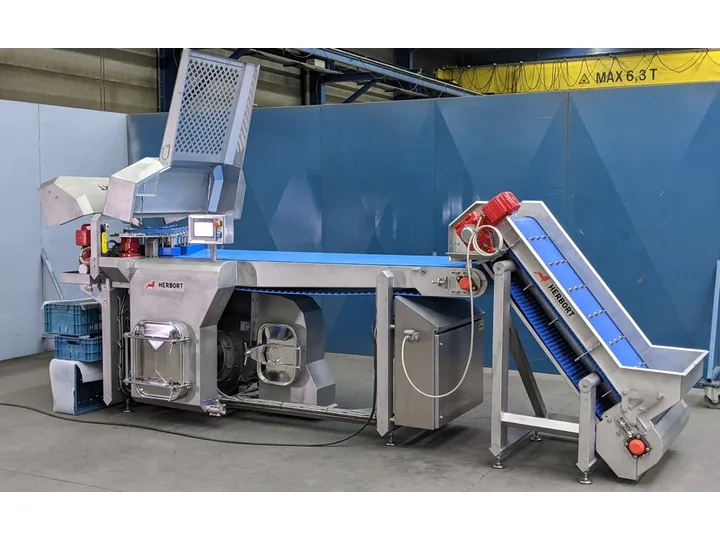
Herbort 145
Herbort describes manual inverted placement on a perforated belt, vacuum support and circular-knife top trimming. This preparation machine is separate from optical sorting.
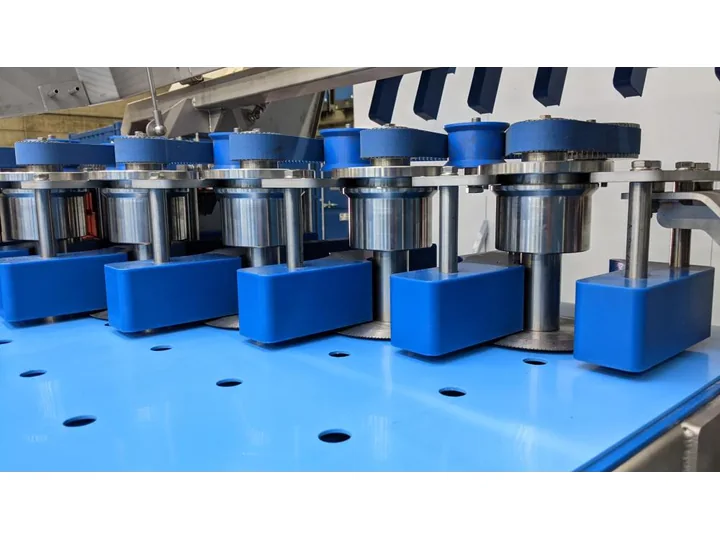
Herbort 145 tooling
The close view locates the tooling and perforated support belt. Confirm fruit presentation, accepted cap cut and retained flesh with actual samples.
Calyx removal is a separate preparation task. Compare manual trimming with a purpose-specified cap-removal system using accepted flesh-loss and residual-leaf samples. A sorter that rejects stems does not necessarily remove attached calyces.
Cutting: bypass or specify deliberate reduction
Whole strawberries bypass the cutter. For halves, slices or dice, specify size range, orientation and firmness, and inspect crushed edges, seed-bearing surface damage and free juice.
Sorting: separate grading from preparation
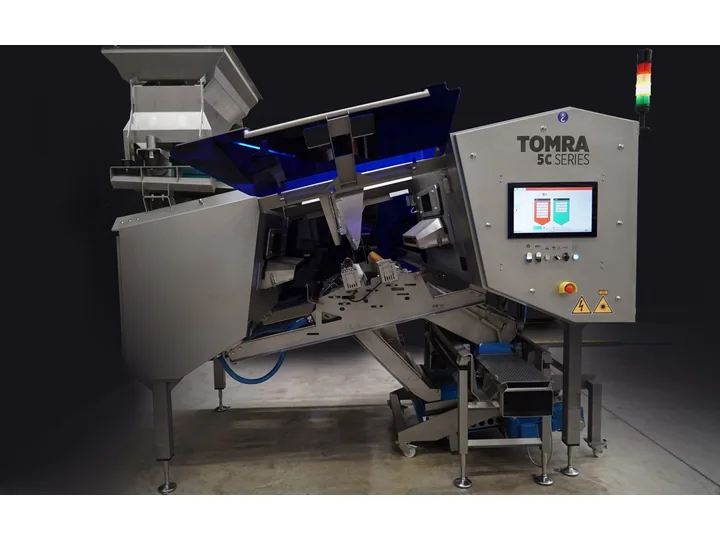
TOMRA 5C
A sorting-machine family exterior. Specify actual fresh, frozen or dried input and defect samples; no detection percentage or food-safety guarantee is inferred.
TOMRA lists several strawberry states including fresh and frozen. Specify which state enters the actual machine and the defect classes to reject. Do not transfer frozen-product settings or claimed detection capability to a fresh-fruit line.
Dewatering: control free water
Compare supported drainage and air handling before packing or freezing. Measure free water separately from juice leakage; do not assume a leafy-green centrifuge will preserve strawberry shape.
Packaging: specify the feeder and pack
Fresh punnets, frozen ingredient bags and puree filling are different interfaces. Trial portioning drops, sticking, package closure and lot separation with the actual prepared product.
Strawberry manufacturer reference
TOMRA links this strawberry-sorting reference from its application page. Agree the incoming fruit state and reject classes. Sorting and attached-calyx removal are separate operations.
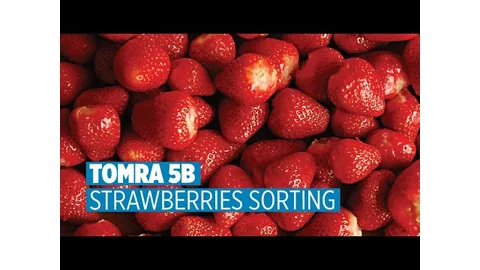 Open the manufacturer reference on YouTube ↗
TOMRA · External manufacturer reference
Questions to compare with the proposed equipment
- Is the fruit fresh or frozen?
- How is delicate fruit picked up and discharged?
- Does the demonstration sort berries or remove attached calyces?
These comparison questions follow the written equipment description. Video content and playback have not been independently reviewed. No timestamps, measured result or verified playback claim is supplied. The written guide stands on its own.
Prepare a strawberry equipment trial brief
- Bring representative input: variety, maturity, size, incoming condition and seasonal variation.
- Show accepted and rejected samples: retained skin, leaf, stem, head or cut form, useful rework and finished pack.
- Record useful output: trim/peel loss, damage, fines, missed defects, free water and rejected packs.
- Test interfaces: product supports, drops, screens, drainage, dose control, stops and restart.
- Confirm supplied configuration: safe access, guards, tooling, water circuits, utilities, cleaning and training.
Questions before choosing strawberry equipment
Does this establish a ready-to-run strawberry line?
No. Manufacturer references explain equipment roles. Agree actual input, retained product, supplied configuration, interfaces and acceptance samples in a supplier trial.
Sources, image credits and review scope · 3 November 2026
Equipment photographs and output references are identified beside each image. Historical installation photographs are labelled. Footage and machine images belong to the named sources and are not Food Machinery IQ installations or independent acceptance tests. Source addresses are plain text. Supplier inclusion is permanently free.
- Delicate Washerhttps://unimasz.pl/fruit-washer-and-dryer/?lang=en
- Berrieshttps://www.tomra.com/food/categories/fruit/berries
- Prephttps://www.kronen.eu/en/solutions/trimming-table-for-4-people
- Inspectionhttps://www.herbort-gmbh.de/en/products/machines/inspection-belt-85
- Strawberry Filmhttps://www.youtube.com/watch?v=lpPHnBpmq-o
- Strawberry Capperhttps://www.herbort-gmbh.de/en/products/machines/strawberry-capper-145
- Strawberry Sortinghttps://www.tomra.com/food/categories/fruit/strawberries
General layout and selection advice is an editorial trial brief. Crop-specific application listings are distinguished from general machine-family references. No certification, numerical output, pathogen reduction, energy saving or shelf-life promise has been independently established here.